


Two canals from Central Asia selected for the prestigious WHIS Award 2026
Two historic irrigation canals from Central Asia — Shokhrud and Dargom — have been selected for the World Heritage Irrigation Structure (WHIS) Award 2026 by the International Commission on Irrigation and Drainage (ICID).
On October 14, 2026, two irrigation structures in Uzbekistan — the Shokhrud and Dargom canals — were honored as World Heritage Irrigation Structures (WHIS) at an award ceremony held in Marseille, France, during the 77th meeting of the International Executive Council of the International Commission on Irrigation and Drainage (ICID).
ICID President Marco Arcieri presented certificates and commemorative plaques to Erkin Fayzillaev, Head of the Amu-Bukhara Basin Administration of Irrigation Systems, representing the Shokhrud Canal, and Farkhod Rajabov, Head of the Zeravshan Basin Administration of Irrigation Systems, representing the Dargom Canal.
The ceremony was also attended by Vadim Sokolov, ICID Vice President and Chair of the Jury for the Recognition of World Heritage Irrigation Structures, and Azam Eraliev, Chief Water Inspector at the Administration of the President of the Republic of Uzbekistan, who headed Uzbekistan's delegation to the ICID events in Marseille.

The WHIS program aims to identify, study, and safeguard historic irrigation infrastructure as a vital part of the world’s water heritage. These systems not only reflect the historical evolution of irrigation technologies but also demonstrate their importance to the development of human civilizations.
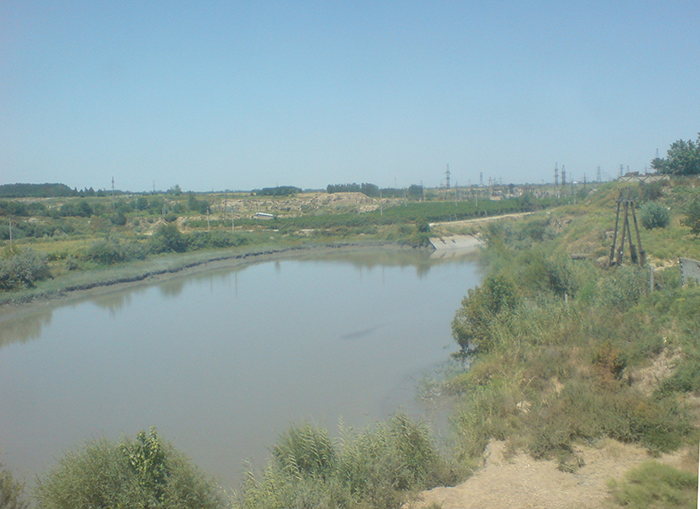
The Dargom Canal is one of the oldest irrigation systems in Central Asia still in operation. Its construction dates to the 5th-4th centuries BCE. For more than two millennia, the canal has supplied water to the Samarkand oasis and supported irrigated agriculture, cities and settlements in the Zeravshan Valley. Approximately 102 km long, the canal serves about 178,000 hectares in Samarkand and Kashkadarya provinces. Its system comprises 146 hydraulic facilities and 12 gauging stations. Having preserved its historic route and gravity-flow operation, the Dargom Canal remains a key element of Uzbekistan's water distribution system.
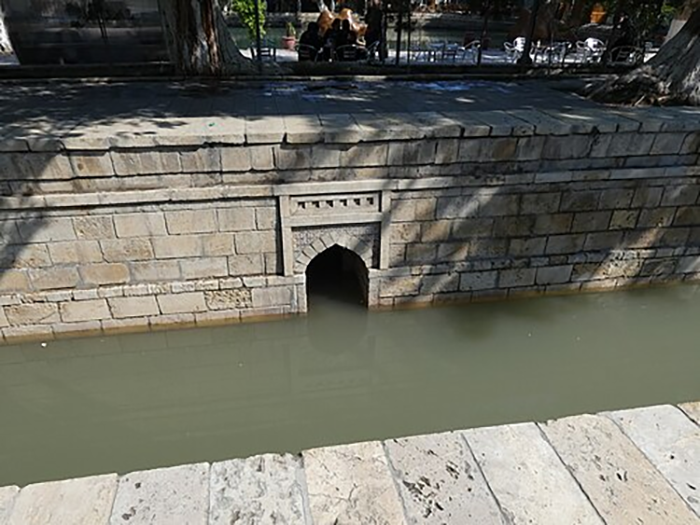
The Shokhrud Canal, believed to have been constructed in the 3rd-4th centuries CE, played a key role in the formation of the Bukhara oasis and the development of the city of Bukhara. For centuries, it supplied water to irrigated lands, orchards and vineyards, craft and residential quarters, as well as the city's hauzes/ponds. The Shokhrud Canal is closely associated with the Historic Cente of Bukhara, which is inscribed on the UNESCO World Heritage List.
The nominations were prepared by the Scientific Information Center of the Interstate Commission for Water Coordination (SIC ICWC) and the Expert Platform on Water Security, Sustainable Development and Future Studies. They were submitted on behalf of the Uzbek National Committee on Irrigation and Drainage (UzNCID).