
Section 4. Bilateral water cooperation between the countries of Central Asia
4.1. Bilateral collaboration
4.1.1. Kazakhstan–Kyrgyzstan
High-level contacts
In 2024, the President of Kyrgyzstan paid an official visit to Kazakhstan. During the talks, the parties: (1) signed a package of documents, including the Treaty on deepening and expanding allied relations; (2) discussed cooperation in the area of water and energy, economy, trade, investment and agriculture; implementation of joint projects on transport, communications, digitalization; (3) convened a session of the High Inter-State Council, culminating in the signing of significant agreements (April 18-19, Cholpon-Ata, Kyrgyzstan).
The Heads of State discussed the ways to further strengthen cooperation in trade, economy, investment, and cultural-humanitarian fields during telephone conversations (April 6, December 6).
Cooperation within the Chu-Talas Water Commission
The Chu-Talas Water Commission (СTWC or Commission) was established by the Agreement on the Use of Water Management Facilities of Intergovernmental Status on the Chu and Talas Rivers to ensure mutually beneficial cooperation (January 21, 2000).
Meetings. From 2006 to 2024, the Commission convened 34 meetings. In 2024, 2 meetings were held: (1) 33rd meeting, which discussed implementation of decisions of the 32nd meeting , approved water delivery schedules for the 2024 growing season; repair and restoration of hydraulic facilities (April 26, Bishkek, Kyrgyzstan); (2) 34th meeting, which reviewed current water management situation, implementation of water diversion schedules, operation and maintenance of inter-state water management facilities co-financed by Kazakhstan; automation of water distribution sensors, joint measurements on the Aspara River and Chumysh hydroscheme and resumption of hydrological observations at the Zhasorken gauging station on the Talas River. Discussions also covered amendments to the Agreement of 21.01.2000 and elaboration of a new document for the Chumysh reservoir (July 27, Cholpon-Ata, Kyrgyzstan).
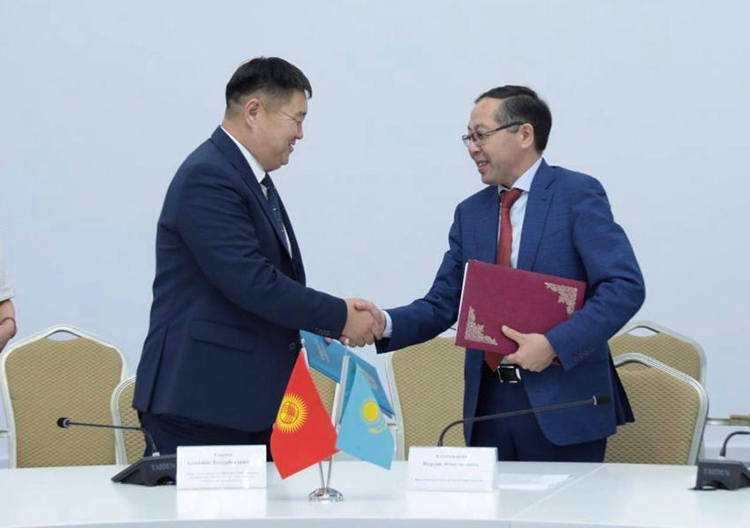
Working Group on environment protection (WGEP) under the CTWC Secretariat. At its 12th meeting, the WGEP discussed: (1) water quality monitoring; (2) hydrometeorological monitoring; (3) hydrodynamic modeling. At the end of the meeting, the 2025 Work Plan was approved (December 4, Bishkek, Kyrgyzstan).
Bilateral water-related arrangements
The Kyrgyz Minister of Energy held a meeting with the Kazakh Vice-Minister of Energy. The parties discussed the Kambarata-1 project, electricity imports to Kyrgyzstan, construction of small hydropower, and supply of coal to the Bishkek TPP (September 17, Bishkek, Kyrgyzstan).
Other bilateral arrangements
The 12th meeting of the Kazakh-Kyrgyz Intergovernmental Council addressed the key aspects of cooperation, including in such fields as transport, logistics, industry, water and energy management. A range of documents was signed, including a roadmap between the Kyrgyz Ministry of Water Resources, Agriculture and Processing Industry and the Kazakh Ministry Agriculture to boost bilateral agricultural commodity trade in 2024- 2025 (December 4, Bishkek, Kyrgyzstan).
4.1.2. Kazakhstan–Tajikistan
The President of Kazakhstan paid a state visit to Tajikistan. The Parties set the goals of bilateral cooperation in the area of agriculture, water and energy, transport, and transit. As a result of negotiations, they signed a treaty on allied relations, as well as other documents, including Memoranda of Understanding on oil and gas cooperation between the Kazakh Ministry of Energy and Tajik Ministry of Energy and Water Resources and on innovation and digital development, training and retraining between the Kazakh Ministry of Agriculture and the Tajik Ministry of Agriculture (August 22-23, Dushanbe, Tajikistan).
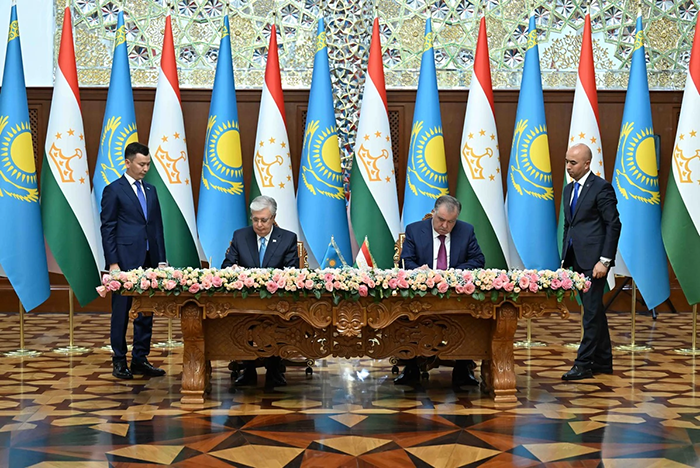
On the sidelines of the SCO Summit, the Presidents of Kazakhstan and Tajikistan held a meeting, where they addressed the prospects for enhancing cooperation across a range of sectors, including trade, economy, transport, logistics, culture, humanitarian affairs, energy, and agriculture (July 3, Astana, Kazakhstan).
Through telephone calls, the Heads of State also addressed the matters of transboundary water use, development of cooperation in trade, economy, and cultural-humanitarian sphere, and further strengthening of Kazakh-Tajik relations (April 12, May 17, October 5).
Other bilateral arrangements
During its 18th meeting, the Tajik-Kazakh Joint Intergovernmental Commission on Economic, Scientific and Technical Cooperation paid particular attention to development of an integrated water and energy cooperation mechanism in Central Asia (July 19, Dushanbe, Tajikistan).
4.1.3. Kazakhstan–Turkmenistan
High-level contacts
During the official visit of the President of Kazakhstan to Turkmenistan, the Declaration on Strengthening Friendship and Deepening Multifaceted Strategic Partnership between Turkmenistan and the Republic of Kazakhstan was singed. Among other things, the Parties: (1) have noted the importance of collaboration in the area of environmental safety and protection, rational use of natural resources, prevention and management of natural and man-made disasters and so on; (2) welcomed the initiatives to open the Project Office for Central Asia on Climate Change and Green Energy, the UN Regional Centre for Sustainable Development Goals for Central Asia and Afghanistan, and the UN Regional Climate Technology Centre for Central Asia; (3) stressed the important role of the IFAS and ongoing work to improve its institutional and legal framework; (4) welcomed the ongoing efforts to establish a dedicated UN Program for the Aral Sea basin. A number of inter-ministerial cooperation documents were also signed by the two countries (October 10, Ashgabat, Turkmenistan).
On the sidelines of the 6th Consultative Meeting of Heads of State of Central Asia, the Presidents of Turkmenistan and Kazakhstan held a meeting to discuss priority issues of bilateral partnership (August 9, Astana, Kazakhstan).
In a telephone conversation the Heads of State discussed key aspects of bilateral cooperation on policy and diplomacy, trade and economy, and cultural aspects (August 5).
Bilateral working groups
The 13th meeting of the Intergovernmental Turkmen-Kazakh Commission on economic, scientific, technical and cultural cooperation was held on October 4 in Ashgabat. The parties focused on deepening cooperation in oil and gas area and on interregional ties. The meeting concluded with the signing of a Protocol.
4.1.4. Kazakhstan–Uzbekistan

High-level contacts
During the state visit of the President of Uzbekistan to Kazakhstan, the 1st meeting of the High-level Interstate Council was held. As a result, a Joint Statement and decisions on approval of the 2024-2034 Program of Strategic Partnership and Alliance and establishment of the Foreign Minister Council were signed. The parties also signed a package of documents at ministerial and agency levels, including an agreement on agricultural cooperation. The Presidents officially opened branches of the TIIAME in Almaty and the M.Auezov South Kazakhstan University in Chirchik city and took part in the ceremony on occasion of arrival of the first freight train following the route Xi An-Khorgos-Almaty-Saryagach–Tashkent (August 7-8, Astana, Kazakhstan).
During an informal meeting, the presidents exchanged views on a wide range of economic cooperation issues, with a particular focus on ensuring stability and security in Central Asia (April 5, Khiva, Uzbekistan).
During their telephone conversations, the heads of state discussed the bilateral and regional agenda, focusing on the implementation of high-level agreements and progress on major cooperation projects in trade, industry, energy, transport, and agriculture (April 23, May 17, July 24).
Kazakh-Uzbek Joint Working Group (Commission) on environment protection and water quality in the Syr Darya River Basin
The Commission on Environment Protection and Water Quality in the Syr Darya River Basin (hereinafter referred to as the Working Group) was established as a follow-up to the 2017-2019 Strategy for Economic Cooperation between Kazakhstan and Uzbekistan and the Agreement between the Government of the Republic of Kazakhstan and the Government of the Republic of Uzbekistan on cooperation in the field of environmental protection and management of 02.06.1997.
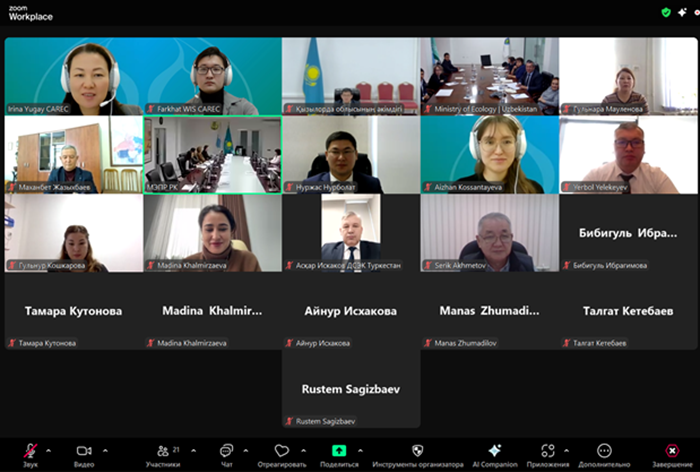
Meetings. In 2024, the 7th meeting of the Working Group was held. The Working Group reviewed progress on the 2024 Work Plan, inventory of potential pollution sources along the Bozsu Canal and the Badam River, and development of the Ecosystem Preservation Program . The Parties agreed to conduct a joint water sampling in autumn and additionally approved a list of three new water quality indicators; to involve an independent laboratory to ensure objectivity and impartiality of results. The Parties also resolved to jointly develop the capacities of specialists and develop a unified water quality standard. They also made a decision to engage upstream basin countries–Tajikistan and Kyrgyzstan–in the Group’s meetings and activities (December 20, online).
Joint Kazakh-Uzbek Working Group on developing proposals for deepening bilateral water cooperation
Since 2016, the Working Group held 11 meetings. In 2024, 3 meetings were held to discuss: (1) the draft Agreement between the Governments of the Republic of Kazakhstan and of the Republic of Uzbekistan on joint management and rational use of transboundary water resources; (2) coordination of a draft regional strategy for rational use of transboundary water with Central Asian states; (3) implementation of the 2nd phase of the “Restoration and reconstruction of the Sardoba reservoir in the Syr Darya province” project; (4) automation of water distribution sites located in Kazakhstan and Uzbekistan; (5) other issues (February 1-2, Shymkent, Kazakhstan; March 14-15, Tashkent, Uzbekistan; September 19, Astana, Kazakhstan).
Kazakhstan and Uzbekistan have agreed to install automated water meters at 10 gauging stations along the Syr Darya River. Each country will install and maintain meters on the other's territory, enabling real-time data exchange and transparent access to water information. The governments hold negotiations with international organizations to get support for the project. Following the meeting, the Ministers signed a Protocol.
Other bilateral meetings on water-related matters
Experts of the Chirchik-Akhangaran BISA, Bozsuv ISA and Turkistan Province Water Department inspected the ESTKA canal and further discussed issues related to repair of hydraulic structures on the canal, etc. (April).
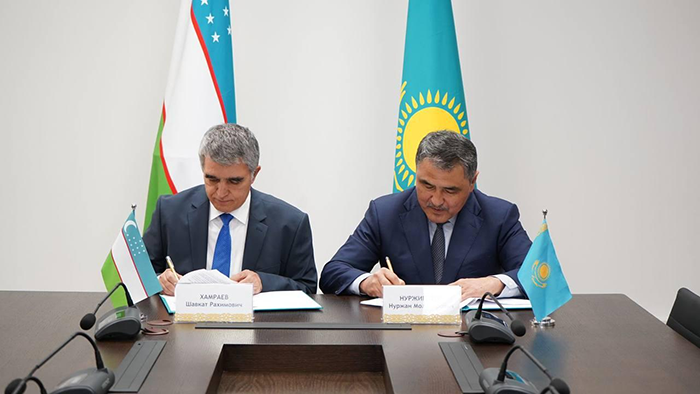
On December 30, a bilateral meeting of water ministers of Kazakhstan and Uzbekistan was held; the Parties approved three options of projected operation regimes of the Shardara reservoir for January–March 2025 and agreed to set up a Joint Working Group that would regulate the discharge into the Aydar-Arnasay lake system. The meeting concluded with signature of a Protocol.
Other bilateral working groups and arrangements
The 21st meeting of the Joint Intergovernmental Commission on bilateral cooperation was held on July 11-12 in Almaty. The Parties discussed the status of projects in the area of trade and economy, investment, water and energy, transport, industry, agriculture, ecology and digitalization to strengthen mutual cooperation.
4.1.5. Kyrgyzstan–Tajikistan
High-level contacts
Meetings took place in Dushanbe between the: (1) President of the Republic of Tajikistan with the Minister of Foreign Affairs of the Kyrgyz Republic to discuss joint use of transboundary water, as well regional and international issues (February 5); (2) Foreign ministers of the RT and the KR, following which a program of cooperation was signed for 2024-2025 (February 4).
Other bilateral arrangements
Energy ministers of Kazakhstan and Kyrgyzstan met to discuss the current situation in the energy sector, development of small hydropower, green energy, thermal power, CASA-1000 project, and electricity supply in border zones. The delegation also visited the ongoing Rogun project and the Dushanbe-2 TPP (February, Tajikistan).
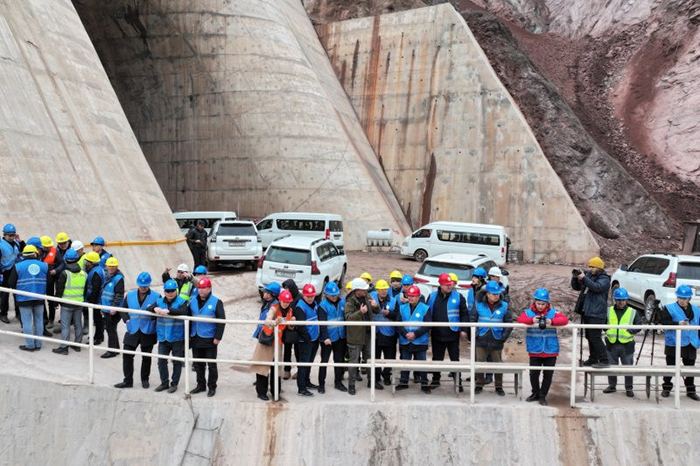
The topographical working groups on delimitation and demarcation of the Kyrgyz-Tajik border met several times in the course of the year. The co-chairs of government delegations met and finalized the delineation of the remaining border sections. With work now started on legal formalization of the border, the next step is the ratification of an agreement by each nation's parliament (December 4, Batken, Kyrgyzstan).
4.1.6. Kyrgyzstan–Turkmenistan
High-level contacts
The President of Kyrgyzstan visited Turkmenistan to take part in the international forum “Interconnection of Times and Civilizations–Basis of Peace and Development”. As part of the visit, a meeting was held with the Chairman of the Halk Maslahaty of Turkmenistan. The Parties discussed cooperation in the area of trade and economy, investment, transport, logistics and energy (October 11, Ashgabat, Turkmenistan). The Heads of State discussed bilateral cooperation during telephone conversations (February 6, December 6).
Other bilateral arrangements
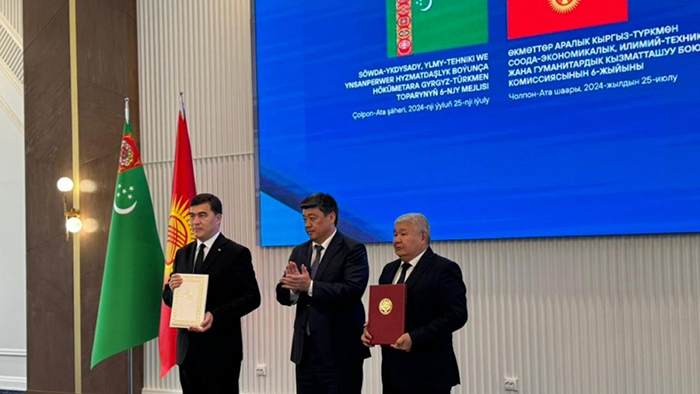
The 6th meeting of the Intergovernmental Turkmen-Kyrgyz Commission on trade-economic, scientific-technical and humanitarian cooperation was held. The Parties discussed a wide range of issues related to the development of cooperation, including in the energy sector. Following the meeting, a final Protocol was signed and the ceremony of exchange of signed documents on electricity imports from Turkmenistan to Kyrgyzstan in 2025 was held (July 24-25, Cholpon-Ata, Kyrgyzstan).
4.1.7. Kyrgyzstan–Uzbekistan
High-level contacts
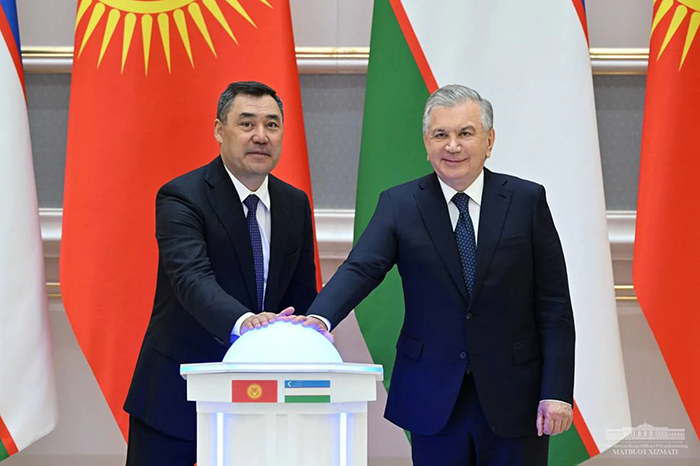
Following the state visit of the Kyrgyz President to the Republic of Uzbekistan, the Presidents: (1) signed a joint statement to deepen and expand the comprehensive strategic partnership; (2) discussed the development of bilateral political, trade and economic, investment, transport and communication, water-energy and interregional cooperation; (3) participated in the launch of two solar projects, with a combined capacity of 400 MW, in the Fergana and Namangan provinces. 16 documents, including the 2024-2026 roadmap for further cooperation on agriculture and food supply were also signed (July 18-19, Tashkent, Khiva, Uzbekistan).
The President of Uzbekistan paid a working visit to the KR to participate in the OTS Summit (November 5-6, Bishkek).
The Heads of State discussed the Uzbek-Kyrgyz cooperation in different areas during telephone conversations (January 26, July 24, December 6).
Joint water commission
The Joint water commission was established by the Cooperation Agreement between the Ministry of Water Management of Uzbekistan and the Water Resources Service at the Ministry of Agriculture of Kyrgyzstan (Bishkek, Kyrgyzstan, November 3, 2022).
Meetings. In 2024, the Commission had 2 meetings, where the Parties: (1) reviewed and signed schedules of water withdrawals from inter-state canals and took note of the operation measures on the Kasan-Say (Orto-Tokoy) reservoir, as well as schedules of water withdrawals from the Andizhan (Kempir-Abad) reservoir for 2023. The Uzbek side informed about the allocation of approx. $305,000 for the operation of the Kasan-Say reservoir. Kyrgyzstan emphasized the need to address the matter of meeting the requirements for the water protection and exclusion zones for the right bank of Kampyravat and Karadarya bypass canals on the Uzbek side (April 22, Andizhan, Uzbekistan); (2) discussed implementation of schedules of water withdrawals from the inter-state canals and operation of the Kasan-Say reservoir, hydraulic facilities in the border areas, “Friendship” pumping station, etc.; exchanged ideas on how to harmonize a regional strategy for the rational use of transboundary rivers in Central Asia (October 4, Osh, Kyrgyzstan).
Bilateral water-related arrangements
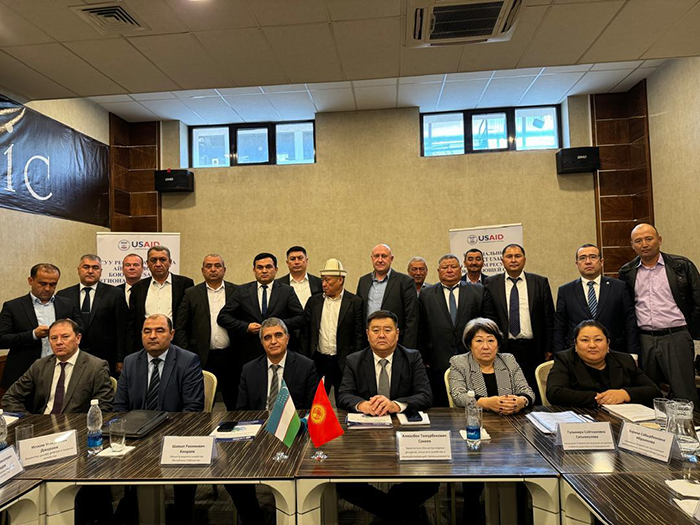
Meetings took place between: (1) the Kyrgyz Minister of Energy and the Uzbek Deputy Minister of Energy to discuss cooperation, including joint implementation of the “Kambarata-1” HPP project, construction of HPP on the Chatkal River, etc. (September 17, Bishkek, Kyrgyzstan); (2) the Uzbek Minister of Water Management and the Director of the Water Resource Service of the Kyrgyz Republic, with agreements reached on efficient water use in the Fergana Valley. The primary objective was to finalize safety and operation rules for the Orto-Tokoy reservoir. The Uzbek side presented a draft regional strategy for transboundary water management. Following the meeting, a Protocol was signed (October 4, Osh, Kyrgyzstan).
Other bilateral arrangements
The following events were held: (1) 2nd meeting of the Kyrgyz-Uzbek Working Group on agricultural cooperation to consider introduction of innovative technologies, creation of joint enterprises, exchange of experience and knowledge, and implementation of joint projects (June 27, Bishkek, Kyrgyzstan); (2) 11th meeting of the Joint Intergovernmental Commission on bilateral cooperation between the KR and RUz (May 3, Tashkent, Uzbekistan).
4.1.8. Tajikistan–Turkmenistan
High-level contacts
The official meeting of the President of Tajikistan with the Chairman of Halk Maslahaty of Turkmenistan took place in Dushanbe. The parties discussed the development of relations in the field of oil and gas, chemistry and metallurgy, industry, agriculture, etc. A range of documents was signed during the visit (April 4-5).
Foreign Ministries of Turkmenistan and Tajikistan held political consultations to discuss how to deepen bilateral relations and expand cooperation in economy, trade, energy, transport, logistics, as well as to intensify interregional contacts and cultural exchanges (November 20, Dushanbe, Tajikistan).
Bilateral working groups
The 13th meeting of the Joint Turkmen-Tajik Intergovernmental Commission on trade, economic, scientific, and technical cooperation was held. It addressed the matters related to trade, economic, and investment collaboration, intensification of joint work on energy, water, and agriculture, and enhancement of partnership in transport and logistics. Following the meeting, a Protocol was signed (October 16, Ashgabat, Turkmenistan).
4.1.9. Tajikistan–Uzbekistan
High-level contacts
During the state visit of the President of Uzbekistan to Tajikistan, the leaders discussed cooperation in trade, economy, industry, energy, and cultural-humanitarian area and outlined further steps to strengthen bilateral relations. Following the negotiations, a Treaty on Allied Relations and a package of ministerial documents were signed (April 18-19, Dushanbe, Tajikistan).
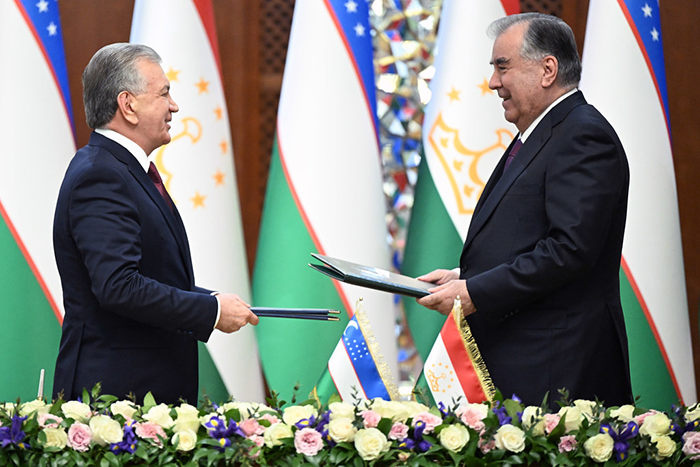
In the course of telephone conversations, the Heads of State discussed the issues related to expanding Uzbek-Tajik relations and cooperation, implementing projects in trade, investment, industry, energy, agriculture, and other areas (July 24, October 5).
Working Group on integrated transboundary water use in Central Asia
By January 1, 2025, 7 meetings of the Working Group (WG) were held. Two meetings were held in 2024: (1) the 6th meeting reviewed the “Reconstruction of the Patar and Sarvat gauging stations on the inter-state Big Fergana Canal and North Ferghana Canal” project and subsequently inaugurated these gauging stations to enable real-time water monitoring and improve transboundary water management (February 23, Gulistan, Tajikistan); (2) the 7th meeting focused on implementation of new transboundary projects in the water sector and on the use of water resources from Lake Sarez. An agreement has been finalized to create a cooperation framework for the construction and operation of the Rogun HPP, based on a balance of the parties' respective interests and positions (August 3, Dushanbe, Tajikistan).
Bilateral water-related meetings
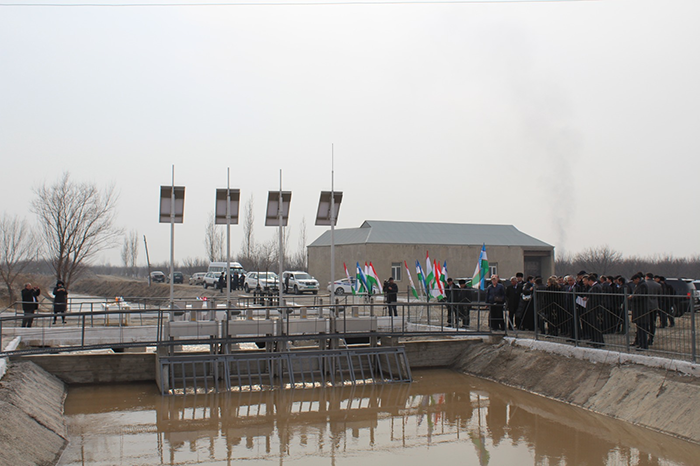
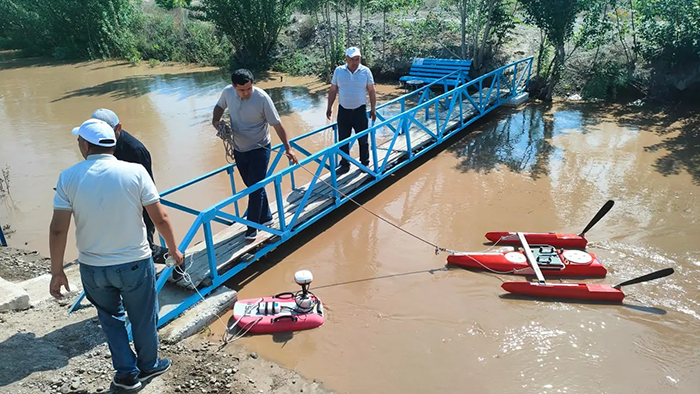
Under the leadership of R.D. Karshiev, Deputy Minister of Water Resources of RUz, and D.Sh. Shoimzoda, First Deputy Minister of Energy and Water Resources of RT, experts took measurements of water delivered to Tajikistan through the Big Fergana Canal. The participants also visited the Patar gauging station in Tajikistan to inspect modern Rubicon Water's control gates (April 24).
Cooperation on the Zarafshan River
In 2018, the parties reached an agreement on Uzbekistan's engagement in the construction and operation of two HPPs on the Zarafshan River. In June 2021, the parties signed an agreement on development of a feasibility study for the HPPs and on the establishment of a joint-stock company. The project consists of two stages: stage 1–construction of the 140 MW Yavan HPP to generate 700-800 million kWh per year (cost: $282 million); stage 2–construction of the 135 MW Fondaryo HPP to generate 600 million kWh a year (cost: $ 270 million). Construction of the Yavan HPP began on June 2, 2022.
OJSC “TAUZ Hydro” was established to support the project. In cooperation with the Tajik Ministry of Water Resources and OJSC “TAUZ Hydro”, Hydropower Sustainability Alliance conducted a training on the application of hydropower sustainability standard in Tajikistan (May 30, Dushanbe, Tajikistan). Environmental, social and management indicators were assessed for the Yavan project (May 31-June 5, Sogd province, Tajikistan), followed by the self-assessment report.
Bilateral working groups
The 11th meeting of the Tajik–Uzbek Intergovernmental Commission on Trade and Economic Cooperation was held in Dushanbe and focused on strengthening bilateral ties in the energy and agriculture sectors (March 12).
4.1.10. Turkmenistan–Uzbekistan
High-level contacts
During the 6th Consultative Meeting of the Heads of State of Central Asia in Astana, the Presidents of Turkmenistan and Uzbekistan met to discuss bolstering their strategic partnership and enhancing cooperation across regional and global agendas (9 August).
In a telephone conversation, the Heads of State discussed the further development of Uzbek–Turkmen relations. They focused on strengthening their strategic partnership in energy, transport, and agriculture, while exploring ways to expand mutually beneficial cooperation across Central Asia (September 22).
Bilateral Commission on water (management) issues
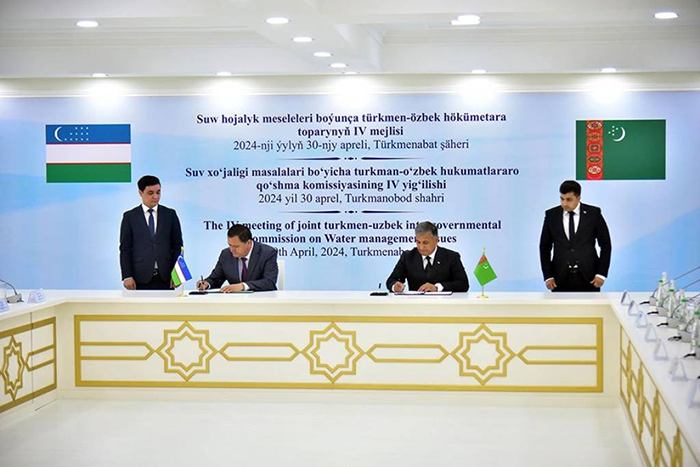
The joint Turkmen-Uzbek Intergovernmental Commission on water issues was established by the respective Agreement between the Government of Uzbekistan and the Government of Turkmenistan . As of January 1, 2025, 4 meetings were held. The 4th meeting reviewed: (1) water analysis of the Amu Darya River for the 2023-2024 hydrological year (April 1, 2023 to March 30, 2024); (2) implementation of decisions of the 3rd meeting (April 22, 2023, Tashkent, Uzbekistan); (3) automation of Kerki, Turkmenabad and Darganata gauging stations; (4) river bank reinforcement and channel straightening. As a result of the meeting, the Commission signed a Protocol (April 30, Turkmenabad, Turkmenistan).
Commission on water allocation in the Amu Darya lower reaches
Water cooperation between Uzbekistan and Turkmenistan is also facilitated through the Commission on Water Allocation in the Amu Darya Lower Reaches, which incorporates the BWO Amu Darya. As of January 1, 2025, the Commission has held 269 meetings, including 17 sessions conducted in 2024.
Bilateral working groups
The 18th meeting of the Joint Turkmen–Uzbek Commission on Trade-Economic, Scientific-Technical, and Cultural Cooperation focused on reviewing the implementation of existing agreements and identifying promising avenues for further multifaceted growth. Participants exchanged views on key sectors, including energy, agriculture, and water management. The session concluded with the signing of a formal Protocol (July 16, Tashkent, Uzbekistan).
4.2. Multilateral Collaboration
4.2.1. Trilateral water-related arrangements (Kazakhstan-Kyrgyzstan-Uzbekistan)
The energy ministers of Kazakhstan, Kyrgyzstan, and Uzbekistan signed a roadmap for the implementation of the 1,860-MW Kambarata-1 HPP project on the Naryn River in Kyrgyzstan (January 6, 2023, Bishkek). Throughout 2024, the heads of the water and energy authorities of Kazakhstan, Kyrgyzstan, and Uzbekistan held a series of meetings to: (1) discuss the regional energy deficit and develop potential joint solutions; (2) coordinate measures to ensure the stable operation of the Central Asian water-energy systems; (3) sign a trilateral agreement between the energy ministries to prepare for the construction and operation of the Kambarata-1 HPP ; (4) review preliminary studies and plans with the Chinese company "CEEC" for the construction of a hydropower plant on the Chatkal River in the Jalal-Abad province of Kyrgyzstan (February 2-3, Tashkent, Uzbekistan; April 11, Shymkent, Kazakhstan; June 10-11, Vienna, Austria; June 29-30, Cholpon-Ata, Kyrgyzstan; October 12, Tashkent, Uzbekistan).
The Cabinet of Ministers of the Kyrgyz Republic and the World Bank hosted a roundtable featuring regional representatives and international experts. During the event, the Swiss engineering firm AFRY presented proposed dam designs for the Kambarata-1 HPP project. Following the presentation of analytical results by international specialists, the next steps will involve selecting the final dam type and completing the feasibility study, which is scheduled for May 2025 (September 4, Bishkek, Kyrgyzstan).
4.2.2. Regional Working Group on water quality (RWG-WQ)
The RWG-WQ was established between 2009 and 2012 by UNECE and CAREC as part of the “Water Quality in Central Asia” project. It comprises representatives from the ministries of water resources and environmental agencies of all five Central Asian nations (see United Nations and its Specialized Agencies, Water Yearbooks for 2019 and 2020).
Since 2019, the RWG-WQ has held six meetings with the support of the Blue Peace Central Asia initiative (funded by SDC). In 2024, representatives from the hydrometeorological services of Kazakhstan, Kyrgyzstan, Tajikistan, and Uzbekistan met with specialists from leading Kazakh laboratories involved in monitoring the water quality of the Caspian Sea to exchange technical expertise. As part of this exchange, participants visited the testing laboratory of Kazakhstan Agency of Applied Ecology (KAAE) and the hydrobiological laboratory of Nomad ECO (August 26, Aktau, Kazakhstan).
4.2.3. Regional Working Group (RWG) on a mutually beneficial mechanism for water and energy cooperation under the Green Central Asia Initiative
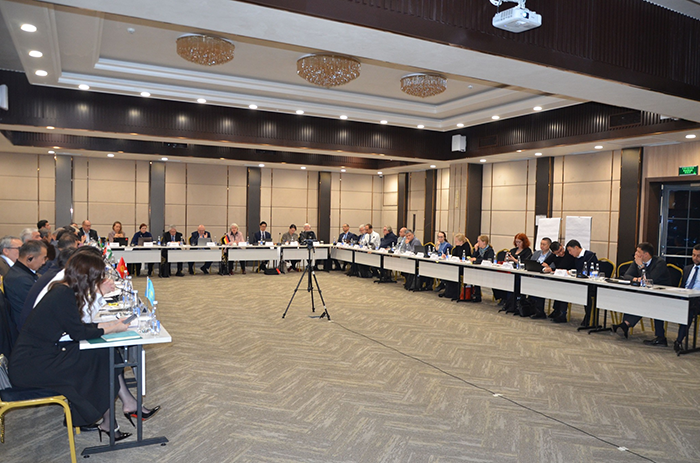
As of January 1, 2025, the RWG has convened three times to discuss mutually beneficial water and energy cooperation under the framework of the Green Central Asia Initiative: (1) May,19 2022 (online); (2) December, 15 2023 (Almaty, Kazakhstan); (3) December,10 2024 (Tashkent, Uzbekistan).
The 3rd meeting was organized under the Green Central Asia Program (Phase II) and the IKI project, "Regional Mechanisms for the Low-Carbon, Climate-Resilient Transformation of the Energy-Water-Land Nexus in Central Asia," implemented in collaboration with the OECD, SIC ICWC, and UNECE. The participants discussed: (1) recent analytical research on water and energy cooperation; (2) opportunities for enhanced synergy between the water and energy sectors to improve natural resource management in Central Asia; (3) strategic approaches to the joint planning of transboundary water-energy projects. The session highlighted the necessity of strengthening regional cooperation and identified specific opportunities for interaction between energy and water organizations. The next meeting of the RWG is scheduled to take place in Astana in May 2025.
4.2.4. Regional Working Group (RWG) on implementation of the Regional Climate Change Adaptation Strategy in Central Asia
The Regional Climate Change Adaptation Strategy for Central Asia (RCCASCA), developed by the Central Asian countries with the support of the Green Central Asia Initiative, was launched at the UNFCCC COP28 (November 30-December 12, 2023, Dubai, UAE)
In 2024, the RWG convened for three key sessions: (1) 1st meeting: discussions focused on the establishment and potential location of a permanent Secretariat and the development of a roadmap for Strategy implementation. Participants also exchanged views on the Nationally Determined Contributions (NDCs) of Central Asian countries ahead of UNFCCC COP29 (May 27, Almaty, Kazakhstan); (2) 2nd meeting: countries shared their respective visions for the Secretariat's location. To maintain momentum, the RWG proposed establishing a Virtual Secretariat for a one-year transitional period. Priority steps were also agreed upon on the roadmap for RCCASCA (July 25, Tashkent, Uzbekistan); (3) 3rd meeting: the newly elected Head of the Secretariat was introduced, and short-term work plans were presented. Participants reviewed the draft RWG Regulations, outlining procedures for interaction between member states and the Secretariat. Additional reports presented during the third session included: Recommendations from the Collective Leadership Institute for effective Strategy implementation; the OSCE Strategy for climate change and security in the Central Asian Highlands; Insights from the National Adaptation Plan (NAP) of the Kyrgyz Republic and its integration with the Strategy’s Implementation Plan; Potential project areas and co-financing sources. The next meeting of the Working Group is scheduled for May 2025 in Ashgabat (November 29, Bishkek, Kyrgyzstan).
Source: Green Central Asia
Development and support
Scientific-Information Center ICWC