
Section 5. Key water developments in the countries of Central Asia
5.1. Kazakhstan
Water Sector
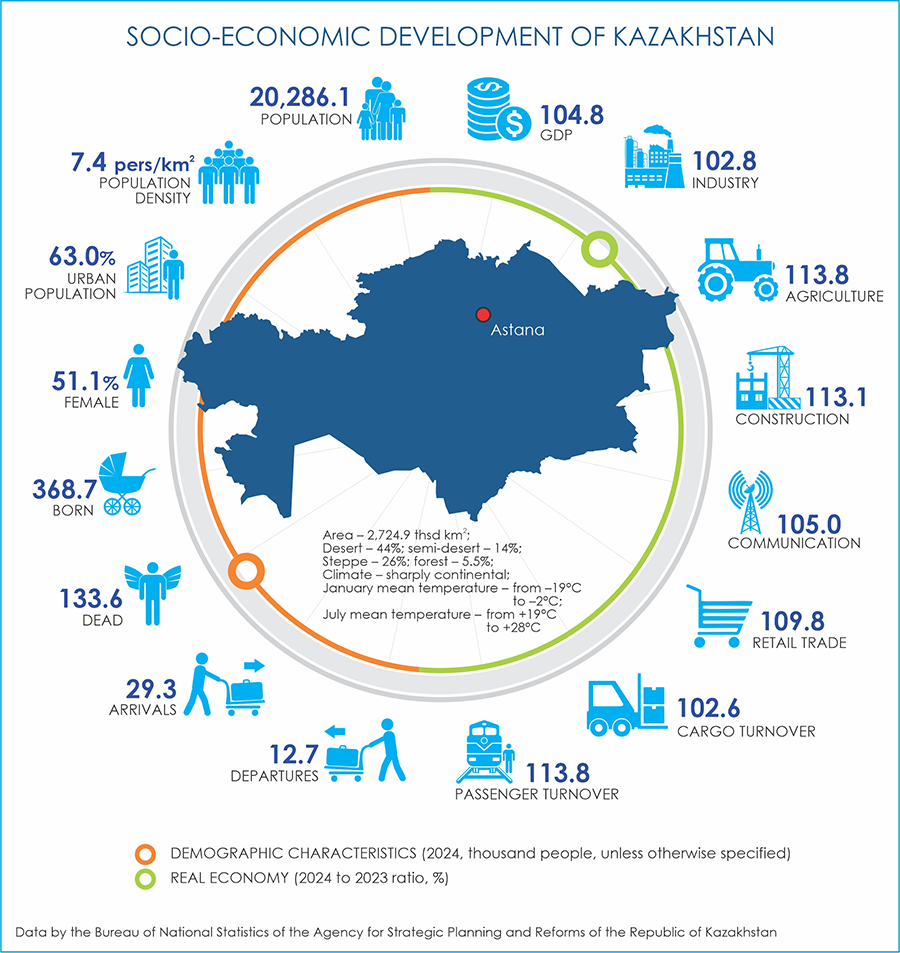
Water resources. The majority of the country's water resources consist of surface waters, averaging 106 km³ annually. Of this total, 59.04 km³ (55.7%) originates from local runoff, while 46.96 km³ (44.3%) is supplied by transboundary rivers flowing from China, Uzbekistan, Russia, and Kyrgyzstan. Additionally, prospective groundwater reserves are estimated at 40 billion m³.
Water infrastructure. Kazakhstan’s water infrastructure comprises 13,366 hydraulic facilities. Ownership is distributed as follows: 6,501 are state-owned, 6,306 are under municipal jurisdiction, 528 are privately held, and 31 are classified as ownerless.
Public administration reforms. The following entities were established under the Ministry of Water Resources and Irrigation (MWRI): (1) NAO “Kazhydrogeology” National Hydrogeological Service (PP-313 of 23.04.2024), mandated to digitize groundwater management; develop comprehensive GIS and spatial databases, and implement digital cartographic systems integrated with Remote Sensing (RS) data; (2) NAO “Information and Analytical Center for Water Resources” (established by PP-541 of 07.10.2024 via the reorganization of "Kazagromeliovodkhoz"), responsible for centralized data processing, flood forecasting, hydrodynamic modeling, and reporting on water scarcity risks; (3) Committee for Regulation, Protection and Use of Water Resources (MWRI Order No.115-NK of 16.07.2024), focused on law enforcement and the protection of national water assets; Water-Saving Technologies Department, tasked with introducing modern approaches and technologies to promote rational water use across the country.
RSE “Kazvodkhoz” was reorganized following its merger with the RSE “Nura Group water pipeline” (PP-58 of 01.02.2024).
Latest developments in legislation. The following documents were approved: (1) the 2024–2030 Water Resource Management Development Concept (PP-66 of 05.02.2024). Key targets include: saving 2.192 million m³ of irrigation water annually through water-saving technologies; increasing the water reuse rate across economic sectors from 17% to 28%; reducing water loss in irrigation canals from 50% to 25%; expanding digital monitoring and management coverage to 40%; increasing the water volume of the Northern Aral Sea from 20 to 27 km³; (2) the 2024–2028 Comprehensive Water Sector Development Plan (PP-694 of 28.08.2024). This plan comprises 160 measures focused on full-scale infrastructure modernization to mitigate forecasted water scarcity.
The following legislative acts were adopted: (1) Law No. 67-VIII ZRK (25.03.2024) on ratification of the Convention on the Law of the Non-Navigational Uses of International Watercourses; (2) Government Decree No. 695 (28.08.2024) on amendments to Decree No. 66 (05.02.2024) regarding the "Concept for the Development of the Water Resource Management System in the Republic of Kazakhstan for 2024–2030.Adopted documents: (1) ZRK-67-VIII of 25.03.2024 to ratify the Convention on the Law of the Non-navigational Uses of International WatercoursesPP-695 of 28.08.2024 to amend the Governmental Decree No. 66 of 05.02.2024 “On approval of the 2024–2030 Water Resource Management Development Concept.”
New appointments. Mr. Galym Polatuly Kurman was appointed as the Director of the Strategic Planning and Analysis Department of the MWRI RK. Mr. Nurymbetov Seyilbek Sergazyuly was appointed as the Chairman of the Committee for Regulation, Protection and Use of Water Resources under the MWRI RK.
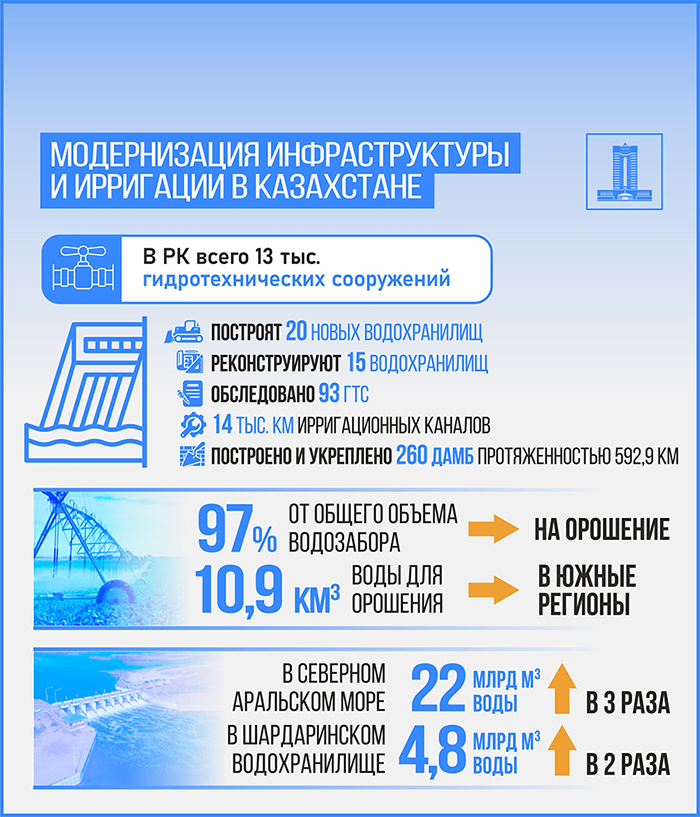
The year 2024 marked a pivotal stage in the reform and development of Kazakhstan's water sector. The Government is committed to accelerating the modernization of water supply and sanitation infrastructure to ensure long-term resilience and efficiency. was an important stage for the water sector reform and development in Kazakhstan. The Government aims to accelerate the modernization of irrigation and drainage infrastructure.
Significant progress has been made in establishing a new regulatory framework: the draft Water Code was prepared, and the first parliamentary hearings were conducted in the Mazhilis (the lower house of Parliament). the 2024–2026 Roadmap for Water Conservation and the 2030 Comprehensive Plan for the Rehabilitation of Water Facilities were developed.
The following entities were established: (1) Coordination Council of Partners for Water Sector Development to promote resource mobilization, strengthen governance, expand regional cooperation and support sustainable practices in water management; (2) specialized organizations for the operation and management of municipal hydraulic structures (Akmola, Aktyube, Atyrau, Western Kazakhstan, Northern Kazakhstan, Kostanay, Kyzylorda, Abay, and Zhetysu provinces).
Since 2024, a major state support program for farmers has been launched, offering subsidies for water-saving technologies and irrigation water. The state’s cost-share for infrastructure and equipment has been increased from 50% to 80%. Additionally, a tiered subsidy for irrigation water has been established, with the amount depending on the water tariff. According to the MWRI RK, in 2024, the area of irrigated land using water-saving methods increased by 100.3 thousand ha (drip irrigation on 43.5 thousand ha; sprinkler irrigation on 56.8 thousand ha), while 57.6 thousand ha underwent laser land leveling, bringing the total to 470.1 thousand ha.
Projects. Ongoing projects: (1) “Second irrigation and drainage improvement project” (WB, 2013-2025): reconstructed 3,064.88 km of canals (88.3%), 1,280.87 km of collectors (80.4%), and 26.593 hydraulic facilities (81.6%); constructed 426 observation wells (92.4%), drilled 222 vertical drainage wells (100%); (2) “Climate sensitive water resource management in Central Asia” (GIZ, 2023-2028).
The USAID Regional Water and Vulnerable Environment Activity held the 4th meeting of the National Intersectoral Committee (September 24, Astana); 7th meeting of the Regional Steering Committee in partnership with MWRI RK (November 21, Almaty); supported the 3rd meeting of the Kazakhstan-Kyrgyzstan Working Group on the joint use of the Chumysh hydroscheme on the Chu River (November 26); held a lecture on “Interdisciplinary research on the Water-Energy-Food-Ecosystem Nexus within the paradigm of sustainable development” jointly with Al-Farabi KazNU (October 7).
Launched projects: (1) “Integrating climate change adaptation into Kazakhstan’s strategic planning” (GCF/UNDP, $2,763,763, 04.2024-02.2028) aimed to establish coordination mechanisms, and standard procedures for climate adaptation at both national and subnational levels in agriculture, forestry, water management, and emergencies; (2) “Climate resilient water resources development” (IsDB, $1.153 million), the first phase of which provides for the construction of 4 new and reconstruction of 4 existing reservoirs, reconstruction and overhaul of 115 canals, including the Astana reservoir recharge project.
Capacity building. The year 2024 marked a milestone for the water sector with the launch of several academic institutions. The Kazakh National University of Water Management and Irrigation was established as a result of splitting the M.Kh. Dulaty Taraz Regional University. Looking ahead to the 2025 academic year, the university plans to introduce 'Hydroecology' as a new degree program.
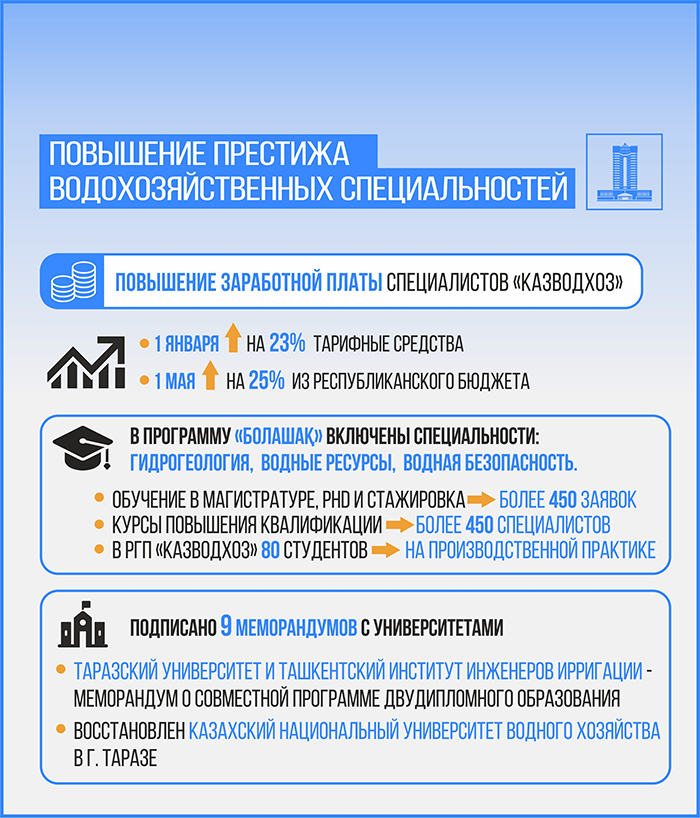
Human capital development in the water sector is being driven by higher wages at Kazvodkhoz and international training through the Bolashak scholarship, resulting in over 450 newly trained water experts.
Strategic partnerships between the MWRI and nine major universities provide students with essential practical training at Kazvodkhoz facilities. To secure the country's future, a new inter-ministerial consortium has also been formed to focus on the exploration and expansion of freshwater resources.
Events. Astana served as the venue of: (1) the 1st meeting of the Coordination Council of Partners for the Development of the Water Sector. The 2024-2030 Water Partnership Initiative was launched; the initiative focuses on developing water information system, modernizing water infrastructure to address climate challenges, implementing advanced irrigation systems, and strengthening transboundary cooperation (September 30); (2) a meeting of the Water Council, where participants discussed the transformation of the national water management system (October 24).
The following events were held also: (1) 1st International Forum “Global Water” (February 22, Astana); (2) session “Transboundary Water Cooperation in the Aral Sea Basin for a Better Future” as part of the 10th World Water Forum (May 22, Bali, Indonesia); (3) side-event “Towards One Water Summit” at the initiative of the Kazakh and French sides (June 11) and ministerial roundtable on “Achieving Greater Efficiency in Water Use in the Central Asian Region” (June 12, Dushanbe, Tajikistan) as part of the 3rd High-Level International Conference on the International Decade for Action “Water for Sustainable Development”, 2018-2028; (4) Forum on Sustainable Use of Water Resources in Central Asia (September 4, Almaty); (5) One Water Summit organized by France and the WB, where Kazakhstan presented five key initiatives to address water challenges; the Kazakh MWRI and WB signed a MoU to improve water management and promote environmental sustainability (December 3, Riyadh, Saudi Arabia).
The Kazakh delegation participated in the: (1) 10th World Water Forum (May 18-24, Bali, Indonesia); (2) 3rd High-Level International Conference on the International Decade for Action “Water for Sustainable Development”, 2018-2028 (June 10-13, Dushanbe, Tajikistan); (3) scientific practical conference “Water in Central Asia: the future in cooperation” (November 8, Tashkent, Uzbekistan).
Regional and international cooperation. In 2024, Kazakhstan assumed the chairmanship of the IFAS. It hosted: (1) a meeting of the IFAS Board (September 18, Astana); (2) the 12th and 13th meetings of the Working Group on Institutional and Legal Improvement of IFAS (September 4, Astana and December 12-13, Almaty); (3) the 86th ICWC meeting (April 12, Shymkent). See International Fund for Saving the Aral Sea
The Kazakhstani delegation participated in the: (1) 87th ICWC meeting (November 6, Ashgabat, Turkmenistan); (2) meetings of water and energy ministers of Kazakhstan, Kyrgyzstan and Uzbekistan on water and energy cooperation (June 29-30, Cholpon Ata, Kyrgyzstan; October 12, Tashkent, Uzbekistan); (3) meetings of the Chu-Talas Water Commission (33rd in April, Bishkek, Kyrgyzstan; 34th on July 27, Cholpon Ata, Kyrgyzstan). See Cooperation between the Countries of Central Asia on Water and Other Matters
Also, Kazakhstani delegations held/participated in the meetings of: (1) the Interdepartmental Working Group on operation of the Irikli and Sarachy reservoirs (March 12, Orenburg, Russia); (2) the Working Group of the Joint Kazakhstan-Russia Commission on the Use and Protection of Transboundary Water Bodies (July 3, Orenburg, November 7, Volgograd, Russia).
The MWRI RK signed MoU with: (1) the Ministry of Foreign Affairs of the Netherlands on cooperation in the construction and use of waterworks facilities, flood forecasting and planning of flood prevention measures, and with the Delft Institute for Water Education (IHE Delft) on water training, science and innovation cooperation; (2) German Water Partnership, uniting more than 300 companies dealing with water, and INNARI Innovation Nature Irrigation GmbH.
Drinking Water Supply
2024 results and plans. According to the MWRI RK, 3,100 km of water supply networks were constructed/reconstructed in 2024. As a result, access to water supply services reached an average of 98.9%. Additionally, water quality assessments were conducted at 241 water pipelines across the country.
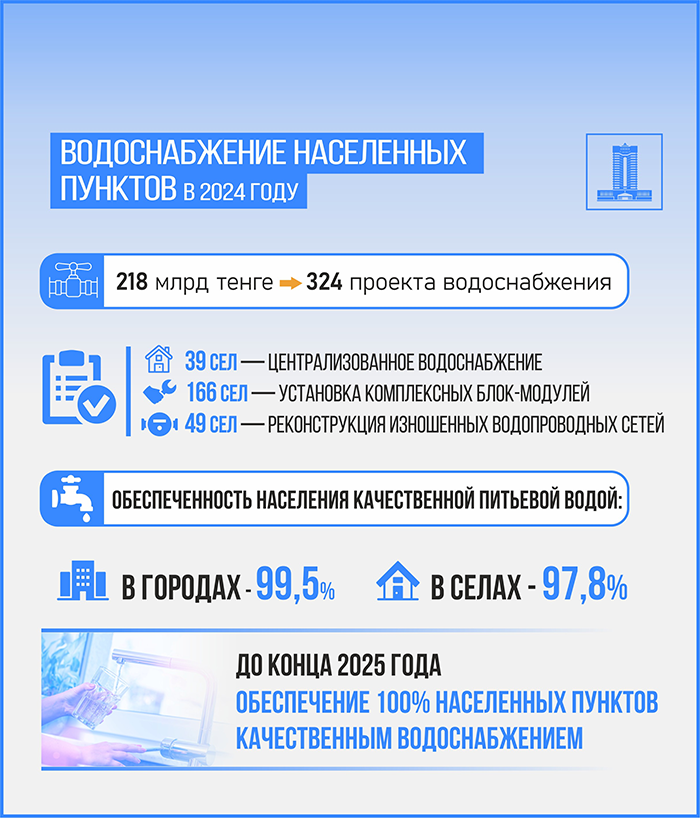
In 2024, 218 billion KZT were allocated for 324 water supply projects, including 122 urban (106 billion KZT) and 202 rural projects (112 billion KZT). Over 10 months, 39 villages got access to centralized water supply, while block modules were installed in 166 villages and aging networks were reconstructed in 49 others. According to the Ministry of Industry and Construction, the water access rate has reached 99.3% in urban areas and 97.5% in rural regions. Notably, eight provinces - Almaty, Aktobe, Atyrau, West Kazakhstan, Kyzylorda, Mangistau, North Kazakhstan, and Turkestan - have achieved 100% coverage. To date, 73 out of 90 cities are fully supplied with drinking water. Projects in the remaining 17 cities, including Astana, Almaty, and Shymkent, are slated for completion by the end of 2025. Of the country’s 6,148 villages, 5,679 now have water access, with 4,420 connected to centralized networks.
As part of the national initiative to modernize energy and utilities (PP-1102 of 25.12.2024), Kazakhstan aims to significantly upgrade its urban infrastructure by 2029. The plan includes modernizing wastewater treatment facilities in 45 cities and overhauling 7,800 km of water and sanitation networks. These measures are designed to reduce the national deterioration rate of water supply systems to 33% and wastewater systems to 41%.
Agriculture
2024 results The total cultivated area reached 23.3 million ha, with spring sowing accounting for 21.1 million ha. Wheat area was recorded at 13.1 million ha, reflecting a decrease of 560,900 ha compared to 2023. Conversely, the area dedicated to oilseeds grew by 135,500 ha to a total of 2.9 million ha, while sugar beet cultivation expanded by 5,500 ha to 25,200 ha. The area for water-intensive crops was reduced, specifically for cotton (down by 10,000 ha) and rice (down by 2,200 ha).
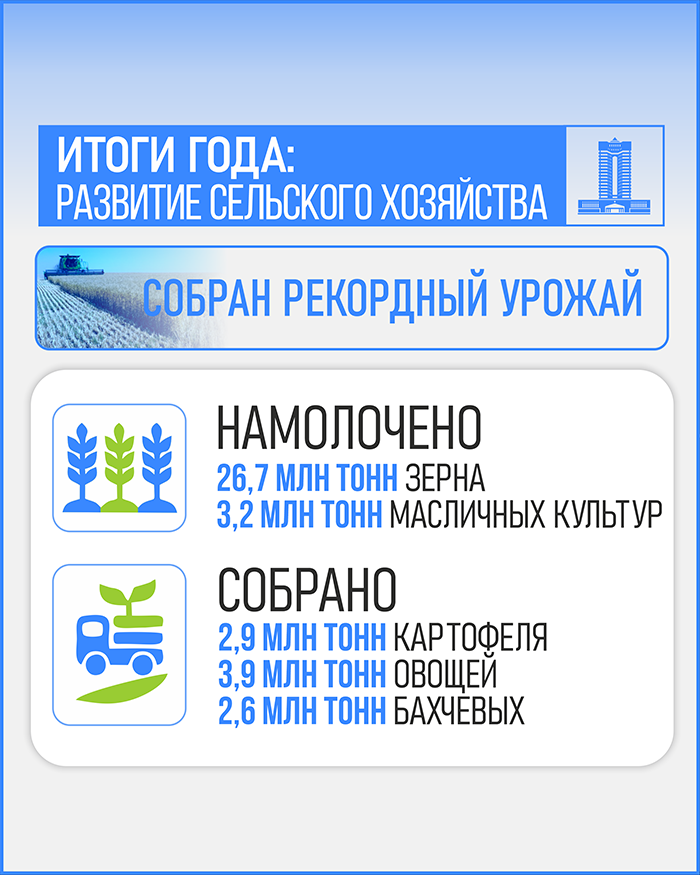
The Physical Volume Index of gross agricultural output grew by 12.7%, reaching a total value of 7.1 trillion KZT. This expansion was primarily driven by an 18.8% surge in crop production (valued at 4.5 trillion KZT) and a 3.3% increase in animal husbandry (valued at 2.6 trillion KZT).
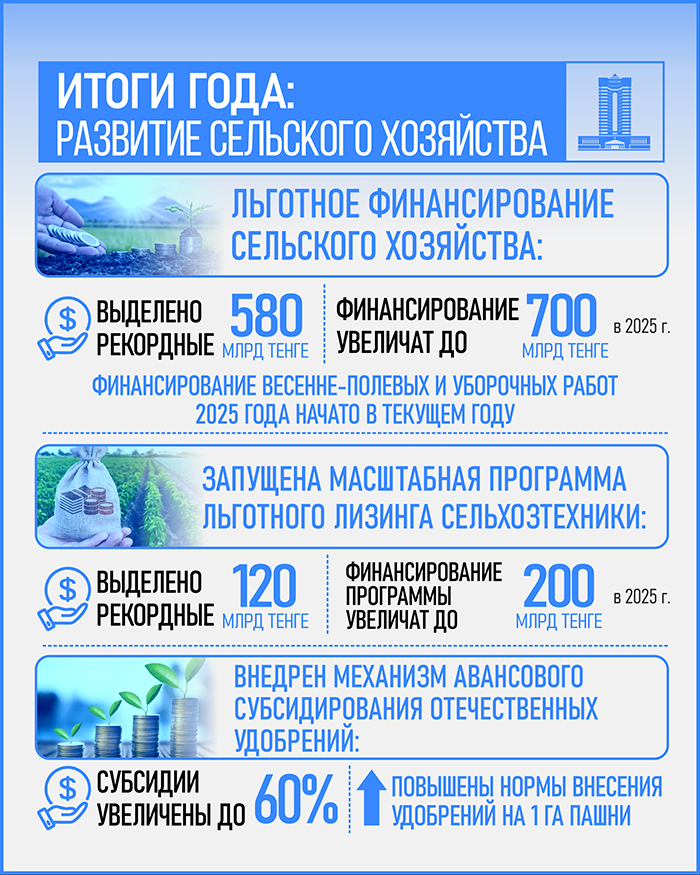
AO KazAgroFinance has relaunched three key leasing programs to support farmers amid rising demand for modern farm equipment, each offering a preferential annual rate of 6% for up to 10 years: “Made in Kazakhstan” for leasing domestically produced or assembled; it requires a minimum 15% down payment; “Local forage” for financing forage harvesting equipment and mobile irrigation systems; it requires a minimum 15% down payment, with a possible payment deferral; “Preferential Leasing 6%” for purchasing domestically produced self-propelled machinery with no down payment required.
The Kazakh MA has developed Rules to compensate damages incurred by individuals and legal entities due to natural disasters in agriculture. It establishes mechanisms for crop and livestock loss compensation through both budgetary and extra-budgetary sources.
Reforms. The Sectoral Council for Professional Qualifications in the field of agricultural processing has been formed under the Kazakh MA as an advisory body.
With the support of the Kazakh MA, two new consortia were established as part of the transformation of the National Agrarian Science and Education Center (NASEC): “Ontustik” Scientific and Production Breeding and Seed Consortium and “Qazaq Tuqym” Scientific and Production Consortium. Their primary purpose is to accelerate development and introduction of new, domestically bred crop varieties and increase the production of elite seeds.
Pursuant to the President’s directive, the Kazakh Research Institute of Horse Breeding has been established on the basis of the existing Aktobe Agricultural Experimental Station.
Latest developments in legislation. Approved documents: (1) 2024-2028 comprehensive plan for crop breeding and seed production in the Republic of Kazakhstan (PPRK-427 of 30.05.2024); (2) 2024-2028 comprehensive plan for agricultural processing (PPRK-512 of 28.06.2024). Amendments have been made to the 2021-2030Concept for agroindustry development in the Republic of Kazakhstan (PPRK-132 of 28.02.2024).
Adopted laws: (1) on amendment of several legislative acts regarding pasture use, including the Land Code and the Forest Code of the Republic of Kazakhstan (65-VIII ZRK of 27.02.2024) and on production and turnover of organic products, which establishes the legal, economic, social, and institutional frameworks for the conservation and rational use of natural resources (89-VIII of 10.06.2024 ZRK); (2) on some issues related to land regulation between Kyzylorda and Ulytau provinces (PPRK-622 of 01.08.2024).
Projects. The “Kazakhstan Resilient Landscapes Restoration” (WB, 2021-2025) project created a permanent nursery for saxaul cultivation, enabling the successful planting of 3,000 ha with saxaul trees along the Kyzylorda-Zhezkazgan highway near Kyzylorda.
Launched projects: (1) “Promoting sustainable food systems and improved ecosystems services in Northern Kazakhstan Landscape” (UNDP/GEF, 2024-2026) to test and pilot sustainable land use and ecosystem management approaches and practices at the landscape level for decision-making at the national and provincial levels; (2) “Land management, Environment and Solid-Waste: inside education and business in Central Asia” (EACEA, 2024-2027) designed to provide Central Asian universities with the tools and resources needed to integrate sustainable land management into their curriculum; (3) “Smarter Agriculture: a Brighter Future” to support farmers, students and researchers across Kazakhstan, Uzbekistan, Tajikistan, and Kyrgyzstan. The project focuses on modernizing traditional agricultural practices through specialized training in Artificial Intelligence (AI) and data analytics.
Events. (1) international conference and exhibition “Fruits and Vegetables of Kazakhstan-2024 KAZAGROFOOD” (February 22-23, Almaty); (2) international exhibitions in Astana – AgriTek/ FarmTek Astana 2024 (March 12-14); Interfood Astana (May 29-31); KazAgro/KazFarm (October 22-24); (3) 3rd meeting of the Ministers of Agriculture of the OTS Member-States on agribusiness development. A final communique was signed and a number of bilateral meetings were held with delegations from Turkey, Uzbekistan, Kyrgyzstan, and Azerbaijan (March 20-21, Taraz); (4) 9th meeting of the SCO Ministers of Agriculture chaired by Kazakhstan, where a cooperation program was approved for breeding and seed production (May 29, online); (5) 18th Central Asian international agriculture exhibition “AGROWORLD QAZAQSTAN 2024” (October 30-November 1, Almaty); (6) 1st Forum of Agriculture Workers (November 15, Astana); (7) 4th international conference and exhibition Day of Seeds TUKYM-2025 (December 4-5, Astana).
The Kazakhstani delegation participated in the: (1) roundtable “Development of Kazakhstan’s agricultural sector: opportunities for investors” as part of the Global Forum for Food and Agriculture and the Green Week exhibition (January 19, Berlin, Germany); (2) international specialized Belagro exhibition 2024 (June 3-9, Minsk, Belarus); (3) International Forum on Landlocked Developing Countries: Food Security and the Sustainable Development Goals (September 4-5, Tashkent, Uzbekistan); (4) 21st China International Agricultural Trade Fair, where a pavilion of agricultural products of Kazakhstan and a round table with 10 largest agricultural and logistics companies of Guangdong Province were organized (November 29-December 1, Guangzhou, China).
Regional and international cooperation. Bilateral meetings of agriculture ministers were held in 2024: (1) Kazakhstan and Uzbekistan - a MoU was signed on cultivation of grain and oilseeds in Kazakhstan (August 7, Astana); (2) Kazakhstan and Kyrgyzstan - dscussions focused on strengthening bilateral cooperation and agricultural trade. Key outcomes included an agreement for Kazakhstan to supply wheat and the establishment of a Joint Working Group to promptly address emerging issues (October 16, Bishkek).
Agreements signed in 2024: (1) an Agreement on strategic investment partnership between Agroholding Dinara Group and Qatar National Enterprises to collaborate on agriculture, construction, infrastructure, healthcare and education (February 14-18, Doha, Qatar); (2) a Memorandum of Intent between the Kazakh MA and Eavision during the 7th meeting of the Kazakh-Chinese Business Council. This document focuses on the deployment of smart drones for plant protection (July 2, Astana).
On October 23–24 in Astana, the Ministry of Agriculture of Kazakhstan, in partnership with the FAO, hosted a national seminar “Convergence Initiative – enhancing synergy between food systems and climate action in Kazakhstan.” The event focused on developing integrated programs and strategies to promote sustainable agriculture, strengthen food systems, and mitigate the impacts of climate change.
Energy
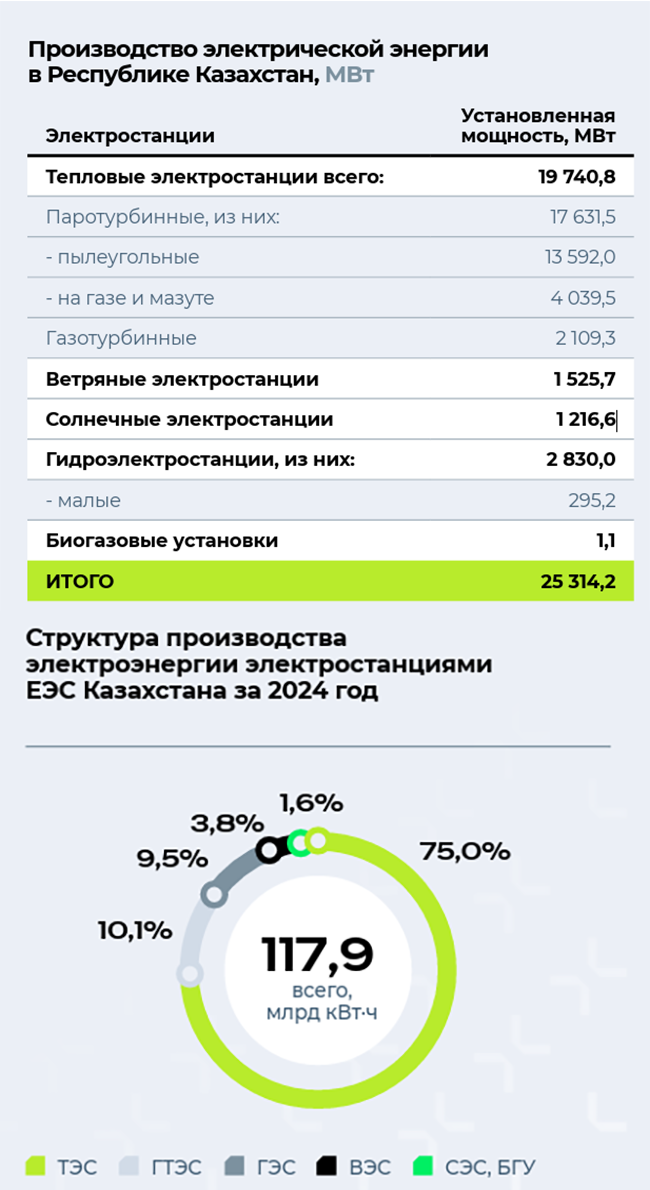
2024 results Kazakhstan’s power generation infrastructure comprises 233 power plants under various forms of ownership. As of January 1, 2025, the country’s total installed capacity stood at 25,314.2 MW. In 2024, electricity generation reached 117,915.4 million kWh, marking an increase of 5,072.7 million kWh (4.5%) compared to 2023.
International rating agencies have affirmed АО KEGOC’s stable financial performance: (1) Fitch Ratings upgraded the company’s long-term credit rating from “BBB-” to “BBB”; (2) Standard & Poor’s (S&P) confirmed its “BB+” rating and upgraded its credit rating from “bb-” to “bb”; (3) Moody’s Ratings (Moody’s) upgraded the rating from “Baa2” to “Baa1”. The outlook for all ratings has been revised to “Stable”, reflecting the confidence of international experts in the reliability and long-term viability of the company.
Latest developments in legislation. Key documents approved included: (1) Kazakhstan’s National Development Plan until 2029 (UPRK-611 of 30.07.2024, “On Approval and Invalidation of Certain Decrees of the President of the Republic of Kazakhstan”) aiming to: (a) modernize infrastructure (reduce the wear and tear of generating capacities and power grids, introduce advanced accounting systems, and deploy smart meters and digital technologies); (b) increase the share of RES (support renewable energy generation within the industry and implement personnel retraining programs); (c) enhance investment attractiveness (reform tariff-setting mechanisms and expand state support for power generation and green hydrogen projects); (d) improve energy efficiency (implement energy ratings for buildings, and support energy efficiency initiatives and audits within the industrial sector); (2) the National Project “Modernization of the Energy and Utility Sectors for 2025–2029” (PPRK-1102 of 25.12.2024) to upgrade existing infrastructure in line with modern standards and the growing demands of the economy and population. The total investment volume is 13.588 trillion KZT, including 6.208 trillion KZT specifically allocated to the energy sector.
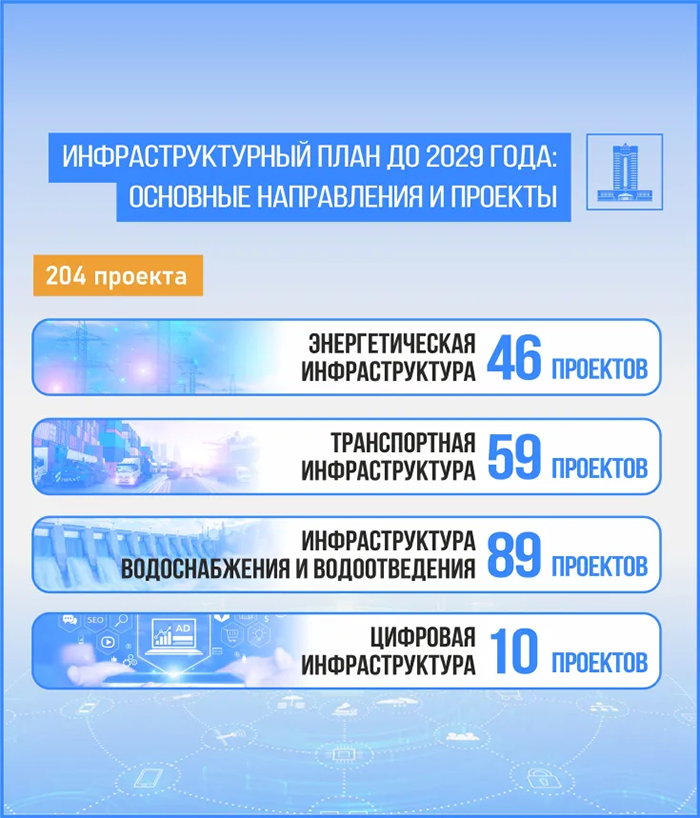
Amendments were made to the Law of the Republic of Kazakhstan No. 588 of 09.07.2004 “On Electric Power Industry”. These amendments are designed to improve regulatory frameworks, advance market-based tools, increase operational efficiency of energy systems, and promote integration of RES within the electricity and heating sectors.
The Kazakhstani ME approved: (1) forecast of electricity balances and capacity in the national electricity power system for 2025-2031 (No.14-n/k of 14.01.2025); (2) Action Plan for Development of the Electric Power Industry until 2035 (No.71 of 20.02.2025).
Events. (1) meeting of energy ministers of Kazakhstan, Kyrgyzstan, Tajikistan, Uzbekistan and Russia on the development of national electricity networks (February 29, Turkistan); (2) 7th meeting of the RK-EU Subcommittee on Energy, Transport, Environment and Climate Change (April 16, Astana); (3) 4th meeting of energy ministers of the SCO Member-States (June 20-21, Astana); (4) meeting of the WG as part of the Strategic Energy Dialogue between the Republic of Kazakhstan and the US (July 22, Astana); (5) 1st meeting of Energy Ministers of Central Asia (August 6, Astana); (6) Energy Week Central Asia and Caspian 2024 (September 5-6, Astana); (7) 42nd meeting of the Coordinating Electric Power Council of Central Asia (October 17, Almaty); (8) 22nd Kazakhstan International Exhibition “Powerexpo Almaty 2024” (October 30-November 1, Almaty); (9) 13th meeting of the Kazakh-Chinese Subcommittee on Energy Cooperation (November 28, Astana).
The Kazakhstani delegation participated in the: (1) 10th Berlin Energy Transition Dialogue (March 18-20, Berlin, Germany); (2) special session of the World Economic Forum (April 28-29, Riyadh, Saudi Arabia); (3) 41st meeting of the Central Asia Electric Power Coordination Council (May 22-23, Tashkent, Uzbekistan); (4) 4th meeting of the Energy Ministers of OTS (September 16, Bishkek, Kyrgyzstan); (5) Industrial and Energy Forum TNF 2024 (September 18, Tyumen, Russia); (6) 45th meeting of the Commission for operational and technological coordination of joint work of the energy systems in CIS and Baltic States (September 19-20, Tashkent, Uzbekistan); (7) roundtable of the Eurasian Economic Forum “Eurasian Economic Integration in the Energy Sector: Challenges and Advantages” (October 3, Yerevan, Armenia); (8) 3rd Ministerial Energy Conference “One Belt, One Road” (October 23-24, Qingdao, China).
Regional and international cooperation. For bilateral cooperation between Kazakhstan and Central Asian countries and trilateral (Kazakhstan-Kyrgyzstan-Uzbekistan) arrangements on water and energy cooperation, see Cooperation between the Countries of Central Asia on Water and Other Matters.
In Astana, the Kazakh ME held meetings on energy cooperation with: (1) the British Ambassador and delegation (February 6); (2) U.S. senator (March 26); (3) Chairman of the Executive Committee of the CIS Electric Power Council (April 17); (4) Personal Representative of the President of the Republic of the Congo (June 11); (5) Minister of Energy and Natural Resources of Turkey (July 4); (6) Deputy Prime Minister of Tajikistan (August 28).
Meetings were held between the heads of: (1) the energy departments of Azerbaijan and Kazakhstan to prepare a draft agreement on strategic partnership in energy (March 5, Baku, Azerbaijan); (2) the water management and energy agencies of Kazakhstan, Kyrgyzstan, Uzbekistan, and Azerbaijan to address water and energy cooperation issues (June 29–30, Cholpon-Ata, Kyrgyzstan).
АО KEGOC signed a Memorandum of Cooperation with: (1) China Energy International Group (July 2); (2) ADB for 58.2 billion KZT for the project to strengthen the electric grid of the Southern zone of the Unified Electric Power System of Kazakhstan (July 22, September 9); (3) Hitachi Energy (September 10); (4) Siemens Energy (September 16).
Kazakhstan’s delegations participated in the meetings of the CIS Electric Power Council: (1) 2nd meeting of the WG on Digital Transformation (April 19, Minsk, Belarus); (2) meeting of the expert group of the CIS Member-States to approve the draft Declaration on Cooperation in ensuring Regional Energy Security (April 23, Minsk); (3) 64th meeting of the EPC (June 6, Saint Petersburg, Russia); (10) 3rd meeting of the WG on Digital Transformation (October 2, Moscow Russia); (13) 9th meeting of the Coordination Council at the EPC (December 11, online).
Hydropower
Kazakhstan is pursuing its “Hydropower Development Plan for 2020-2030”.
The 300 MW Semey HPP project is implemented in collaboration with the Nebras Power (Qatar). This project will serve as a compensating reservoir to the Shulbinsk HPP, enhancing its flexibility and efficiency in utilizing water. A preliminary feasibility study has already been completed, and plans are underway to construct a new reservoir along the Irtysh River.
Design documentation has been prepared for the second phase of the Shulbinsk HPP. The project aims to expand the reservoir and increase the facility's installed capacity from 702 MW to 1,050 MW.
A project for a pumped-storage plant is also developed. It includes construction of two reservoirs to balance the energy system. The principle of operation involves water conservation through a dual-reservoir system: after water is released from the upper reservoir to generate electricity, the equipment at the lower reservoir switches to reverse mode, acting as a pump to reinject water back into the upper reservoir. As part of the project, AO Samruk Energy and China International Water and Electric Corporation signed an agreement to construct the first PSP in the country (March 6, Astana).
Regional and international cooperation. The energy ministers of KR, RK, and RUz signed an interagency cooperation agreement for the Kambarata-1 project on the Naryn River providing for guaranteed purchase of electricity, management of HPP operation and attraction of financial resources (June 11, Vienna, Austria).
The Kazakh ME signed an agreement with ADB on consulting services for the Hydropower Development Program, including design, financing, construction, operation and maintenance of hydropower projects in the Balkhash, Alakol and Irtysh-Zhaysan basins (June 26, London, England).
Thermal power
Under the “Heat and Electric Power Development” budget program, 52.7 billion KZT from the national budget were allocated for 14 projects in 2024: six for heat supply and eight for electricity supply. Launched capacities: (1) two 110/10 kV substations in Uralsk; (2) 500 MW unit No.1 at Ekibastuz-1 TPP (December 23); (3) 65-MW turbine unit was replaced at Atyrau TPP and 43-MW boiler unit was installed at Zhezkazgan TPP. Repairs have been carried out on 285 km of heating networks . The 2025 plan provides for 40.4 billion KZT for 27 projects on reconstruction/construction of heat supply networks.
Latest developments in legislation. Law No. 120-VIII was adopted on 08.07.2025 “On Thermal Power Engineering” to modernize infrastructure and attract investments.
International cooperation. Several agreements were signed: (1) an intergovernmental agreement between the Kazakh ME and Russian ME on cooperation in the construction of TPPs in the cities of Kokshetau, Semey, and Ust-Kamenogorsk (April 17, online); (2) 13 investment agreements with energy-producing organizations representing a total installed capacity of 1.4 GW. Major projects encompass the construction of a 325 MW unit (Unit 7) at the Aksu TPP, upgrade of a boiler unit and replacement of a turbine at the Karaganda-3 TPP, and the capacity expansion of the combined-cycle plant at TOO Karabatan Utility Solution from 310 MW to 620 MW.
Alternative energy
In 2024, RES in Kazakhstan generated 7.58 billion kWh of electricity. According to the Ministry of Energy, as of January 1, 2025, there are 153 RES facilities in operation with a total installed capacity of approximately 3,032 MW, accounting for 6.4% of the country's total electricity generation. In 2024 alone, 8 new renewable energy facilities with a combined capacity of 163.5 MW were commissioned.
Work is continued on implementation of the Green Transition Concept of the Republic of Kazakhstan (UPRK-577 of 30.05.2013) and the 2060 Carbon Neutrality Strategy (UPRK-121 of 02.02.2023). The Presidential Decree No.568 of 10.06.2024 amended UPRK-577 of 30.05.2013 on the Green Transition Concept of the Republic of Kazakhstan.
Latest developments in legislation. Approved laws: (1) ZRK No.57-VIII of 02.02.2024 to ratify a Special Agreement between the Governments of Kazakhstan and France on cooperation in combating global warming. The purpose of the Agreement is to cooperate “... in the fight against global warming by promoting, developing and implementing major projects in the field of RES and sustainable development in the Republic of Kazakhstan”. Specifically, it aims to promote projects in energy security, the transition to environmentally friendly technologies, and emissions reduction; (2) ZRK No.96-VIII of 19.06.2024 to amend several legislative acts of the Republic of Kazakhstan on issues related to support RES and the electric power industry.
The Kazakh ME approved: (1) the 2030 Hydrogen Energy Development Concept (No.342 of 27.09.2024); (2) fixed rates for delivery of RES-generated electricity (No.427 of 28.11.2024).
Events organized: (1) International Innovation Forum iRIF-2024 (May 28, Almaty); (2) 3rd international festival on renewable energy “Qazaq Green Fest-2024” (May 30-31, Borovoe); (3) panel session “Green Energy and Innovations: Investment Opportunities in Kazakhstan” at the COP29 (November 18, Baku, Azerbaijan).
The Kazakhstani delegations participated in the 3rd and 4th meetings of the WG on Low-carbon Development of the CIS Electric Power Council (April 24, December 10, Moscow, Russia).
Regional and international cooperation. A strategic partnership agreement on green energy production and distribution was signed among Azerbaijan, Kazakhstan, and Uzbekistan (November 13, Baku, Azerbaijan). To implement this agreement, three system operators (Kazakh AO KEGOC, Azerbaijani OAO Azerenergy, and Uzbek AO National Electric Networks of Uzbekistan) signed a founding agreement (December 27, online).
AO KEGOC, ТОО Arm Wind, and Italian Eni met to discuss a 247-MW hybrid power plant project (including solar, wind, and gas piston components) to be constructed in the city of Zhanaozen, Mangystau province (June 13, Astana).
The Kazakh ME and (1) the Ministry of Economy, Trade and Industry of Japan signed a MoU on low-carbon development and cooperation as part of the energy transition (January 9, online); (2) GIZ signed an agreement on implementation of a RES development project in Central Asia (September 17, Astana).
In the margins of the COP29: (1) ME RK and ADB signed a MoU; (2) AO Samruk Energy and China Energy Overseas Investment signed an agreement for joint development of a renewable energy project to construct a 500 MW WPP in Karaganda province and a 300 MW SPP in Turkistan province (November 11-22, Baku, Azerbaijan).
Small HPP on the Baskan River. HPP-2 and HPP-3 were commissioned with a planned output of about 76.5 million kWh per year in Sarkan district, Almaty province.
Solar power. LUKOIL started construction of a 4.95 MW SPP in Almaty province. It will be located next to the LUKOIL lubricant plant and provide it with environmentally friendly energy.
АО Samruk Energy: (1) is carrying out design and survey work to construct a 1-GW SPP jointly with Tumar Commerce in Turkistan, Kyzylorda and Zhambyl provinces; (2) in partnership with China Energy Overseas Investment Co. Ltd., is developing an investment project to construct a 300-MW SPP with an energy storage system of 90 MW/360 MWh in Turkistan province.
An auction was held for the construction of a 20-MW SPP in Kyzylorda province (September 26). TOO Vigor Holding was declared the winner.
Wind power. A 100-MW Shokparsky WPP is now complete in Sarysus district, Zhambyl province. Construction is underway on a 100-MW WPP in Ulytau province (“Mezgilder Qushteri” project). The plant will include 16 wind turbines; the Chinese Universal International Holdings Ltd. acts a founder.
АО Samruk Energy is carrying out design and survey work (wind and geotechnical research and development of an electric power supply scheme, negotiations with banks and selection of contractors) jointly with: (1) PetroKazakhstan on a 100-MW WPP with an energy storage system in Ulytau district; (2) China Power International Holding Ltd on a 1-GW WPP with an energy storage system in Pavlodar province.
An investment agreement was signed with Masdar (UAE) on the construction of a 1-GW WPP with an energy storage system in Zhambyl province. It will provide electricity to about 300,000 households and reduce CO₂ emissions by about 2 million tons per year (November, Baku, Azerbaijan). Construction is scheduled to begin in early 2026.
Sovereign Wealth Fund “Samruk-Kazyna” JSC and Chinese SANY Renewable Energy officially launched the construction of a $114 million plant to manufacture wind turbine components in Zhambyl province.
Nuclear power. A national referendum on the construction of a nuclear power plant was held in the country (October 6). According to the Central Election Committee, 71.12% of citizens voted in support of the construction. The Governmental Decree No.1137 of 30.12.2024 approved Zhambyl district, Almaty province to host the plant.
Capacity building. Several workshops were organized in Astana: Stakeholder engagement on the nuclear sector in the Republic of Kazakhstan in (April 10-11); Stakeholder engagement for a nuclear power program (May 29-31); Introduction to management systems for a nuclear power program (December 10-12).
Events. (1) International conference “World Nuclear Spotlight Kazakhstan” (April 15, Almaty); (2) 1st Forum of stakeholders of the NPP project in Kazakhstan (May 28, Astana); (3) KazAtomExpo (August 27, Astana); (4) an exhibition dedicated to the Nuclear Employee Day (September 27, Astana).
The Kazakhstani delegation participated in: (1) the International Conference on Nuclear Security: Shaping the Future/ICONS-2024 (May 21, Vienna, Austria); (2) СОР29, where Kazakhstan joined the Declaration to Triple Nuclear Energy by 2050 (November 13, Baku, Azerbaijan); (3) IAEA Ministerial Conference on Nuclear Science, Technology and Applications (November 26-28, Vienna).
Regional and international cooperation. MoU were signed between: (1) Kazakh ME and Jordan Nuclear Energy Commission on peaceful use of nuclear energy (December 11, Amman, Jordan); (2) AO NAC Kazatomprom and Jordan Uranium Mining Company (December 11, Amman, Jordan).
Environment and Climate Change
Kazakhstan (1) was elected a member of the Clean Technology Fund (CTF) Committee under the Climate Investment Fund (CIF) for 2025–2027; (2) joined the Global Carbon Pricing Challenge (GCPC ) to strengthen the national emissions trading system and achieve decarbonization goals.
The Altyn Dala Initiative , aimed at conserving ecosystems of the Kazakh steppe, won The Earthshot Prize 2024 in the “Protect and Restore Nature” category. Kazhydromet’s meteorological station “Syr Darya River – Kazaly city” is included in the world list of centennial stations (July).
The RSE “Kaspiy Itbalygy State Nature Reserve” was established under the Committee of Fisheries of the Ministry of Agriculture of the Republic of Kazakhstan (PP-884 of 24.10.2024).
New appointments. Mr. Yerlan Nysanbayev was appointed as the Minister of Ecology and Natural Resources of the Republic of Kazakhstan (UP-465 of 06.02.2024).
Latest developments in legislation. The following documents were approved: (1) “Taza Kazakhstan” (Clean Kazakhstan) Concept for 2024-2029 and its Implementation Plan (PPRK-910 of 31.10.2024); (2) Action Plan to the 2021-2030 Green Transition Concept of the Republic of Kazakhstan (PPRK-1019 of 29.11.2024).
An agreement between the Governments of Kazakhstan and Uzbekistan (ZRK-134-VIII of 07.11.2024) on environmental cooperation has been ratified. A joint Kazakh-Uzbek commission for cooperation in environmental protection will be established to prevent air and water pollution, manage waste, conserve biodiversity, protect ecosystems from degradation, prevent sandstorms, and improve ecological situation in the Aral Sea basin. The agreement also provides for joint research, environmental monitoring, data exchange, and coordination of emergency actions.
The following governmental decrees were approved: (1) No.36 of 25.01.2024 on establishment of the non-profit joint-stock company Kazakh Scientific Research Institute of the Caspian Sea to ensure environmental monitoring and research in the Kazakh sector of the Caspian Sea focusing on the conservation and reproduction of natural resources and strengthening cooperation between the research institutes of Caspian states; (2) No.192 of 16.03.2024 “On some issues of transfer of reserve lands to the category of strictly protected natural territories”; (2) No.232 of 27.03.2024 to amend the Government Decree No.996 of 31.12.2021 “On approval of the Classification (Taxonomy) of green projects to be financed through green bonds and loans”; (3) No.241 of 29.03.2024 “On appointment of the National Coordinator from the Republic of Kazakhstan for the Global Environment Facility”; (4) No.527 of 02.07.2024 “On signing the agreement between the Governments of the SCO Member-States on Environmental Cooperation”; (5) No.1113 of 25.12.2024 “On the withdrawal of rare and endangered fish species for scientific purposes”.
Law No.118-VIII was adopted to amend some legislative acts of the Republic of Kazakhstan on protected areas and electric energy (08.07.2024).
Programs and projects. The national program “Green Kazakhstan” (2021–2025) continued its implementation to improve the country's environmental situation. Key environmental campaigns carried out nationwide included: (1) “Clean Kazakhstan” from April 8 to May 11: cleaning of yards and territories; landscaping of monument territories; tree planting; help to veterans; cleaning of water bodies; 1.1 million tons of waste were collected and about 1.6 million trees were planted; (2) World Clean Up Day (September 21 and 28), etc.
Ongoing projects: (1) Aral Sea Environment Restoration Program/ERAS-I (USAID/IFAS EC). Innovative black saxaul cultivation methods were tested on a 500-hectare oasis (Kyzylorda province); (2) “Biodiversity in Kazakhstan” (UNDP/GEF) covering 14 protected areas, 8 forestry enterprises, 12 rural districts, 4 villages and 7 districts in Abay, Almaty, Eastern Kazakhstan, Zhambyl, Zhetysu and Turkestan provinces. More than 2,300 employees in the environmental sector were trained in management plans and new technologies (SMART patrolling systems, camera traps, thermal imaging cameras and drones); 28 wind-solar stations have been installed in 13 remote cordons of the protected areas; the protected areas were expanded by 558,714 ha; feasibility studies were completed to create 6 new protected areas on a total area of more than 1.6 million ha and expand the area of 3 existing ones by more than 214 thousand ha.
Launched projects: (1) “Integrating climate change adaptation into Kazakhstan’s strategic planning” (GCF/UNDP, 2024-2027) to establish clear mandates, coordination mechanisms, and standard procedures for climate adaptation at both national and subnational levels in agriculture, forestry, water management, and emergencies; (2) “Preparing First Biennial Transparency Report (1BTR) and a combined Ninth National Communication and Second Biennial Transparency Report (9NC/2BTR)” (UNDP/GEF, 2024-2028) to be submitted to the UNFCCC in 2024 and 2026, respectively.
Launched initiatives: (1) @TazaQazBot chatbot to engage citizens in solving environmental challenges; (2) large-scale TV project “Taza Kala” by Jibek Joly TV channel (June 7) for rating of the cleanest cities in Kazakhstan.
Events. The following events were held: (1) Central Asia Climate Change Conference/CACCC-2024 (May 27-29, Almaty); (2) 2nd interregional forum of environmental initiatives (June 4, Temirtau); (3) CICA ministerial environmental conference (August 28, Astana); (4) roundtable on “Ecological culture and international obligations: challenges and ways of development in Kazakhstan” (September 20, Astana); (5) panel session “Contribution of volunteers to solving environmental problems” as part of the Conference on Interaction and Confidence-building Measures in Asia (CICA) (October 3, Astana); (6) plenary session on Innovative Automated Systems for Monitoring Water and Air Pollution – Finnish experience (November 12, Astana); (7) GCIP Kazakhstan 2024 National Forum (December 12, Astana).
The Kazakhstani delegations participated in: (1) the 14th meeting of the Conference of the Parties to the Convention on the Conservation of Migratory Species of Wild Animals, where a MoU on animal world conservation on the Ustyurt Plateau was signed with Uzbekistan and a parallel event was held on “Recognizing and developing the success of cross-border cooperation in restoration of the saiga antelope in Central Asia” (February 11-17, Samarkand, Uzbekistan); (2) 6th session of the UN Environment Assembly (February 26 – March 1, Nairobi, Kenya); (3) meeting of environmental ministers of Central Asia and the OSCE Secretary General (March 4, Ashgabat, Turkmenistan); (4) climate dialogue on expanded measures for combatting climate change and financing climate actions (May 20-21, Istanbul, Turkey); (5)1st high–level regional dialogue “Creating a clean air future in Central Asia” (June 19, Tashkent, Uzbekistan); (6) high-level panel session at the Pre-COP29 regional conference “Adaptation Planning and Financing in Central Asia: the Road to COP29” (September 25, Bishkek, Kyrgyzstan); (7) Prometeo Meteorological Conference (October 24-25, Paris, France); (8) 27th session of the North Eurasian Climate Forum/CEACOF-27 (October 31, Saint Petersburg, Russia); (9) 16th session of the Conference of the Parties to the United Nations Convention to Combat Desertification/COP16 (December 2-13, Riyadh, Saudi Arabia).
On the sidelines of the COP29 (November 11-22, Baku, Azerbaijan): (1) MoUs were signed with Freedom Holding Corp., Ministry of Ecology and Natural Resources of Azerbaijan, ORMEX and Chapter Zero Kazakhstan; (2) EcoForum of Kazakhstan participated in the Caspian House dialogue platform, where NGOs of Kazakhstan, Azerbaijan, Russia, and Turkmenistan adopted a Memorandum on creation of the Caspian House platform (November 19); (3) Kazakhstan held sessions jointly with (a) the Potsdam Institute for Climate Impact Research “Scientific Communication in the face of climate challenge in Kazakhstan”; (b) Green Academy REC “Potential and priorities for building a low-carbon infrastructure in Central Asia” ; (c) EBRD and OECD “Climate change mobilization: countries, international financial institutions, and private sector join forces to implement the Paris Agreement”; (d) event “Towards a global platform for green climate technologies through the Green Bridge Partnership Program”; (3) the Kazakhstan’s delegation participated in the (a) 1st meeting of the ministers of the OTS Member-States responsible for environmental protection and ecology (November 14); (b) working meeting of representatives of the ECO Member-States on environmental issues (November 15).
Regional and international cooperation. The ICSD’s Consultative Council meeting and 33rd meeting summed up the results of Kazakhstan's chairmanship within the ICSD (2022-2024); a ceremony was also held to transfer the powers of the presidency from Kazakhstan to Tajikistan (March 27-28, Astana, Kazakhstan). See Interstate Commission on Sustainable Development
Kazakhstan chaired: (1) the 5th meeting of the Heads of SCO Member-States’ ministries and agencies in charge of environmental protection, which approved Joint approaches to environmental challenges, the Implementation Plan for the 2024-2026 SCO Green Belt Program, and 2025-2027 Implementation Plan for the Environmental Cooperation Concept (May 22, Astana); (2) the Council of Scientists of Kazakhstan and Uzbekistan on afforestation of the drained bottom of the Aral Sea, where the 2024-2025 Work Plan was discussed (May 30, online); (3) the 4th meeting of the Kazakh-Russian Commission on Environmental Protection regarding implementation of the bilateral cooperation agreement (September 12, online).
The Kazakhstani delegation participated in: (1) the 11th meeting of the Working Group on Monitoring, Analysis and Assessment of Transboundary River Water Quality under the Kazakhstan-China Commission and the 7th joint expert seminar of the Working Group (June 25-26, online); (2) the expert meeting of the Kazakhstan-Russia Commission on Ecosystem Conservation in the Transboundary Zhayik/Ural River Basin (July 25, Uralsk; December 12, online); (3) the 35th session of the Interstate Council for Hydrometeorology of the CIS, where National Hydrometeorological Services (NHS) of Kazakhstan and Belarus and Kazakhstan and Tajikistan signed the 2025-2028 Cooperation Programs; the Cooperation Program between Kazakhstan and Azerbaijan was updated (September 11, Dushanbe, Tajikistan).
SDGs in Kazakhstan
The Parliamentary Commission continued to monitor the implementation of SDGs in Kazakhstan. Key discussions centered on affordable energy, gender equality, and legislative alignment (February 23, October 14, December 13). In parallel, the SDG Coordinating Council convened (January 5, October 28, Astana; November 14, online) to consider updating national indicators and their new list, as well as localization of the SDGs.
Kazakhstan was ranked 70th out of 167 countries in the annual sustainable development rating.
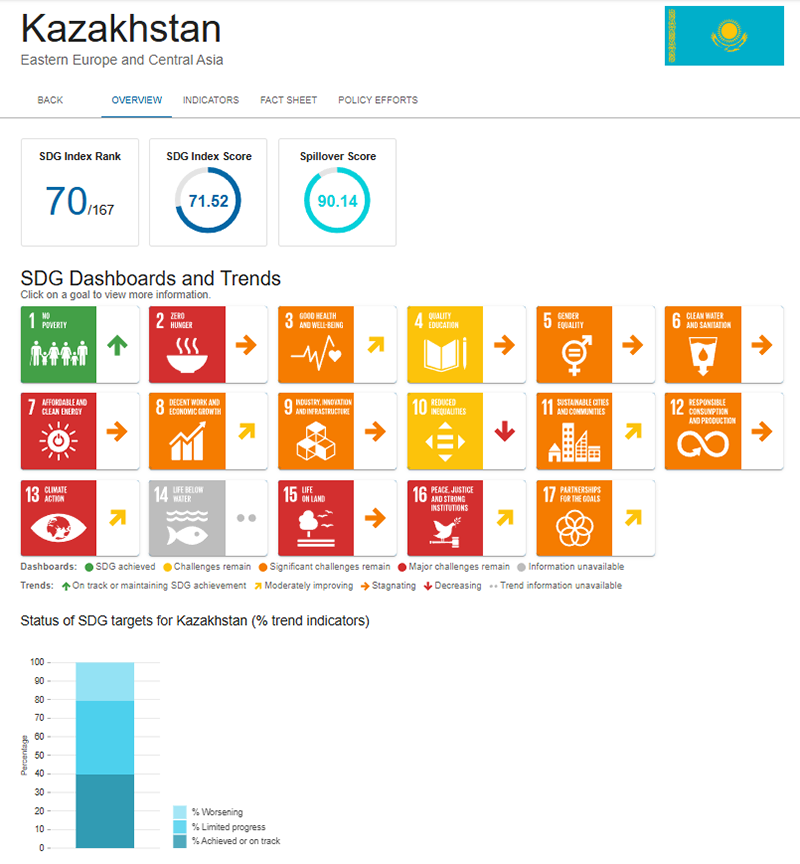
The "SDG Impact Report 2024" was officially presented in Almaty on August 16 by the SDG Accelerator.
Capacity building. The roundtable "Promoting Sustainable Development Goals through Education and Research" was held on February 28 in Kyzylorda. The event focused on integrating the principles of sustainable development into academic curricula and research initiatives.
A seminar “Regional Cooperation: SDG Implementation and Water Diplomacy” was held for diplomats from Kyrgyzstan, Tajikistan, Turkmenistan and Uzbekistan as part of the Dostyk: Diplomacy program . The program was focused on the transition toward sustainable development, the role of public authorities in managing official development assistance, the interconnected nature of SDG implementation in CA countries, and adressing water-related challenges (June 10-12, Astana).
Events. The following events were organized: (1) 2nd SDSN Kazakhstan Conference “Localization of Sustainable Development Goals in Various Sectors of Central Asia” to discuss partnerships, SDG monitoring, sustainability of higher education, sustainable development in CA (May 13, Astana); (2) a seminar on the role of project management in achieving the SDGs (November 8-9, Astana).
The Kazakhstani delegation participated in: (1) the CIS Statistical Officers' Meeting on Statistics for the SDGs (April 17-18, Moscow, Russia); (2) Summit of the Future: Multilateral Solutions for a Better Tomorrow (September 18, New York, USA).
Emergencies and Disasters
Development has launched on Tasqyn, a Flood Forecasting and Modeling Information System designed to simulate potential emergencies and provide the forecasts necessary for strategic decision-making.
In 2024, the country recorded a total of 12,516 natural and man-made emergencies, representing a 2.8% decrease compared to the previous year. The total losses from these disasters reached 459,698 million KZT, compared to 172,911 million KZT in 2023.
Latest developments in legislation. The following legislative documents were adopted: (1) Laws (a) No.76-VIII ZRK of 23.04.2024 on ratification of the agreement between Kazakhstan and Kyrgyzstan on cooperation in aviation search and rescue; (b) No.80-VIII ZRK of 6.05.2024 on ratification of the agreement on cooperation in prevention of and response to public health emergencies of a sanitary and epidemiological nature among the CIS Member-States; (2) Government Decrees (а) No.479 of 18.06.2024 on amendments to the Government Decree No.486 of 16.08.2027 “On approval of global and regional emergency response plans”; (b) No.526 of 02.07.2024 “Comprehensive development plan for seismological industry spanning in the Republic of Kazakhstan for 2024 - 2028”; (c) No.651 of 14.08.2024 “On approval of the 2024-2030 Concept for industrial safety in the Republic of Kazakhstan”; (d) No.841 of 10.10.2024 “On signing the Agreement on establishment of the Civil Protection Mechanism for the Organization of Turkic States”.
Public administration reforms. The Ministry of Emergency Situations of the Republic of Kazakhstan (MES RK) has established the Emergency Prevention Committee, pursuant to Government Decree No. 519 of June 28, 2024.
New appointments. Mr. Ch. Arinov was appointed as the Minister for Emergency Situations (UP-461 of 06.02.2024).
Strategies, programs, and projects. The following events were held as part of the 2022-2030 Strategy for Development of Cooperation between Central Asian Countries in DRR : (1) meeting of the Working Group (experts) of the Regional Forum - Meeting of Heads of Emergency Agencies of Central Asia (July 4, Almaty); (2) Regional Forum - Meeting of Heads of Emergency Agencies of Central Asia , where a number of documents was signed (August 15, Cholpon-Ata, Kyrgyzstan).
The Regional “Climate Risk Management in Central Asia”/CRM CA (2022-2026) Program saw a number of events in 2024: (1) the regional seminar on climate risk assessment and capacity development (February 20, Tashkent); (2) trainings in remote monitoring of glacial systems by ArcGIS (March 11-15, Almaty); (3) ToT on effective climate risk management and implementation of adaptation strategies (June-September, Tashkent); (4) climate risk assessment workshop (December 10, Tashkent).
Under the project “Strengthening Capacity for the Safe Management of Transboundary Water Resources in Central Asia through Innovative ICT” (GIZ, 2023–2025), an expert group conducted a field survey of a mudflow-prone area near the village of Ugam. The team - which included representatives from Kazselezashchita (the national mudflow protection agency), the Department of Emergency Situations (DES) of the Kazygurt District, and the national nature park - successfully generated a 3D model of the Ugam River basin covering a 5 km stretch (September 30-October 8, Turkistan province).
The project “Strengthening Kazakhstan’s capacity to adapt to climate change and reduce disaster risks by developing an interactive map and digital safety passports” (OSCE, 2023–2024) has reached completion. The final meeting, held on December 6 in Astana, showcased the “Digital Safety Passport” and “Interactive Map” subsystems, both developed at the request of the Ministry of Emergency Situations (MES RK). A key highlight was the enhancement of the Interactive Maps subsystem, which now features a comprehensive Hazard Atlas. This atlas includes over 140 maps detailing natural, technological, hydrological, and other multifaceted threats across the country's regions.
Capacity building. Trainings were organized on: (1) monitoring the implementation of the Sendai Framework for DRR 2015-2030 for the representatives of emergency agencies in the Central Asian countries (August 14, Bosteri, Issyk-Kul province); (2) use of unmanned aviation for emergency prevention and response (September 11-15, Almaty province); (3) use of unmanned aviation for disaster prevention and response (September 15-19, Almaty and Almaty province).
Events. A number of international scientific practical conferences were organized, including on: “Historical aspects, urgent challenges and prospects for development of the state civil protection system in the Republic of Kazakhstan” (February 28, Kokshetau); “Wildfires – a global problem of the 21st century” (February 28, Semey); “Current issues of fire safety, emergency prevention and elimination” (October 11, Kokshetau); “Current issues of design, development and application of information systems in emergency protection” (November 27, online).
The Kazakhstani delegation participated in: (1) the study tour on disaster management in Japan (November 28, Tokio); (2) roundtable on emergency prevention, disaster monitoring, and crisis response (August 12, Rubtsovsk, Russia); (3) regional forum – meeting of the Heads of Emergency Authorities of Central Asian countries (August 15, Cholpon-Ata, Kyrgyzstan); (4) 9th ECO Ministerial Meeting on Disaster Risk Reduction, as well as the meeting of the high-level WG on Disaster Risk Reduction (September 16-17, Dushanbe, Tajikistan); (5) 22nd meeting of the CIS Inter-State Council on Industrial Safety (December 17-18, Dushanbe); (6) 11th OTS Summit (November 6, Bishkek, Kyrgyzstan); (7) 13th meeting of the Conference of the Parties to the UNECE Industrial Accidents Convention (December 6, Geneva, Switzerland).
Regional and international cooperation. The Center for Emergency Situations and Disaster Risk Reduction held the 15th meeting of its Council in Almaty (December 24).
The MES RK held bilateral meetings in Astana: a technical exchange with German experts on flood management (June 6) and a consultative meeting with the Slovak Republic on integrating advanced technologies into emergency response frameworks (November 7).
The following events took place: (1) 6th joint meeting of the Kazakh and Kyrgyz Emergency Ministries (August 15, Cholpon-Ata, Kyrgyzstan); (2) 11th meeting of the Joint Board of the Ministry of Emergency Situations of the Republic of Kazakhstan, the Ministry of Emergency Situations of the Republic of Belarus and the Ministry of Civil Defense, Emergencies and Elimination of Natural Disaster Consequences of the Russian Federation (September 4, Almaty); (3) 15th meeting of the Coordinating Council for Emergencies of the CSTO Member-States (September 5, Almaty province).
Foreign Policy and International Cooperation
In 2024, the Ministry of Foreign Affairs finalized 83 international treaties with foreign states. During this period, the Ministry coordinated 24 foreign visits for the President of Kazakhstan, encompassing state, official, and working visits, as well as participation in high-level international forums. Additionally, the Deputy Prime Minister and other senior officials conducted 35 official overseas visits.
Working and official visits. President Tokayev paid state, official and working visits to Italy (January)/Vatican (January), Russia (February, May, October 8 and 23, December), Qatar (February, December), Azerbaijan (March, July, November), China (March), Uzbekistan (April), Armenia (April), Singapore (May), Tajikistan (August), Turkmenistan (October), Mongolia (October), France (November), Kyrgyzstan (November), Serbia (November), Hungary (November), Saudi Arabia (December).
Major Significant Events in the Foreign Policy of the Republic of Kazakhstan
Kazakhstan’s foreign policy is centered on safeguarding national sovereignty and territorial integrity, protecting the rights and interests of its citizens, and fostering a stable external environment conducive to sustainable economic growth. The nation is pursuing pragmatic and mutually beneficial cooperation with all global partners, with a primary focus on strengthening ties with its immediate neighbors.
Kazakhstan hosted: (1) Digital Almaty 2024 Forum “Industry X: the Digital Evolution of the Future” (February 1-3, Almaty); (2) international scientific practical conference “Golden Horde and its Legacy” (April 25-26, Turkestan); (3) 7th Central Asian Expert Forum “Gravity of Trust” (June 14, Astana); (4) international industrial exhibition and business forum “Expo-Eurasia Kazakhstan 2024” (June 19-21, Almaty); (5) Central Asia-Germany Summit (September 17, Astana); (6) Think Tank Forum 2024 (October 16-17, Astana); (7) Kazakhstan Global Investment Roundtable (November 1, Astana).
Development of alliances and strategic partnerships. Kazakhstan has actively expanded its cooperation with other Central Asian states. Key diplomatic milestones included the President’s visit to Tajikistan (August 22–23, Dushanbe), where 16 bilateral documents were signed, most notably the landmark “Treaty on Allied Relations.” This was followed by a visit to Turkmenistan (October 10, Ashgabat), resulting in several new interagency agreements and the signing of a Declaration on Strengthening Friendship and Deepening a Multifaceted Strategic Partnership.
Kazakhstan hosted several high-level diplomatic visits from neighboring Central Asian leaders in Astana: Kyrgyzstan – a number of documents were signed, including an agreement on deepening and expanding allied relations; a meeting of the Supreme Interstate Council was held (April 18-19); Uzbekistan – the 1st meeting of the Supreme Interstate Council was held; the Strategic Partnership and Alliance Program for 2024-2034 was adopted; a joint statement of the Heads of State and 15 documents of intersectoral cooperation were signed (August 7-8). See Cooperation between the Countries of Central Asia on Water and Other Matters
The President of Kazakhstan approved a number of laws ratifying agreements: (1) between Kazakhstan and Uzbekistan on allied relations (No.83-VIII ZRK of 20.05.2024) ; (2) between Kazakh and Chinese Governments on development of the Trans-Caspian international transport route, including for container trains between China and Europe (No.101-VIII ZRK of 01.07.2024); (3) between governments of the OTS on establishment of a simplified customs corridor (No.129-VIII ZRK of 23.09.2024) .
The Kazakhstani delegation participated in: (1) the anniversary summit of the Supreme Eurasian Economic Council/SEEC (May 8, Moscow, Russia); (2) international forum “Interconnection of Times and Civilizations – the Basis of Peace and Development” (October 11, Ashgabat, Turkmenistan); (3) BRICS Summit (October 24, Kazan, Russia); (4) 20th Forum of Kazakhstan-Russia Interregional Cooperation (November 27, online); (5) SEEC meeting in narrow and extended formats (December 26, Saint Petersburg, Russia).
Chairmanship in international organizations. In 2024, Kazakhstan chaired several international organizations and platforms:
Consultative Meeting of the Heads of Central Asia States. On June 9, Astana hosted the 6th Consultative Meeting of the Heads of Central Asia States. The President of Azerbaijan and the Head of the UNRCCA participated as guests of honor. The Heads of State discussed key issues on regional agenda, including rational use of water and energy. The President proposed to develop a new consolidated water policy to ensure equitable water use and mutual obligations. The Summit resulted in a number of documents, including the Joint Statement of the Heads of State, Concept for Development of Regional Cooperation “Central Asia – 2040”. The official delegations signed additional documents, including a Communiqué following the 1st meeting of the Energy Ministers of Central Asia .
IFAS (2024-2026). K-J.Tokayev was elected as the President of IFAS, A.Orazbay – Chairman of EC IFAS. Kazakhstan’s current priorities include finalizing the reform of IFAS, establishing a mutually beneficial mechanism for water and energy management, and ensuring the effective implementation of regional environmental programs. See International Fund for Saving the Aral Sea.
CSTO. CSTO organized a number of meetings of: (1) Parliamentary Assembly Council (June 3, Astana); (2) the Council of Ministers of Foreign Affairs (June 21, Almaty); (3) Foreign Ministers of the Member-States, meeting annually on the sidelines of the UNGA (September 26, New York, USA); (4) Collective Security Council (November 28, Astana); (5) Council of Foreign Ministers, Council of Defense Ministers and Committee of Secretaries of Security Councils (November 28, Astana), etc.
OTS. The year concluded under the motto “TURK TIME!” with several landmark achievements: a Latin-based Common Turkic Alphabet was agreed (September 9-11, Baku, Azerbaijan); Council of Central Banks and Turkic Green Finance Council were established; Charter of the Turkic World was adopted.
Kazakhstan participated in/held: (1) informal summit of the Heads of OTS States “Building a Sustainable Future through Transport, Connectivity and Climate Action”, which adopted the Garabagh Declaration and signed a decision to strengthen organizational capacity of the OTS (July 6, Shusha, Azerbaijan); (2) informal meeting of foreign ministers of the OTS Member-States (September 25, New York, USA); (3) 11th Summit “Strengthening the Turkic World: Economic Integration, Sustainable Development, Digital Future, and Security for All” (November 6, Bishkek, Kyrgyzstan).
SCO. The year 2024 - the SCO Year of Ecology - saw: (1) the SCO-UN special event “One Planet, One Future: Joining Efforts for Environmental Sustainability” (February 29, Nairobi, Kenya) highlighting efforts between the SCO and UN in addressing global environmental and climate challenges; (2) 5th meeting of the Heads of SCO Member-States’ ministries and agencies in charge of environmental protection. It approved Joint approaches to environmental problems, Implementation Plan for the SCO Green Belt Program for 2024-2026 and Implementation Plan for the Environmental Cooperation Concept for 2025-2027 (May 22, Astana).
Kazakhstan hosted: (1) SCO Digital Forum (February 1, Almaty); (2) 4th meeting of Energy Ministers of the SCO Member-States (June 21, Astana); (3) SCO Summit (July 3-4, Astana), which adopted Astana Declaration underlining the importance of enhancing environmental cooperation – from nature conservation and environmental safety to natural resource management and climate change adaptation, including technology transfer and support to developing countries and the need for joint regional and subregional action plans.
Promotion of the national interests and reinforcement of the country’s image. Kazakhstan actively cooperates with the UN, EU, OSCE, OIC, ECO, and international organizations.
EU. The following events were organized: (1) 7th Subcommittee on Energy, Transport, Environment and Climate Change (April 16, Astana); (2) 14th Kazakhstan–EU dialogue platform meeting (April 18, Astana); (3) 2nd Interregional Forum of Environmental Initiatives SAF AUA (June 4, Temirtau); (4) 21st meeting of the EU-Kazakhstan Cooperation Council (October 14, Luxembourg, Luxembourg).
UN. During the 79th UNGA session, Kazakhstan urged G20 members and international development banks to enhance support for low- and middle-income countries, including facilitating access to green technologies and concessional financing. The country also announced plans to host a Regional Climate Summit in 2026 to deepen cooperation among the UN Member-States on climate-related issues.
Resolutions adopted at Kazakhstan's initiative in 2024 included: (1) A/RES/79/79 “Strengthening and institutionalizing the Convention on the Prohibition of the Development, Production and Stockpiling of Bacteriological (Biological) and Toxin Weapons and on their Destruction” (December 2, New York, USA); (2) A/RES/79/60 “Addressing the legacy of nuclear weapons: providing victim assistance and environmental remediation to Member-States affected by the use or testing of nuclear weapons” (December 2, New York, USA); (3) A/RES/79/39 “Universal Declaration on the Achievement of a Nuclear-Weapon Free World” (December 2, New York, USA).
ECOSOC. Kazakhstan has concluded its membership in ECOSOC (2022-2024). At the same time, the 23rd meeting of the States Parties to the UN Convention on the Elimination of All Forms of Discrimination against Women elected a candidate from Kazakhstan to CEDAW for 2025-2028 (June 7, New York, USA).
CIS. The Kazakhstani delegation participated in meetings of: (1) the Council of Heads of State (October 8, Moscow, Russia); (2) the Council of Heads of Government (December 12, Moscow); (3) the Council of Foreign Ministers (April 12, Minsk, Belarus; October 7, Moscow); (4) the Economic Council (March 29, September 20, November 29, Moscow); (5) informal Summit of the Heads of State (December 25, Saint Petersburg, Russia).
Sources:
Official sites of the: President, Ministry of Foreign Affairs, Ministry of Ecology and Natural Resources, Ministry of Water Resources and Irrigation, Ministry of Agriculture, Ministry of Energy, Ministry of Emergency Situations, Legal Information System of the Republic of Kazakhstan, Institute of Economic Research
Information agencies:
inbusiness.kz, ainews.kz, kazenergy.com, forbes.kz, kursiv.kz, informburo.kz, liter.kz, kazaral.org, kazakh-zerno.net, inform.kz, kaztag.kz, centrasia.org
Development and support
Scientific-Information Center ICWC