
Section 5. Key water developments in the countries of Central Asia
5.3 Republic of Tajikistan
Water sector
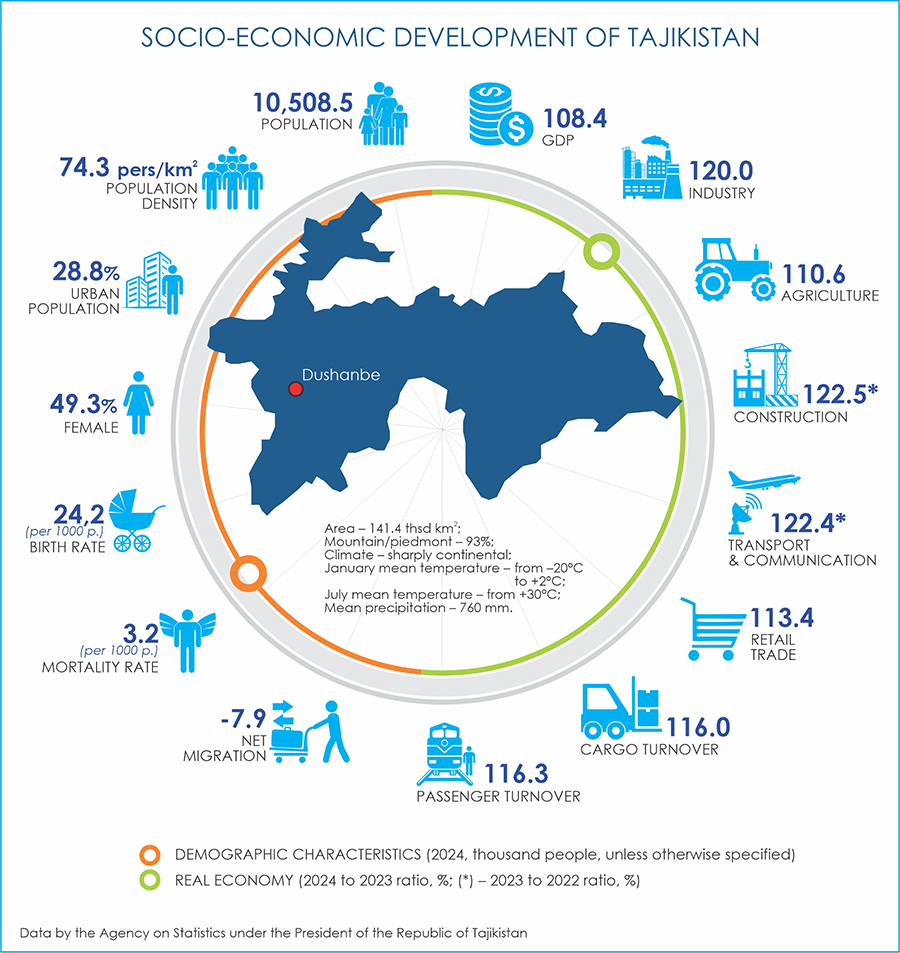
Water resources. Tajikistan's water resources are comprised of glaciers, rivers, lakes, reservoirs, and groundwater. The country's cryosphere includes 14,509 glaciers, covering a total area of 11,146 km² (approximately 8% of the national territory) with an estimated ice volume of 845 km³. The hydrological network consists of 947 rivers with a combined length of over 28,500 km. The average annual river runoff is 64 km³, which represents 55.4% of the long-term average annual runoff in the Aral Sea basin. Of this runoff, approximately 80% is contributed to the Amu Darya basin and 1% to the Syr Darya basin. Additionally, Tajikistan features roughly 1,300 lakes covering a total area of 705 km², with a combined storage capacity exceeding 46.3 km³, of which 20 km³ is fresh water.
The country's 11 reservoirs cover a total surface area of 664 km² and hold a total capacity of 15,344 km³. Their usable capacity, amounting to 7.63 km³, represents 13% of the long-term average annual runoff in the Aral Sea Basin. The country's potential groundwater stock is 18.7 million km³ per year, with usable resources estimated at 2.8 km³ per year. The largest basins are the Vakhsh (4.92 km³/year), Syr Darya (3.58 km³/year), and Kafirnigan (2.5 km³/year). The return runoff amounts to 3.5-4.0 km³/year, of which 3.0 km³ falls on collector and drainage waters and 0.5 km³ on municipal and industrial wastewater. Additionally, over 200 mineral springs and 100 geothermal water deposits have been registered.
The main water consumer in Tajikistan is irrigated agriculture, which accounts for 85% of total use. Household and drinking needs account for 5%, industry – 5%, fishing – 2%, and other sectors – 3%.
Latest developments in legislation. The documents approved in 2024 include: (1) the 2024-2028 Program of Irrigation and Drainage Development and the 2024-2026 Action Plan (PPRT-327 of 01.06.2024). The Program aims to foster a favorable investment climate for foreign and private capital, modernize and rehabilitate hydraulic facilities to make them more resilient, ensure sustainable water supply and effective drainage and wastewater treatment, reclaim land conditions, and develop new agricultural land and restore abandoned one; (2) the 2040 National Water Strategy of the Republic of Tajikistan (PPRT-627 of 29.11.2024) outlining the fundamental principles of public policy in the area of water use and protection, strategic directions for long-lasting IWRM, and key areas of water management activity balancing the interests of all users in the context of climate change; (3) Procedure for delineating water protection zones and coastal protective strips, including through special information signs, to prevent negative impact on water bodies and ensure the protection of associated ecosystems and biodiversity (PPRT-664 of 26.12.2024).
Programs and projects. Ongoing initiatives:
(1) 2016-2025 Water Sector Reform Program (PPRT-791 of 30.12.2015), as part of which: the 2040 National Water Strategy of the Republic of Tajikistan was adopted; a joint meeting of the Coordination Working Group and the Working Group on IWRM was held to discuss implementation, the concept for supporting higher water education in Tajikistan for 2023-2030, and a plan for developing a national water information system (April 19, Dushanbe). Meetings were held by the established River Basin Councils (RBC), including: (a) Zarafshan RBC, to assess and rank measures for the Zarafshan RBMP using the nexus approach (April 17, Ayni district); (b) Panj RBC (August 5, Ishkashim, GBAO), Small Basin Council of the Tajik part of the Isfara River (November 8) and Kafirnigan RBC (November 9). Participants were briefed on the work of RBC and new requirements for basin management plans, including their integration into regional socio-economic development plans. Accordingly, the Kafirnigan RBC, in cooperation with GIZ, has initiated the development of the Kafirnigan River Basin Management Plan for 2026-2030. Sets of equipment were handed over to the Zarafshan, Kafirnigan, Vakhsh and Panj RBCs;
(2) State Program on bank protection works in the Republic of Tajikistan for 2023-2027 (PPRT-186 of 29.04.2023) – bank protection and sai/mountain river cleaning work is carried out to mitigate the mudflow and flood risk;
(3) 2023-2027 Investment Program on provision of pumping stations of the Agency for Land Reclamation and Irrigation at the Government of Tajikistan with modern energy-saving Equipment (PPRT-296 of 30.06.2023).
As part of the “Panj River Basin Water Management” Project (ADB, additional financing, $46.610 million, 2017-2024): a workshop “Strengthening cooperation of the Agency for Hydrometeorology with interested parties” was organized in Dushanbe (April 23); a new water treatment basin in the M.S.Khamadoni district was launched (September 5); the Agency for Land Reclamation and Irrigation under the Government of the Republic of Tajikistan signed a contract with OAO TGEM on the construction of a settling tank in M.S.Khamadoni district and modernization of pumping stations (October).
The “Improvement of water resources management in Khatlon province” Project (IsDB, $53.5 million, 2020-2024) contributes to better water management in 9 districts of Khatlon province (improved access to irrigation, drinking water and sanitation). The project has introduced sustainable water tariffs and management systems.
The following projects continued: Climate- and Disaster-Resilient Irrigation and Drainage Modernization in the Vakhsh River Basin (WB, $35.2 million, 2022-2027) and Strengthening Water and Irrigation Management/SWIM (WB, EU, $47.34 million, 2023-2027).
Events. Dushanbe hosted: (1) Scientific-practical conference “Sustainable water resource management as the foundation for food security in a changing climate” (March 6-7); (2) International conference “Enhancement of Cooperation on Water Security between the Central Asian Countries” (April 25-26); (3) 14th International drainage workshop (May 30-June 1); (4) 3rd International High-level Conference on the International Decade for Action “Water for Sustainable Development”, 2018-2028, which included a number of forums on women and water, climate and glaciers, etc., interactive dialogues corresponding to the dialogues of the UN Water Conference 2023. Following the conference, the Dushanbe Declaration was adopted (June 10-13, See 2024 Calendar of events); (5) International scientific-practical conference “Global Initiatives of the Republic of Tajikistan – a Basis for Dialogue and Finding Solutions to Water Protection Challenges and the Climate Agenda” (November 22); (6) 27th session of the SPECA Working Group on Water, Energy, and Environment (November 25).
The Tajikistani delegation participated in: (1) the High-level event “Celebrating World Water Day 2024: Joining efforts, maintaining the momentum of progress” (March 22, New York, USA); (2) 10th World Water Forum (May 18-24, Bali, Indonesia); (3) World Water Week (August 25-29, Stockholm, Sweden); (4) side event of the RT “Tajikistan’s leadership in promoting international initiatives related to water management for sustainable development in the context of climate change” (September 13, Prague, Czech Republic); (5) Scientific-practical conference “Water in Central Asia: the Future in Cooperation” (November 8, Tashkent, Uzbekistan); (6) One Water Summit (December 3, Riyadh, Saudi Arabia).
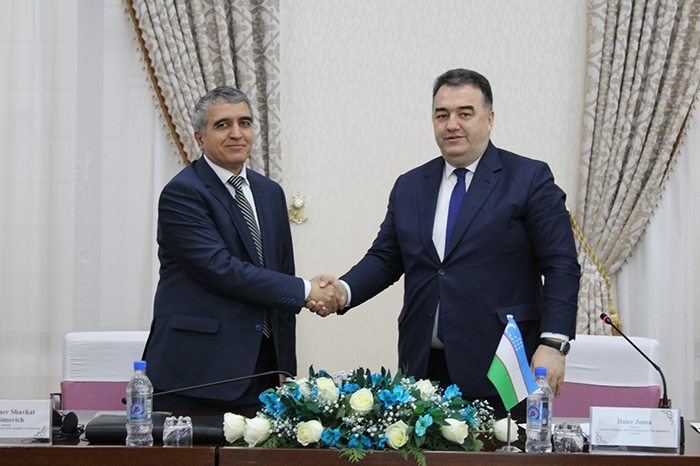
Regional and international cooperation. The 6th and 7th meetings of the Joint Working Group on Integrated Transboundary Water Use between the Republic of Tajikistan and the Republic of Uzbekistan were held (February 23, Guliston; August 3, Dushanbe). At the 6th meeting, officials launched the Patar and Sarvat automated gauging stations. Located on the cross-border Big Ferghana and Northern Ferghana canals, these stations will automatically record and transmit water data in real time. See Cooperation between the Countries of Central Asia on Water and Other Matters
The Tajikistani delegation participated in: (1) the meeting of the IFAS Board (September 18, Astana, Kazakhstan); (2) 86th and 87th meetings of ICWC (April 12, Shymkent, Kazakhstan; November 6, Ashgabat, Turkmenistan); (3) 12th and 13th meetings of the Working Group on Institutional and Legal Improvement of IFAS (September 4, Astana and December 12-13, Almaty, Kazakhstan). See International Fund for the Aral Sea Saving.
Drinking Water Supply
According to the State Unitary Enterprise (SUE) “Housing and Communal Services”, 66% of the population now has access to centralized water supply.
Public administration reform. By Government Decree (PPRT-436 of 31.07.2024), a new Committee for Housing and Communal Services was established. The Committee is comprised of the SUE “Housing and Communal Services” and SUE “Capital Construction and Repair”, and the Center for the Implementation of Water Supply and Sanitation Projects.
The “State Program for Drinking Water Supply and Sanitation through 2032” has been finalized and formally submitted to the Government of the Republic of Tajikistan.
Programs and projects. Ongoing initiatives: (1) 2021-2024 Program for development of housing and communal services in the Republic of Tajikistan (PP-53 of 27.02.2021); (2) Water supply and sanitation in the Kulyab city (WB, €16.25 million, 2019-2025); (3) Rural water supply and sewerage (WB, $58 million, 2019-2025); (4) Investments in water supply and sanitation in Tajikistan (IDA, $45 million, 2022-2027); (5) Improved water supply and sanitation in the Dushanbe city (ADB, $88.43 million, 2018-2028), etc.
As part of: (1) “Integrated rural development” Project (EU, 3 districts in the Rasht Valley), a drinking water supply system was launched in Lakhsh district (September 12, Vakhdat); (2) “Rural Water Supply” Project (USAID), a new water supply system was inaugurated in Rohati village of Rudaki district to provide more than 3,000 people (455 households) with safe drinking water (April 12) and water supply system in Palos Municipality, Buston city was reconstructed to provide 4,500 people with safe drinking water (September 19, Sogd province); (3) “Integrated Natural Resource Management in Zarafshon Valley for Equitable and Sustainable Development” Project/INVEST (EU, 2022-2027), construction of drinking water supply systems for 1,086 households in Kukhistoni-Matchokh and Panjikent districts was started. It is planned to expand the coverage to 4,452 households by July 2027.
International cooperation. The Ministry of Finance of Tajikistan signed new grant agreements with: (1) JICA on the “Improvement of water supply system in Jomi district, Khatlon province” Project (August 8); (2) EBRD on two water supply improvement projects in the Bokhtar city and Dangara district, respectively (December 3).
Agriculture
2024 results Agriculture accounts for 24.5% of Tajikistan's GDP. In 2024, total agricultural output reached 73.9 billion TJS, marking a 10.6% increase as compared to 2023. This growth was driven by a 13.4% rise in crop production (50.9 billion TJS) and a 4.8% increase in animal husbandry (22.9 billion TJS). Agricultural exports totaled 268.3 thousand tons, valued at $226.7
The irrigation water tariff was adjusted in 2024 to 5 dirhams per m³ (including VAT), up from 2 dirhams in 2023. This rate applies to all water consumers, regardless of ownership.
Tajikistan has emerged as a regional leader in organic farming within the CIS. According to the FAO , the country’s agricultural products are among the most environmentally friendly in the region, supported by the allocation of 1.4% of all cultivated land to organic agriculture.
Latest developments in legislation. Programs approved in 2024: (1) 2024-2028 Program for reclamation of agricultural land in Tajikistan and the 2024-2026 Action Plan (PPRT-137 of 01.03.2024) ; (2) Food Safety Program of the Republic of Tajikistan for 2024-2028 (PPRT-224 of 29.04.2024) to support: (1) irrigation system, including on-farm irrigation networks; (2) protection of plants and animals; (3) seed production; (4) increased production of processed products; (5) financial stability of the production process.
Amendments and additions we made on several laws, including: (1) ZRT-2027 of 03.01.2024 “On soil protection”; (2) ZRT-2029 of 03.01.2024 “On seed production”; (3) ZRT-2059 of 20.06.2024 “On pastures”.
Programs and projects. Ongoing initiatives: (1) Concept for organization and development of agroclusters in the Republic of Tajikistan till 2040 (PPRT-566 of 28.10.2020); (2) 2022-2027 State Program for development of new irrigated land and rehabilitation of retired ones (PPRT-90 of 01.03.2022); (3) 2023-2027 Pasture Development Program (PPRT-579 of 29.11.2022); (4) 2030 Agri-Food System and Sustainable Agriculture Program (PPRT-54 of 01.03.2023).
These programs are primarily implemented through investment projects, including: (1) Integrated Natural Resource Management in Zarafshon Valley for Equitable and Sustainable Development/ INVEST (EU, 2022-2027): two irrigation lines were launched in Panjikent for watering 246 ha in the village of Gusari Poyon and more than 100 ha in Zarrinrud; (2) Increasing Sustainability of Agriculture in Tajikistan (WB, 2021-2026), which provided farmers with climate-resilient seeds, seedlings and tractors; held trainings in Kulyab and Bokhtar of Sogd province and GBAO. The project also plans to build three agricultural centers in Dushanbe, Sogd and Khatlon provinces, with two additional centers contingent on extra funding in Khatlon province and GBAO.
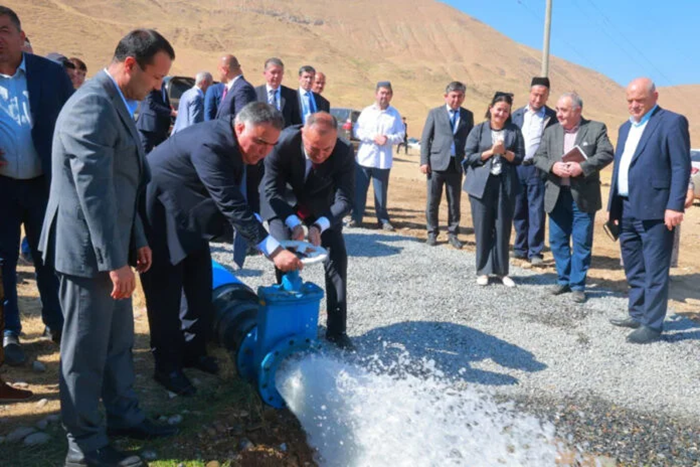
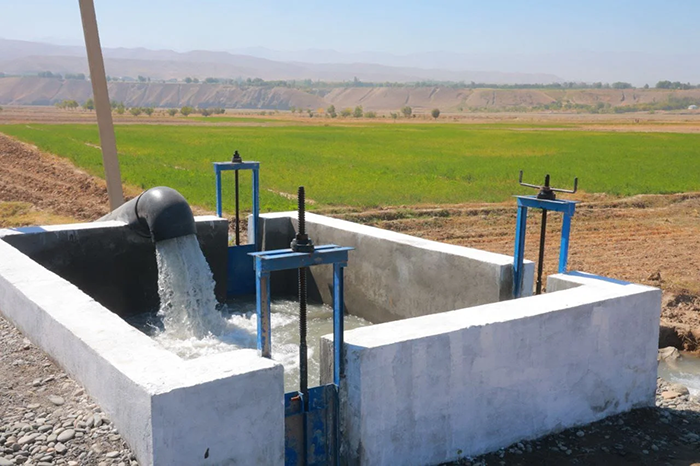
Market Driven Rural Development Activity/MDRD (USAID, 2022-2027): a modern greenhouse was built in Tursunzade; Tajik entrepreneurs studied Uzbekistan's best practices in production and processing of dried fruits (August, Samarkand, Fergana); a week-long Market Systems Development (MSD) training, an extended conference on MSD best practices, and a special forum designed for businesswomen were held in Dushanbe.
New projects: (1) Increasing Economic Independence and Improving the Status of Women in Central Asia through Access to Irrigation Water and Infrastructure (Coca-Cola Foundation, over $500 thousand, Bokhtar district in Khatlon province and Vakhdat district of republican subordination). The project team presented results on rehabilitation of canals and retired lands and installation of drip irrigation systems (September 17, Khatlon province, pilot Panjrud WUA); (2) Sustainable Livelihoods and Empowerment of Rural Women (ADB, $17.5 million), aimed to increase productivity of female-headed farms, improve conditions for processing and storing agricultural products and strengthen support for vulnerable women in six districts – Bokhtar, Farkhor, Kulyab, Panj, Shahritus and Vose (Khatlon province).
Events. (1) 1st National Forum of Cooperatives in Tajikistan organized by FAO (March 12-13, Dushanbe); (2) International forum “Khatlon Invest” and exhibition “Bokhtar Food – 2024” (October 17-18, Bokhtar, Khatlon province).
The Tajikistani delegation participated in: (1) the Global Forum for Food and Agriculture and 88th International Green Week (January 18-28, Berlin, Germany); (2) International Forum on Landlocked Developing Countries: Food Security and the Sustainable Development Goals (September 4-5, Tashkent, Uzbekistan).
Regional and international cooperation. The following Memoranda of Understanding were singed: (1) between MA RK and MA RT, on innovative and digital development, training and retraining of agricultural personnel, and between MA RK and Committee for Food Security under the Government of the RT, on cooperation in veterinary medicine (August 22, Dushanbe); (2) between MA RT and Ministry of Environment, Water and Agriculture of the Kingdom of Saudi Arabia, on cooperation in agriculture (November 25-27, Riyadh, Saudi Arabia).
Energy
Energy production and export. According to the MEWR RT, the country’s annual hydropower potential is estimated at 527 billion kWh, yet only 4-5% of this capacity is currently utilized. The existing infrastructure includes 11 large and medium HPPs and roughly 300 small ones, with the total installed capacity of 5,500 MW.
In 2024, Tajikistan generated 22.427 billion kWh (a 567.2 million kWh increase from 2023) and exported 2.478 billion kWh. The main export destinations were Afghanistan (1.530 billion kWh), Uzbekistan (943.9 million kWh), and Kyrgyzstan (4.428 million kWh).
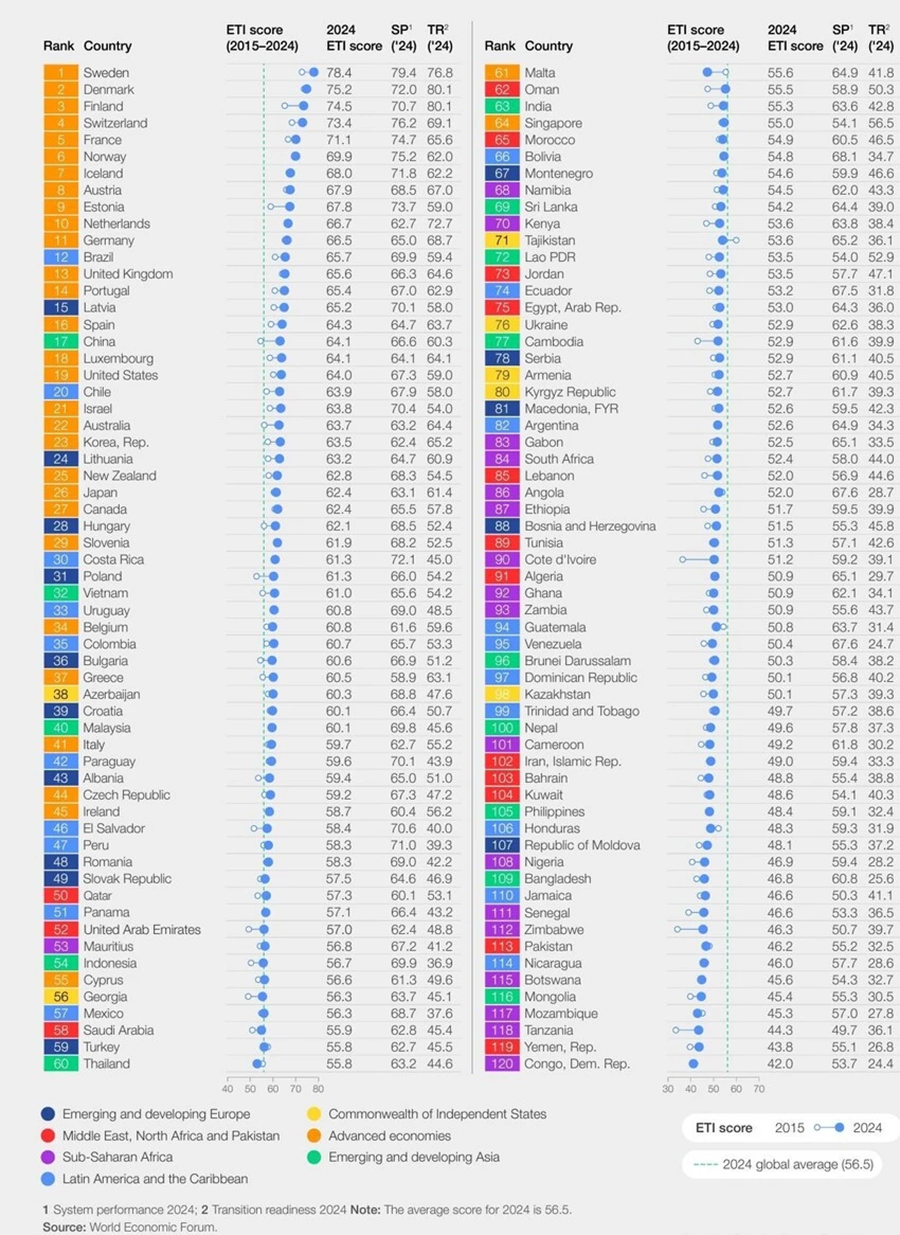
Tajikistan ranked first among Central Asian countries in the WEF 2024 Energy Transition Index . The country was placed 71st out of 120 countries, with a score of 53.6, ahead of Kyrgyzstan (80th) and Kazakhstan (98th). Uzbekistan and Turkmenistan were not included in the ranking.
Latest developments in legislation. With the support of the EU and regulatory authorities, ministries and agencies, the work is continued on drafting: (1) Energy law (in a new version), which is to ensure full regulation in the energy sector, including the accounting and billing system ; (2) Energy Code of the RT, covering the important aspects, such as energy efficiency, RES, electricity, heat, and geothermal power .
Projects and strategies. Under its 2023-2027 Green Economy Development Strategy, Tajikistan aims to build 1,000 MW of solar and wind capacity by 2033. This push for diversification is happening alongside significant investments in hydropower, including the Rogun HPP and upgrades to the Nurek, Kairakkum, and Sarband HPP.
Hydropower construction and modernization
Rogun HPP. In 2024, Rogun HPP produced 1.220 billion kWh or 5.5% of Tajikistan's total generation, according to MEWR RT. The plant, managed by state-owned OAO Rogun HPP, currently has two operational units.
A 2.7-km transmission line from the Rogun HPP to the Rogun substation was commissioned on September 27. This transmission line will ensure a permanent power supply for Rogun, Rasht Valley districts, Fayzabad, and parts of Vakhdat (September 27).
The World Bank approved IDA grant for $350 million as part the first phase of the “Sustainable Financing of the Rogun HPP” project (2024-2029) to assist Tajikistan in financing the completion of the Rogun HPP. The project is structured in two phases. Phase 1, targeting 2028, will raise the dam to 1,185 m with an installed capacity of 1,660 MW (400 MW for units 5/6 and 1,260 MW for units 3/4). Phase 2, targeting 2035, will complete the dam at 1,300 m, bringing the total capacity to 3,780 MW by operating all six units at 630 MW each. According to the agreement between the World Bank and Tajikistan, the Rogun HPP will operate during both the reservoir filling period and the operational period (after the full filling level is reached) in compliance with regional water-sharing agreements, the Rogun HPP reservoir management rules, and without causing significant harm to downstream countries.
Tajikistan signed loan/financial agreements with: (1) the Kuwait Fund for Arab Economic Development for $16.7 million. This is a part of the total funding of $100 million to be allocated in stages (December 18, Dushanbe); (2) AIIB for $270 million for the Rogun Development Program, Phase I (December 20, Beijing, PRC). The AIIB will allocate $500 million in two stages under separate agreements. The funds will be used to construct and reconstruct 55 km of roads, including bridges between villages, etc.
The Government (PPRT-157 of 28.02.2025) has established a special Benefit-Sharing Fund account for revenues from the sale of electricity generated by Rogun HPP.
Yavan HPP. Installed capacity of 100 MW and annual average electricity generation of 429.3 million kWh per year. The design location is Ayni district in Sogd province.
In 2024, the Hydropower Sustainability Alliance, MEWR RT and OAO TAUZ Hydro conducted trainings on HS application : (1) for power engineers from Tajikistan and Uzbekistan (May 30); (2) for estimators to assess environmental, social and management indicators for the construction of Yavan HPP . The assessment results were presented at the meeting, and self-assessment report is published on the Hydropower Sustainability Alliance website (July 9).
Kairakkum HPP. In 2024, units 4, 5, and 6 were recommissioned after a comprehensive modernization. The upgrade increased their capacity from 19 MW to 29 MW. Since 2019, equipment in the turbine hall, turbine control apparatus, water pressure vessel, hydraulic control unit, and six transformers, each with a capacity of 40 MVA have been overhauled. A 220/110 kV open-air switchgear has been replaced with a gas-insulated one. The dam has been strengthened, unit 2 underwent inspection, and five lifting cranes have been reconstructed. Upon full completion in 2026, these upgrades are projected to increase the average annual electricity generation from 580 million kWh to 850 million kWh.
Nurek HPP. Financed by the WB ($225.7 million), AIIB ($60 million), and the Eurasian Fund for Stabilization and Development ($40 million), the first phase of the reconstruction is ongoing. This phase includes the overhaul of three hydraulic units, replacement of hydromechanical equipment and six autotransformers, and improvement dam safety. In 2024, unit 4 was launched.
The second phase of the project ($115 million) will overhaul the remaining six units, Nurek bridge, turbine hall, and other key facilities. It also includes a capacity building program to enhance staff skills in O&M.
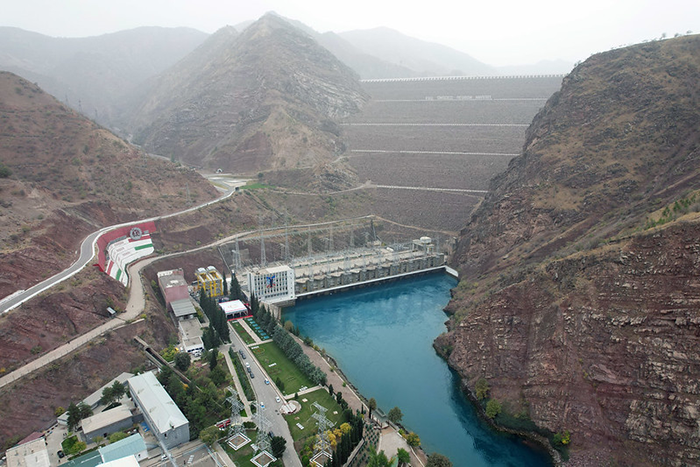
Golovnaya (Sarband) HPP. The ADB has approved a $21 million grant as an additional funding to replace unit 4. An initial ADB grant of $136 million helped replace 5 units, modernize switchgears and Vose substation, and construct new Rudaki substation and a connecting power line in southern Tajikistan. Following its complete modernization, the installed capacity will increase from 240 MW (in 2012) to 274 MW by 2026.
CASA-1000. The CASA-1000 project, Central Asia's largest regional energy initiative, will connect the power grids of Kyrgyzstan and Tajikistan to Afghanistan and Pakistan with a new high-voltage transmission line. In July 2024, Tajikistan announced the project's completion. The outcomes included three converter substations in Tajikistan and construction of a new, approximately 250-km power transmission line connecting the Kyrgyz and Afghan grid sections.
Alternative energy
Small hydropower. At the small Sebzor HPP , work is underway at the head structure, water pipelines, and the machine hall. According to TGEM , work was completed by 80% at the dam site, 80% at the water intake, 70% at the discharge channel, 60% at the treatment facilities, and 77% in the machine hall. The plant is scheduled for commissioning in 2025.
Solar power. The Tajik Committee for Architecture and Construction has issued Order No. 40/f of March 29, 2024 mandating the integration of solar power and conventional power into all buildings. Effective April 1, 2024, all new and renovated structures must be designed and operated with PV systems and a minimum of one day's energy storage capacity, alongside the main electrical grid.
GBAO constructs a new 3-MW SPP in Shugnan district and expands the Murgab SPP from 200 kW to 800 kW, which includes a 1.2-MWh battery storage system. In Panj and Dangara Free Economic Zones, the China Pingmei Shenma Holding Group invests $400 million in construction of a 1,000-MW SPP.
The MoUs were signed: (1) between the Tajik Ministry of Economic Development and Trade and the Chinese Eging PV Technology on construction of SPP in the Panj Free Economic Zone. The total investment for the four-stage project will reach $1.5 billion. The first stage ($150 million) involves the construction of a 200-MW SPP on 250 ha (May 29); (2) between OAO Pamir Energy and USAID on a 400-kW SPP in the Murgab district, GBAO as part the “Central Asia Energy” project (November 21).
Events. Dushanbe hosted: (1) regional conference “Prospects for the development of renewable energy in the Republic of Tajikistan” (June 24-26); (2) 20th meeting of the Intergovernmental Commission of the RT and Russia on trade and economic cooperation to address cooperation in the fuel and energy sector (October 4); (3) regional workshop “Enhancing sustainability and investment attractiveness of hydropower projects in Central Asia using HS” (October 29); (4) 2nd meeting of the ECO Regional Electricity Market (ECO-REM) Expert Group featuring the presentation of the Draft ECO Roadmap (November 27).
The MEWR RT and the EU Delegation organized the European Union - Tajikistan Sustainable Energy Days (SEDs) to promote sustainable energy and mobility awareness, while engaging local communities, especially focusing on the youth ready to take up new green jobs (May 28-29, Khatlon province).
The Tajikistani delegation participated in: (1) International Congress “Hydropower. Central Asia and the Caspian” (March 12-15, Tashkent); (2) 1st Meeting of Energy Ministers of CA states (August 6, Astana); (3) 23rd CAREC Ministerial Conference (November 7, Astana); (4) Energy Transition Investment Forum (November 15, Baku); (5) 7th China International PV and Energy Storage Industry Conference (November 17-20, Chengdu, PRC); (6) side event “Diversification of energy sources: acceleration of foreign direct investment in energy and mineral projects” (November 26, Riyadh, Saudi Arabia).
Regional and international cooperation. At the 4th meeting of SCO energy ministers, Tajikistan endorsed a draft “Strategy for Energy Cooperation of the SCO Member-States up to 2030”. The Strategy focuses on developing transit potential of energy resources, diversifying export routes, and forming a new, balanced energy system (June 21). The 24th meeting of the Council of Heads of State of the SCO Member-States adopted the Strategy on July 4 in Astana.
Since June 2024, Tajikistan has rejoined the United Energy System of Central Asia (UES CA) . ADB allocated additional grant funding ($15 million) to reconnect the power system of Tajikistan to the OES CA. A new 22-km, 500-kV power line will connect Tajikistan's Sogd substation to Uzbekistan's Novaya Syr Darya substation. This link will boost electricity trading capacity among Kazakhstan, Kyrgyzstan, Tajikistan, and Uzbekistan, while also reinforcing the grid against disruptions.
The following relevant documents were signed in Dushanbe: MoU in the field of oil and gas between the Kazakh ME and Tajik MEWR (August 22); agreement between OAO Pamir Energy and the Swiss Gruner Stucky on the feasibility study for construction of a 14-MW Charsem HPP on the Gund River in the Shugnan district, GBAO (September 27); protocol of negotiations between the MEWR RT and the Korea Institute of Technology Development on the construction SPPs and energy storage systems in Sogd province and GBAO (December 9).
Climate change, glaciers and environmental protection
Demonstrating its ongoing commitment to sustainable development, climate, and environment, Tajikistan has declared 2024 the “Year of Environmental Education”. The 29th session of the UNECE Committee on Environmental Policy adopted Tajikistan’s “Fourth Environmental Performance Review” that provides a comprehensive assessment of national progress in environmental protection, harmonization of economic and environmental objectives, and compliance with international obligations. UN experts recommended to reform environmental legislation, improve public access to clean water and sanitation and urged for stronger pollution controls in industry, agriculture, transport, and energy, alongside enhanced measures to protect biodiversity (November 7, Geneva, Switzerland).
At UN Headquarters, the Permanent Missions of Tajikistan and Argentina co-chaired a session of the Group of Friends on Glaciers . The Chairman of Committee for Environmental Protection under the Government of the Republic of Tajikistan announced that the country was among the first to contribute financially to the “International Trust Fund for Glacier Preservation” and called for further international financial support and proposed establishing a regional glaciological center in Dushanbe, along with international scientific expeditions to study the country's glaciers (July 24, New York, USA).
Latest developments in legislation. The following legislative documents were adopted: (1) Law “On protection of glaciers” (ZRT-2026 of 03.01.2024), which sets the legal, economic, and institutional framework for glaciers preservation and regulates educational and research activities in this area; (2) Resolution No.879 of 16.11.2024 “On the accession of the Republic of Tajikistan to the International Union for Conservation of Nature” (IUCN ). By Resolution, the Environmental Protection Committee is authorized to represent the country in the IUCN. Tajikistan will have access to GEF and GCF funds, as well as to the IUCN Red List of Threatened Species.
In addition, the following Government decrees were adopted: (1) PPRT-178 of 28.03.2024 “On the distribution of powers among state bodies for biological safety and security”; (2) PP-200 of 30.03.2024 “On the amount and procedure for collecting ecotourism fees in strictly protected natural areas”; (3) PPRT-374 of 29.06.2024 on State Program for greening the Republic of Tajikistan until 2040, which is to regulate natural balance and reduce greenhouse gas emissions; adapt to climate change and improve environmental situation; ensure preservation and sustainable management of natural landscapes; foster biodiversity and create conditions for a healthy environment; and facilitate green economy.
Amendments and additions were made to a number of laws, including: (1) “On flora protection and use” (ZRT-2058 of 20.06.2024); (2) “On environmental information” (ZRT-2096 of 13.11.2024); (3) “On environmental monitoring” (ZRT-2097 of 13.11.2024); (4) “On hydrometeorological activities” (ZRT-2098 of 13.11.2024); (5) “On environmental protection” (ZRT-2099 of 13.11.2024); (6) “On environmental audit” (ZRT-2100 of 13.11.2024).
To enhance environmental awareness and ensure ecological safety in Dushanbe, the Government adopted Resolution No. 114 on February 27, 2024, designating it the 'Year of Environmental Education.' This initiative prompted the closure of several environmentally hazardous enterprises, accelerated the transition to green transport, and launched an extensive 900-day planting campaign. Additionally, the city hosted numerous educational activities, including school competitions and expert roundtables.
Programs and projects. Ongoing initiatives: (1) “2023-2028 State Environmental Program of the Republic of Tajikistan”: a Waste Control and Monitoring Center was established; 50 surveillance cameras were installed and 827 containers for collecting plastic waste were placed; 138 temporary waste storage sites were established and 50 electric scooters were acquired for disposal operations; (2) “2010-2030 State Program for the Study and Conservation of Glaciers of the Republic of Tajikistan”: aerial observations were carried out in river basins of the Kyzylsu, Yakhsu, Obihingob, Surkhob, and Kamarob and the Kanskaya zone of the Kafirnigan River to measure snow cover; snow survey was held in the regions of Mayhhura, Khushori and Takob of the Varzob district, as well as in the basins of the Saratog River in Ayni district, Kamarob River in Rasht district, Yakhsu River in Muminabad district, Obikhingob River in Sangvor district, Vanchob and Gundi Rivers in GBAO. Reports and bulletins on snow stock were prepared; expedition and aerial observations were organized in the upper tongue of the Vanjakh/Fedchenko glacier; (3) “2021-2025 Comprehensive State Program for the Development of Environmental Education and Awareness in the Republic of Tajikistan”: a scientific-theoretical conference “Factors for Increasing Environmental Awareness of Citizens” was conducted; republican competition for artists and creative people on “Nature of Tajikistan reflected in the mirror”; eco-marathon and ecological action “Clean banks” were organized.
As part of the “Climate Risk Management in Central Asia/CRM CA (BMZ, GIZ, 2022-2026) Project, a number of events were organized: a regional workshop on climate risk assessment and capacity building dedicated to the launch a study in five river basins in CA (February 20, Tashkent, Uzbekistan); a training of trainers (ToT) on climate risk management and adaptation strategies for 27 trainers from Central Asia to lead local efforts in building climate resilience (June-September, Tashkent, Uzbekistan); a workshop on identification, analysis and ranking of climate risks in the Zarafshan River basin (June 13-14, Samarkand, Uzbekistan); a meeting focusing on the review of climate risk assessment (December 10, Tashkent, Uzbekistan).
The “Tajikistan Resilient Landscape Restoration” (WB, IDA, 2022-2027) project covers Khatlon province (Kafirnigan basin), Kabadian, Shahrituz and Nosiri Hisrav districts; Sogd province (Zarafshan River basin), Ayni, Mountain Mastchokh and Panjikent districts; Gorno-Badakhshan Autonomous Region (Panj River basin), and Wanj, Rushan, Shugnan and Murghab Districts. The project helped to establish 142 joint forest management groups across pilot sites in Tajikistan, involving 355 households. Trees were planted on an area of 576 ha and a 1,014-ha land plot has been allocated for organization of a forestry farm. Furthermore, the project established 63 Pasture User Societies, providing them with customized livestock and grazing management plans. Key infrastructure projects—including water lines, bridges, and wells—were completed to support these groups. The initiative also focused on empowering women and enhancing conservation efforts in the Tigrovaya Balka Nature Reserve to protect rare flora and fauna. To strengthen these efforts, the project team conducted a study tour “Innovative approaches to biodiversity management and conservation in European national parks,” focusing on transboundary park management (October 26-November 3, Austria, Slovakia, Czech Republic).
Events. Dushanbe hosted: (1) Scientific-practical conference “The role of cities in green initiatives: Dushanbe case” (March 15); (2) International conference “Monitoring glaciers and glacial lakes – risk management” (August 26-27); (3) SPECA Economic Forum “Green Development in the SPECA Region”, where the Dushanbe Declaration was adopted to secure commitments of participating countries to green development, digitalization, sustainable energy, and enhanced climate resilience and new initiatives were approved, including SPECA Climate and Innovation Dialogue, SPECA Forum of Climate Smart Cities (initiative of Azerbaijan) and the SPECA Concept of Development until 2030 (initiative of Uzbekistan) (November 26-27); (4) 19th session of the SPECA focusing on decisions to strengthen regional cooperation and implement adopted initiatives, election of the next SPECA chair country for 2025 (November 28), etc.
The Tajikistani delegation participated in: (1) the High-level meeting of CA environmental ministers and OSCE Secretary General (March 4, Ashgabat, Turkmenistan); (2) the Central Asia Climate Change Conference (May 27-29, Almaty, Kazakhstan); (3) the SCO Forum on Green Development (July 7-9, Sindao, PRC); (4) the CICA Ministerial Conference on Environmental Issues (August 28, online); (5) the 31st OSCE Economic and Environmental Forum (September 12-13, Prague, Czech Republic); (6) the Conference of the Parties to the Convention on Biological Diversity/COP16 (October 29, Cali, Colombia); (7) a High-level side event “United by Water: Securing Our Collective Future Amidst Rising Seas and Melting Glaciers” (September 25, New York, USA); (8) COP29 (November 11-22, Baku, Azerbaijan), including the World Leaders Climate Action Summit. The President of Tajikistan stated that the country aims to achieve full domestic energy production from renewables by 2032 and complete 'green' status by 2037. As part of this environmental strategy, he proposed Dushanbe as the site for a new regional center for glacier research.
Regional and international cooperation. As part of the activities of ICSD, the Tajikistani delegation participated in meetings of the ICSD Advisory Council and the 33rd session of the Board, during which the outcomes of the Republic of Kazakhstan’s chairmanship of the ICSD (2022–2024) were summarized, reports on the RPEPSDCA and the Regional Waste Management Center in Dushanbe, and other issues related to environmental cooperation were reviewed, and the procedure for the transfer of the ICSD chairmanship from Kazakhstan to Tajikistan was carried out (March 27 and March 28, Astana). Dushanbe hosted the Regional conference “Cooperation for sustainable development: 30th anniversary of the ICSD”, with the primary objective of evaluating the ICSD’s contribution to sustainable development and environmental stewardship in Central Asia (November 26). See Interstate Commission on Sustainable Development
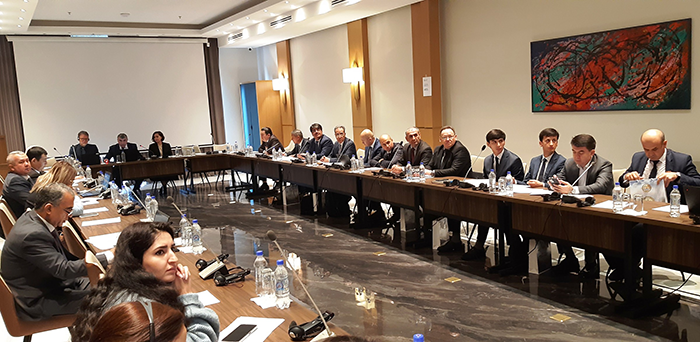
With support from ADB, Tajikistan has developed a Climate Finance Plan for its NDCs. The plan estimates that $8 billion in investment will be required by 2030 to achieve the country’s climate adaptation and mitigation targets. Priority sectors include renewable energy, energy efficiency, sustainable transport, green industry, waste management, and climate-resilient agriculture.
A number of international documents were signed, including : (1) the Declaration on Children, Youth, and Climate Action to accelerate inclusive climate policies with a primary focus on safeguarding the well-being of children and youth at the national level (May 6, Dushanbe); (2) a MoU between the Tajik Committee for Environmental Protection and the Belarusian Ministry of Natural Resources and Environmental Protection on environmental protection and sustainable development (June 11, Dushanbe); (3) a MoU with the Initiative for Climate Action Transparency (ICAT) on development of a national data framework for climate change (June 13, Bonn, Germany); (4) an environmental cooperation agreement between the governments of the SCO Member-States on creation of conditions for environmental preservation and sustainable natural resource use (July 4, Astana).
The UNGA adopted the resolution “Decade of Action for Cryospheric Sciences, 2025-2034” A/78/L.99 facilitated by Tajikistan and the Republic of France to combat glacier melting and cryospheric shifts by driving research, improving monitoring systems, and boosting public understanding (July 13, New York, USA).
Tajikistan and the UN University (UNU) signed a MoU on academic and scientific collaboration in order to address critical global environmental challenges, with a focus on water, food security, climate change, biodiversity. The collaboration will promote sharing of knowledge, capacity-building initiatives, and policy-relevant research to support the efforts of Tajikistan and the UN at all levels in strengthening science, technology, and innovation initiatives in line with the 2030 Agenda (September 22, New York, USA).
SDGs in Tajikistan
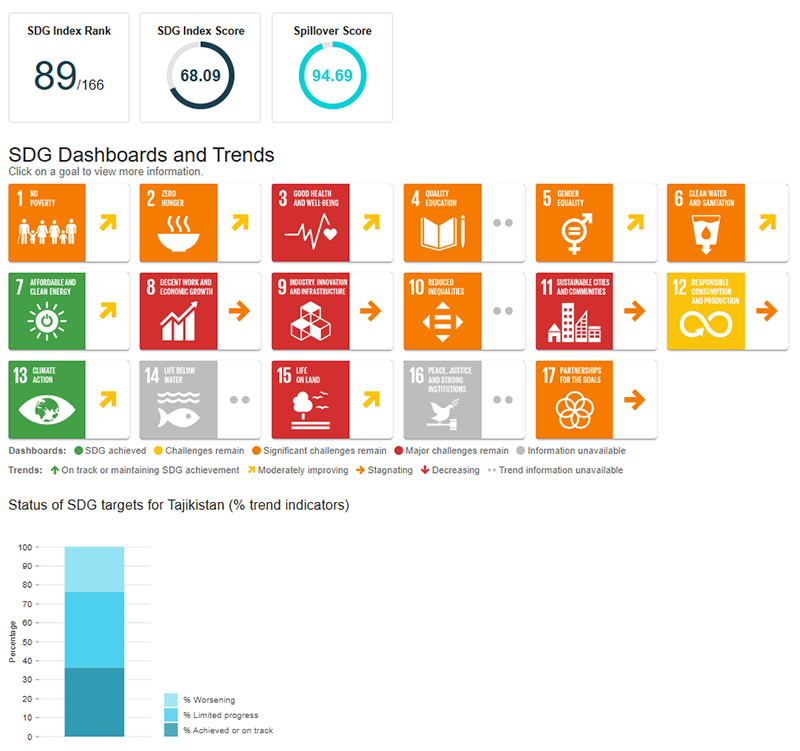
Tajikistan was ranked 89 out of 166 countries in the annual sustainable development rating published by the UN and Bertelsmann Fund.
Events. The Tajikistani delegation participated in: (1) UNECE Regional Forum on Sustainable Development (March 13-14, Geneva, Switzerland); (2) 80th session of ESCAP on “Leveraging digital innovation for sustainable development in Asia and the Pacific” (April 22-26, Bangkok, Kingdom of Thailand); (3) High-Level Political Forum on Sustainable Development/HLPF-2024 (July 15, New York, USA); (4) Forum “Youth for a Sustainable Future in Central Asia” (October 28-29, Almaty, Kazakhstan).
Emergencies
Latest developments in legislation. The following Government decrees were adopted in 2024: (1) No.78 of 27.02.2024 “On Submission of the Government's Opinion Regarding Draft Law “On Amendments to the Law of the Republic of Tajikistan on Protection of the Population and Territories from Natural and Man-Made Emergencies”; (2) No.101 of 27.02.2024 “On Introducing Amendments and Additions to Government Decree No. 98 of March 1, 2012” that amended the Provisions of the National Platform for Disaster Risk Reduction of the RT by broadening its membership and strengthening its authority.
Emergency situations. The Tajikistan’s Committee of Emergency Situations (CES) recorded 639 natural disasters and emergencies, resulting in an estimated 161.05 million TJS in material damage. The impact on infrastructure was severe: 334 houses were damaged, along with 80 bridges, 139 km of power lines, and 154 km of irrigation canals. Additionally, 29.7 km of coastal fortifications were compromised. The agricultural sector also suffered, with 2,729 ha of farmland destroyed and over 1,100 livestock lost.
Preventive measures. Ahead of the flood season, mitigation efforts focused on clearing protective dams, drainage systems, and mudflow channels. Additionally, bank reinforcement work was conducted on canals and drainage ditches to minimize the risk of disaster.
Programs and projects. Ongoing initiatives: (1) 2019-2034 National Strategy for disaster risk reduction (PPRT-624 of 29.12.2022); (2) Medium-term State Program to protect the population and territories from emergencies for 2023-2028 (PPRT-630 of 29.12.2022); (3) State Program for bank protection for 2023-2027 (PPRT-186 of 29.04.2023).
Tajikistan’s National Disaster Risk Reduction Platform met to audit state programs and emergency funding. The agenda included also updates on the Early Warnings for All initiative (March 14, May 31, July 16, Dushanbe).
As part of the World Bank-funded project “Improving Preparedness and Resilience to Disasters in Tajikistan”, specialists of the Committee of Emergency Situations, in cooperation with the national ICT company, developed a mobile application “SOS” , which provides citizens with prompt emergency alerts, severe weather, and regional hazards. CES branches have got: (1) 4 monitor hazardous areas; (2) trainings for UAV operators in GIS applications and a consultative workshop to strengthen their understanding of disaster risks (October 24).
The National Disaster Risk Management project (ADB) has equipped the CES with specialized rescue gear and advanced surveillance technology. These tools are designed to feed directly into a new Unified Automated Emergency Response System , currently under development.
Capacity building. CES staff underwent specialized training in 2024. This included workshops in Dushanbe held under the 2023–2028 State Protection Program (March 4-12), a joint two-week program with the OSCE in Dushanbe and Varzob (March 4-16), and collaborative exercises following the MoU signed with AFAD (November).
Events. Dushanbe hosted: (1) 9th ECO Ministerial Meeting on Disaster Risk Reduction (September 17); (2) regional meeting “Understanding the Impact of Sand and Dust Storms on Glaciers in Asia and the Pacific: Towards Conservation and Cooperation” (September 26-27).
The Tajikistani delegation participated in: (1) the side event of the Asia-Pacific Centre for Disaster Information Management Development on “Innovative Disaster Information Management for Sustainable and Climate-Sensitive Development” (April 23, Bangkok, Kingdom of Thailand); (2) Central Asia – China meeting of the Heads of Emergency Agencies (May 30, Urumqi, PRC); (3) meeting of the Working Group (experts) (July 4, Almaty, Kazakhstan) and a Regular Regional Forum - Meeting of the Heads of Emergency Authorities of Central Asia, which adopted a Protocol and a Roadmap to the Strategy of cooperation development between the Central Asian countries in disaster risk reduction for 2023-2024 (August 14-15, Cholpon-Ata, Kyrgyzstan); (4) 15th meeting of the Coordination Council for Emergency Situations of the CSTO Member-States (September 5, training ground “Rock City Astana”, Almaty province, Kazakhstan); (5) Ministerial roundtable “Scaling up disaster risk reduction in a changing risk landscape” under the Europe and Central Asia Regional Platform for Disaster Risk Reduction (November 6-8, Budva, Montenegro).
International cooperation. Tajikistan, as part of the UN Secretary General's Early Warnings for All/EW4All initiative, hosted consultative seminars, where representatives of relevant ministries and agencies discussed the draft Roadmap for the initiative (April 19-30, Khujand, Khorog and Bokhtar).
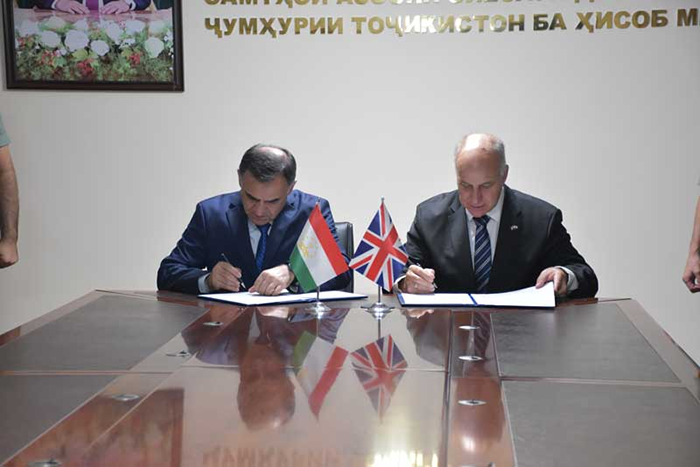
A Disaster Risk Management Partnership Agreement was signed between the CES and the Government of the United Kingdom of Great Britain and Northern Ireland in Dushane (August 2,).
The Turkish Agency for Cooperation and Coordination (TIKA) handed over technical equipment for deep-sea diving to the CES (August 14, Dushanbe).
Foreign Policy and International Cooperation
In 2024, Tajikistan took part in key international forums. The Head of State paid 22 foreign visits and signed more than 150 international documents
State, official, and working visits. In 2024, the Tajik President paid visits to Qatar (January, February, October), Russia (February, May, October 7, October 23, December), Italy (April), Vatican (April), Azerbaijan (May, November), Iran (May, July), Kazakhstan (July, August, September, November), Turkmenistan (October), Kuwait (November), Saudi Arabia (November), USA (September).
Major significant events in Foreign Policy of the Republic of Tajikistan in 2024
Tajikistan continues to pursue a proactive foreign policy focused on security, national interests, and global leadership. Central to this effort is the “Dushanbe Water Process” - a government initiative in partnership with the UN. Most recently, Tajikistan hosted the 3rd International High-Level Conference on the “Water for Sustainable Development” ' Decade of Action (2018–2028). This series builds on the momentum of the 2018 conference, which focused on strategic dialogue, and the 2022 conference, which served as a critical stepping stone to the UN 2023 Water Conference in New York (June 10-13, See 2024 Calendar of Events).
Development of alliances and strategic partnerships. As part of state visits to Tajikistan: (1) Presidents of Tajikistan and Uzbekistan signed the Treaty on Allied Relations and 28 documents of intersectoral cooperation (April 18-19, Dushanbe); (2) Presidents of Tajikistan and Kazakhstan signed 16 documents, including the Treaty on Allied Relations (August 22-23, Dushanbe).
Government delegations from Tajikistan and Kyrgyzstan have finalized the description of the remaining sections of the state border. Consequently, both nations have launched the official process of formalizing the delimitation documents. See Cooperation between the Countries of Central Asia on Water and Other Matters
The Tajik delegation headed by the President participated in: (1) the 6th Consultative Meeting of Heads of State of Central Asia (August 9, Astana, Kazakhstan); (2) 3rd Voice of Global South Summit (August 17, online); (3) 2nd “Central Asia-Germany” Summit (September 17, Astana, Kazakhstan); (4) Future Summit (September 22-23, New York, USA); (5) BRICS Summit (October 22-24, Kazan, Russia).
Chairmanship in integrational organizations. In 2024, Tajikistan chaired the SPECA. Thus, Dushanbe hosted: (1) 27th session of the Working Group on Water, Energy and Environment (November 25); (2) SPECA high-level events, including the Economic Forum “Green Development in the SPECA Region”, with the resulting adoption of the Dushanbe Declaration (November 26-27); (3) 19th session of SPECA Governing Council (November 28).
Promotion of the national interests and reinforcement of the country’s image
UN. Addressing the 79th UNGA Session, the President of Tajikistan proposed utilizing the Dushanbe Water Process to monitor the outcomes of the 2023 UN Water Conference and to prepare for the upcoming 2028 UN Water Conference in Dushanbe. He also highlighted a joint initiative with France to declare 2025–2034 the Decade of Action for Cryospheric Sciences. Finally, the President reaffirmed Tajikistan’s commitment to becoming a fully 'green' country by 2037.
The President’s Decree No. 672 of 12.01.2024 launched the Permanent Mission of Tajikistan to UNESCO. The Supreme Assembly of the Republic of Tajikistan adopted the Resolution No. 1305 of 08.05.2024 “On Ratification of MoU between the Government of the Republic of Tajikistan and the World Food Program”.
CIS. The Tajikistani delegation participated in the CIS meetings of: (1) the Council of Heads of State (October 8, Moscow, Russia); (2) the Council of Heads of Government (December 12, Moscow); (3) the Council of Foreign Ministers (April 12, Minsk, Belarus; October 7, Moscow); (4) the Economic Council (March 29, September 20, November 29, Moscow); (5) an informal Summit of Heads of State (December 25, St. Petersburg, Russia).
Tajikistan will assume the CIS presidency in 2025. A briefing was held to present the key priorities of the Chairmanship (December 20).
SCO. The national delegation participated in: (1) SCO summit, where participants supported the Tajikistan's initiative to establish an antimonopoly cooperation mechanism and the SCO Anti-drug Center in Dushanbe (July 3-4, Astana, Kazakhstan); (2) 22nd meeting of Prosecutors-General of the SCO (July 25, Bishkek, Kyrgyzstan); (3) 23rd meeting of the Council of Heads of Government (Prime Ministers) of the SCO Member-States (September 12, Islamabad, Islamic Republic of Pakistan); (4) 42nd meeting of the Council of the Regional Anti-Terrorist Structure of the SCO (September 13, Beijing, PRC).
The SCO Friendship and Cooperation Center in Tajikistan held a roundtable dedicated to the Year of Sustainable Development of SCO (October 18, Dushanbe).
CSTO. Tajikistan continues cooperating with CSTO by taking part in the meetings of the CSTO Council of Parliamentary Assembly (June 3, Almaty, Kazakhstan, December 10, Moscow), CSTO Council of Foreign Ministers (June 21, Almaty, Kazakhstan), CSTO sessions (November 28, Astana, Kazakhstan), and other events (see News).
Sources
Official sites of: President, Ministry of Foreign Affairs, Ministry of Economic Development and Trade, Ministry of Justice, Ministry of Energy and Water Resources, Ministry of Agriculture, Committee for Emergency Situations and Civil Defense, Committee for Environmental Protection, Agency for Land Reclamation and Irrigation, Agency for Hydrometeorology, Executive Committee of IFAS, "Center for Glacier Research of the National Academy of Sciences of Tajikistan", Dushanbe Water Process
Information agencies and sites:
khovar.tj; dialog.tj; east-fruit.com; tajikta.tj; avesta.tj; tj.sputniknews.ru; fergana.agency; sugdnews.com; eco.uz; spinform.ru
Development and support
Scientific-Information Center ICWC