
Section 5. Key water developments in the countries of Central Asia
5.4. Turkmenistan
Water sector
Water resources. Turkmenistan’s water resources are primarily derived from surface runoff, with the Amu Darya River accounting for 88% of the total supply. Other significant sources include the Murgab (6.5%), Tejen (3.5%), and the Atrek, Sumbar, and Chandyr rivers (1.4%). Smaller watercourses from the northeastern slopes of the Kopetdag mountains contribute 0.6%, supplemented by minimal amounts of groundwater and collector-drainage water. As all major rivers in Turkmenistan are transboundary, approximately 95% of the country's surface water originates outside its borders.
National programs. Turkmenistan is currently implementing its 2019–2025 Social and Economic Development Program, which prioritizes IWRM and regional cooperation. The program focuses on water conservation, the development of new water sources, soil salinity prevention, and land reclamation. Key achievements to date include the rehabilitation of the Sultan-Sanjar dam and the deployment of an automated water metering system at all gauging stations along the Karakum Canal.
Projects. The USAID Regional Water and Environment Activity held: (1) a series of events dedicated to the World Water Day (March 28, Dashoguz); (2) 6th and 7th meetings of the project Regional Coordination Committee (May 1, Ashgabat; November 21, Almaty); (3) 7th meeting of the National Intersectoral Committee (October, Ashgabat); (4) training on automated water metering system in the Karakum and Murgab River basins (October 14, Ashgabat); (5) media briefing (October 15, Ashgabat); (6) meeting of partners (October 16, Ashgabat); (6) workshop on water diplomacy and water-energy-food-ecosystem nexus (October 17-18, Ashgabat).
FAO launched the Project “Enhancing Capacities for Climate-Resilient Water Management” (2024-2025, $150,000), which among other things plans to install water meters, upgrade inter-farm irrigation networks, set up a weather station, and provide training on irrigation.
Capacity building. Several capacity-building initiatives were organized, including: (1) transboundary training on the Amu Darya basin for specialists from Uzbekistan and Turkmenistan (November 19, Ashgabat; December 3, Khiva, Uzbekistan); (2) training for Turkmen water management organizations (November 20-21, Ashgabat); (3) regional workshop focused on improving water quality in the Amu Darya basin (December 4, Urgench, Uzbekistan).
The Training Center for Priority Areas of Diplomacy of Turkmenistan held a series of training sessions in the course of the year (January 17 and 19; February 28; March 20; April 12 and 24; May 1; June 7, 14 and 20; October 2, 16 and 17-18; November 7 and 27; December 23 and 25, Ashgabat).
Regional and international cooperation. The 4th session of the Turkmen-Uzbek Intergovernmental Commission focused on joint Amu Darya management and infrastructure modernization. Discussions covered the digitalization of gauging stations (Kerki, Turkmenabat, and Darganata) and river engineering projects, including bank stabilization. The decisions were solidified through the signing of a bilateral Protocol (April 30, Turkmenabad, Turkmenistan). See Cooperation between the Countries of Central Asia on Water and Other Matters
Ashgabat hosted the 87th meeting of ICWC (November 6). The Turkmen delegation participated in: (1) the 86th meeting of ICWC (April 12, Shymkent); (2) meeting of the IFAS Board (September 18, Astana); (3) 12th and 13th meetings of the Working Group on Institutional and Legal Improvement of IFAS (September 4, Astana and December 12-13, Almaty). See International Fund for Saving the Aral Sea
Events. Ashgabat hosted: (1) a Scientific conference “Water resource management in the context of climate change” (April 22); (2) Regional conference on water management in Central Asian countries (April 30).
The Turkmenistan’s delegation participated in: (1) the 3rd High-Level International Conference on International Decade for Action “Water for Sustainable Development”, 2018-2028 (June 10-13, Dushanbe); (2) International Scientific-Practical Conference “Land Reclamation and Water Management – the Basis for Food and Environmental Security” (October 9-11, online, Moscow); (3) Scientific-Practical Conference “Water in Central Asia: the Future in Cooperation” (November 8, Tashkent, Uzbekistan); (4) One Water Summit (December 3, Riyadh, Saudi Arabia).
Drinking Water Supply
Turkmenistan commissioned four high-capacity water treatment plants under its current social development programs. Notable additions include the massive Bagtyyarlyk facility in Ashgabat, capable of processing 150,000 m³ per day, and the Yashlyk plant in Ahal Province. New facilities were also inaugurated in the Tejen and Turkmenkala districts in late December, further expanding the country's access to clean drinking water.
Specialists from the Turkmengeology State Corporation’s field offices in Dashoguz, Balkan, and Ahal are actively exploring aquifers and estimating groundwater reserves. Their work includes conducting hydrochemical analyses to determine water quality and assessing the technical condition of existing operational wells.
Agriculture
In 2024, the agricultural sector demonstrated robust growth, with a 26.9% increase in total output and a 5.3% rise in agricultural GDP. Production gains were seen across all major categories compared to the previous year. Notably, vegetable production grew by 8.4%, while meat (net weight) and grape yields increased by 7.0% and 6.0%, respectively. Other increases were recorded for potatoes (4.6%), milk (2.1%), and fruits and berries (1.5%).
Latest developments in legislation. Amendments were enacted to the Land Code of Turkmenistan on March 30, 2024, followed by further revisions to the Law on Seed Production on July 13, 2024.
Agricultural reformation and modernization. Following a Presidential Decree on February 9, 2024, the Ministry of Agriculture of Turkmenistan underwent a significant reorganization. Five specialized entities were established: the 'Türkmengallaönümleri' State Union (Grain Products), the State Union of Food Production, the State Union of Livestock and Poultry Industry, the 'Türkmenpagta' State Concern (Cotton), and the 'Türkmenobahyzmat' State Union (Agricultural Services). These new structures serve as legal successors to the Ministry within their respective fields of specialization.
New appointments. Mr. Ch.Chetiev was appointed as the Minister of Agriculture (Presidential Decree of February 2, 2024).
National programs. Ongoing programs: (1) continued implementation of the Halq Maslahaty Resolution (September 25, 2018) on further improvement of agricultural reforms; (2) 2019-2025 Social and Economic Development Program (PPT of February 1, 2019); (3) Program “Revival of a new era of a powerful state: National Social and Economic Development Program of Turkmenistan for 2022-2052” (PPT of February 11, 2022). To support agricultural producers, new state purchase prices have been set per ton of harvest of: (1) wheat - 2,000 manats; (2) medium-fiber cotton – from 4,550 to 5,000 manats, depending on collection season; (3) fine-stapled cotton – from 6,100 to 6,700 manats (PPT of February 9, 2024).
Turkmen researchers are currently focused on two pillars: (1) crop innovation – the Grain Farming Research Institute, under the Ministry of Agriculture, has developed new winter wheat cultivars named ‘Serdar’, ‘Arkadag’, and ‘Pyragy’; (2) efforts are underway to adapt traditional water catchment methods to meet contemporary needs.
Projects. On November 28 in Ashgabat, an agreement was signed to extend Turkmenistan's participation in the CACILM-2 FAO/GEF Project (Integrated Natural Resources Management in Drought-prone and Salt-affected Landscapes). Additionally, a specialized seminar was held on September 18–19 to draft and review proposed amendments to Turkmenistan’s Forest Code.
As part of the “Conservation and Sustainable Management of Land Resources and High Nature Value Ecosystems in the Aral Sea Basin for Multiple Benefits” (UNDP/GEF) Project, a number of events were organized, including: (1) a regional water diplomacy workshop (April 9, Ashgabat); (2) a roundtable for employees of the Amu Darya and Kaplankyr nature reserves (June 14, Ashgabat); (3) a workshop on biodiversity conservation and effective management of PAs (June 20, Dashoguz); (4) a study tour to the Republic of Turkey on preventing land degradation and combating desertification (May, Adana-Konya-Gaziantep, Turkey); (5) a tree planting campaign (December, Lebap province); (6) a workshop on practical application of the Land Degradation Neutrality concept (November 26, Ashgabat); etc.
A series of training, meetings with the leadership of the Ministry of Agriculture, and field visits to Akhal province were organized within the framework of the FAO Project “Support to the Development of Digital Land Registry” (April 15-21).
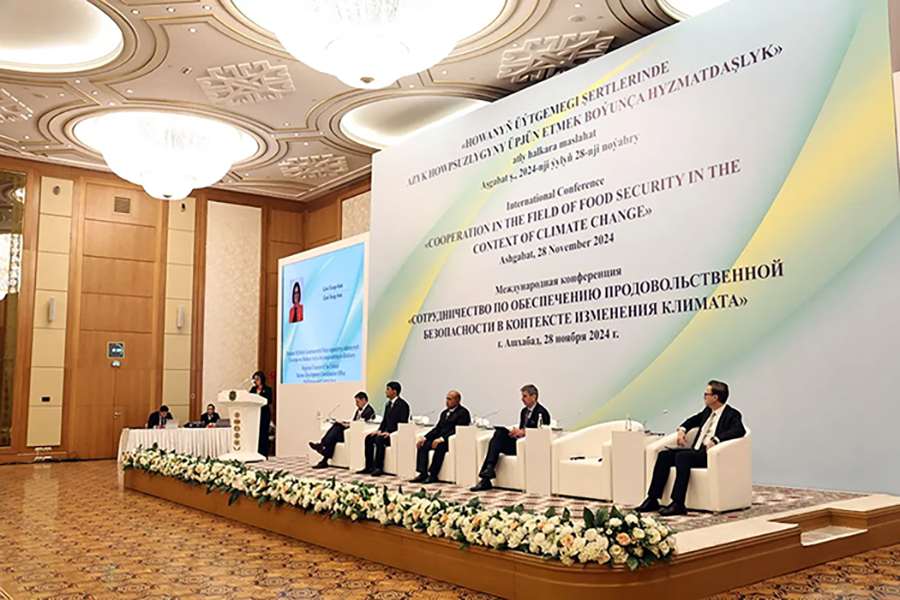
Regional and international cooperation. Ashgabat hosted: (1) the GEF-FAO meeting with representatives of key Turkmenistan agencies and organizations to present the “Catalyzing Nature-Positive Transformation of Agriculture in Turkmenistan for Enhanced Resilience” Project (July 18); (2) and international conference “Cooperation on Food Security in the Context of Climate Change”, where the Government of Turkmenistan and FAO signed an agreement (November 28); (3) a regular meeting of the Intergovernmental Coordinating Council on Seed Production in CIS (September 16).
Events. Ashgabat hosted several international scientific-practical conferences, including on: (1) “Achieved Milestones and Goals Set for Seed Production” and accompanying exhibition (September 19), (2) “Sustainable Development of Agribusiness” (November 6), (3) “Role of Biotechnology in Sustainable Agriculture” (December 19, Dashoguz), and (4) 16th specialized exhibition a business forum - Iran Agrofood (December 16-18).
The Turkmen delegation participated in the Food AG 2024 (August 9, Karachi, Pakistan) and the International Forum of Landlocked Developing Countries: Food Security and the Sustainable Development Goals (September 5-6, Tashkent, Uzbekistan).
Energy
The Ministry of Energy currently oversees 12 power plants with a total installed capacity of 6,511.2 MW. For the period of January to December, the sector’s power generation and related services reached 104.6% of the annual target.
Latest developments in legislation. The following laws were adopted: (1) “On energy efficiency and energy saving” (No.90-VII of 30.03.2024), which establishes legal, economic and institutional frameworks and measures for energy saving and efficiency, including concessional lending, tax preferences and tariff policies; (2) “Ratification of the amendment to article VI of the Statute of the International Atomic Energy Agency” (13.07.2024).
National strategies and programs. Turkmenistan is advancing its State Program on Energy Saving (2018–2024), the National Strategy for Renewable Energy Development until 2030, and the Program for Energy Diplomacy Development (2021–2025).
The construction of a 1,574 MW combined-cycle power plant is underway in Turkmenbashy district, Balkan province. The “Balkan-Dashoguz” high-voltage power transmission line and its two 500 kV substations were commissioned to create a single energy ring in the country. A 10 MW combined solar-wind power plant is being built in the Kyzylarvat district, Balkan province.
Projects. The EU-funded “Support to Sustainable Energy Connectivity in Central Asia (SECCA)” Project organized several events in 2024, including: (1) international conferences “Prospects for introduction of green innovative energy efficiency technologies in the electric power industry of Turkmenistan” (March 18, Mary), “Climate change – challenges and solutions for sustainable energy” (May 2, Turkmenbashy), “Renewable Energy Sources Transition – the Energy of the Future” (July 8, Mary), “Opportunities for Turkmenistan’s Participation in the Horizon Europe Program” (November 26, Ashgabat), and “Sustainable Energy for Environmental Protection – Reviewing International Best Practice” (November 28, Mary); (2) lectures and roundtables for students of higher education institutions (April 27-30, Ashgabat; May 3, Turkmenbashy).
The project team participated in the following events in Kazakhstan: (1) Central Asian and European Hydrogen Diplomacy Forum (May 23, Astana); (2) Regional Conference on Gender and Energy in Central Asia (October 17-18, Almaty); (3) regional training on the model-based integrated energy and climate analyses (December 11-13, Almaty).
Regional and international cooperation. Meetings were held between: (1) the MFA of Turkmenistan and the UNECE Director of the Sustainable Energy Division, who addressed the perspectives for partnership in green energy and reduced methane emissions (October 22, Ashgabat); (2) energy ministers of Uzbekistan and Turkmenistan, where the parties discussed potential joint projects to expand their cooperation in the supply of natural gas, RES and innovative technologies (October 23, Ashgabat).
Following the 9th meeting of the Energy Subcommittee of the Turkmen-Chinese Intergovernmental Cooperation Committee, a MoU was signed in Beijing (November 18).
Events. Ashgabat hosted several events, including: (1) Transportation Engineering and Safety Conference (TESC-2024) (June 5); (2) international expert meeting on promoting cooperation and sustainable development (October 16-17); (3) International Conference and EXPO “Development of Construction, Industrial, Chemical and Energy Sectors in Turkmenistan” (November 3-5); (4) OSCE regional seminar on green energy development in Central Asia (November 14-15).
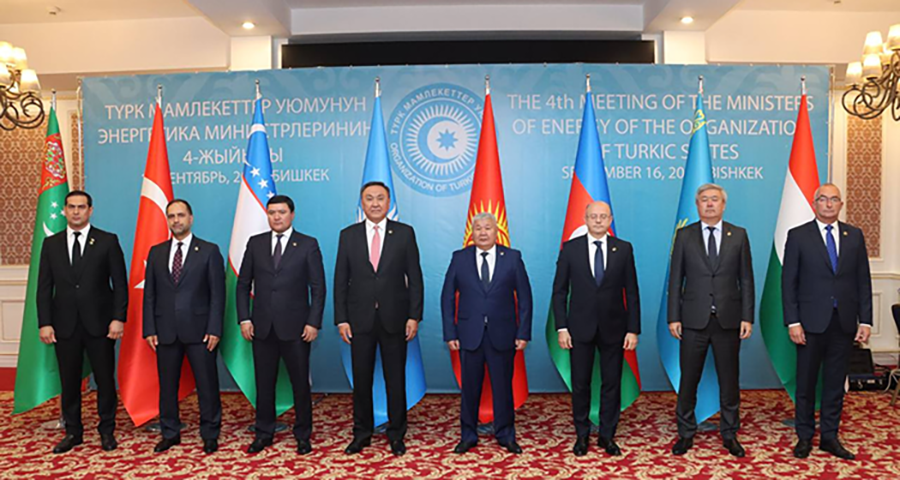
The Turkmen delegation participated in: (1) the 1st Meeting of Energy Ministers of CA states (August 6, Astana, Kazakhstan); (2) the 4th meeting of the Energy Ministers of the OTS Member-States (September 16, Bishkek, Kyrgyzstan); (3) UNECE Sustainable Energy Week (September 18-19, Geneva, Switzerland).
Environment and Climate Change
Latest developments in legislation. The following laws were adopted: (1) “On Hydrometeorological Activities” (No.91-VII of 30.03.2024), which sets the legal, economic and institutional frameworks for hydrometeorological activities; (2) “On accession to the Convention on International Trade in Endangered Species of Wild Fauna and Flora” (13.07.2024).
National strategies and programs. Turkmenistan is implementing its National Strategy on Climate Change, with some actions set in the Strategy included in sectoral programs and socio-economic plans. Ongoing programs: (1) 2021-2025 National Forestry Program, which provides for annual tree-planting campaigns in spring and autumn; a roundtable was conducted to launch a newly developed practical guide on methods for planting orchards and forests in Turkmenistan; (2) 2021-2025 National Program on the Aral Sea.
The Regional Consultative Meeting of the ESCAP was held in Ashgabat to discuss the establishment of the UN Special Program for the Aral Sea Basin (November 30-December 1). Following the meeting, a final document was adopted and would be presented at the 81st session of ESCAP (April 21-25, 2025, Bangkok, Thailand).
At meetings of the Cabinet of Ministers in Ashgabat: (1) the President of Turkmenistan has approved a state program and corresponding action plan for comprehensive development of biotechnology in 2024-2028 (May 10); (2) the 2025-2026 roadmap on strengthening international cooperation of Turkmenistan was adopted as a follow up to the goals and objectives set in the Global Methane Pledge. A package of measures was developed for implementation of the roadmap (November 1).
Projects. As part of the “Developing a National Adaptation Planning Process in Turkmenistan” (UNDP/GCF) project, a series of trainings/workshops were held on: “Integrating climate change adaptation into water management planning in Turkmenistan” (March 11-12); “Raising awareness on adaptation to climate change and risks imposed by climate change in the sectors and economic activity of Turkmenistan: water and agricultural sectors” (March 13-15); “Tools for adaptation to climate change in water and agricultural sectors” (April 7-8); “Strengthening climate resilience of the water-energy-food-ecosystem nexus in Turkmenistan and Central Asia” (May 14) . A roundtable “Draft adaptation component of the updated NDC of Turkmenistan” (May 15) and a series of workshops for the private sector on climate change and adaptation (June 3-7, July 9-10 and July 15-16, October 21-25, Ashgabat, Dashoguz) were also organized.
As part of the “Sustainable Cities in Turkmenistan: Integrated Green Urban Development in Ashgabat and Awaza” (GEF/UNDP) Project, the following events were held: (1) lectures for university teachers (February 1); (2) contest “Women Scientists: Leaders in Climate Change” (March 2); (3) training on greenhouse gas inventory (April 3-5) and improvement of environmental monitoring in Turkmenistan (May); (4) working meeting on preparation of the 4th National Communication and the 1st Biennial Report of Turkmenistan on the UNFCCC (August 29).
As part of the “Regional Climate Action Transparency Hub for Central Asia”/ReCATH project, the project team from Turkmenistan participated in regional seminars on climate finance (March 11-15) and climate transparency (October 8-9) in Tashkent, summer academy (July 23-August 2) in Istambul, etc.
The “Strengthening the Resilience of Central Asian Countries by Enabling Regional Cooperation to Assess Glacio-nival Systems to Develop Integrated Methods for Sustainable Development and Adaptation to Climate Change” Project (GEF/UNDP/UNESCO) was launched. Ashgabat hosted a national workshop on November 8-9. Project team from Turkmenistan participated in regional and subregional seminars (April 3-4 and November 4-5, Almaty, Kazakhstan).
and subregional seminars (April 3-4 and November 4-5, Almaty, Kazakhstan). The new GIZ “EU for Green Development in Turkmenistan: Policy Dialogue and Climate Action 2024-2028” Project was launched with the support of EU and the German Federal Foreign Office (September 13, Ashgabat).
Regional and international cooperation. High-level meetings took place between: (1) heads of Central Asian environmental agencies and the OSCE Secretary General (March 4, Ashgabat); (2) the Minister of Foreign Affairs of Turkmenistan and the UN Under-Secretary-General/Executive Director of UNEP (August 16, via videoconference).
Turkmenistan and GIZ concluded an agreement on the Project “Measures and policy dialogue for combating climate change in 2024-2028” (May 14, Ashgabat).
Turkmen delegation participated in the meeting of the ICSD Consultative Council (March 27) and the 33rd meeting of the ICSD (March 28) in Astana and the regional conference “Cooperation for sustainable development on occasion of the 30th anniversary of ICSD” (November 26, Dushanbe). See Interstate Commission on Sustainable Development
Eco-activists of Turkmenistan took part in the international environmental camp (June 23-26, Samarkand; June 27-30, Tashkent, Uzbekistan). Turkmen experts joined the 14th Central Asia Leadership Program for Sustainable Development (September 9-13, Almaty, Kazakhstan).
Events. The following events were held: (1) a roundtable “The roadmap of youth initiatives in the fight against climate change in Turkmenistan – Youth for climate action” (January 25, Ashgabat); (2) the scientific-practical conference “Turkmenistan – a region of environmental well-being” (June 5, Ashgabat); (2) meeting “A Road from Dubai to Baku – Pre-COP29” (June 12, Ashgabat); (3) series of conferences of Youth on Climate Change (September 3, Dashoguz; September 6, Balkanabad; September 9, Mary; September 11, Turkmenabad; September 16, Ashgabat); (4) briefing on “Establishment of the Regional Centre for Climate Technologies for Central Asia in Ashgabat” and “Development of Renewable Energy Sources in Turkmenistan” (September 12, Ashgabat).
The Turkmen delegation participated in: (1) the 14th Conference of the Parties to the Convention on the Conservation of Migratory Wildlife Species (CMS/COP14) (February 12-17, Samarkand, Uzbekistan); (2) a workshop on regional cooperation in CA “Peace forest initiatives for land restoration, sand and dust storm prevention and natural resource sharing” (March 12-15, Tashkent, Uzbekistan); (3) Bonn Climate Change Conference (June 3-13, Bonn, Germany); (4) CACCC-2024 (May 27-29, Almaty, Kazakhstan); (5) 29th Conference of the Parties to the UN Framework Convention on Climate Change/COP29 (November 11-22, Baku, Azerbaijan).
Emergencies
Floods. Spring floods and mudslides - triggered by heavy rainfall along the Sumbar, Kushka, and Murgab river systems - impacted Mary, Akhal, Balkan, and Lebap provinces. The surge caused extensive damage to both infrastructure and the agricultural sector.
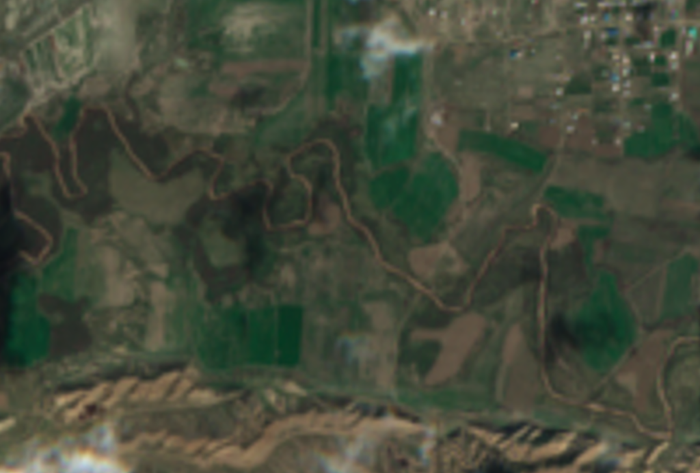
Sumbar River, Balkan province Source
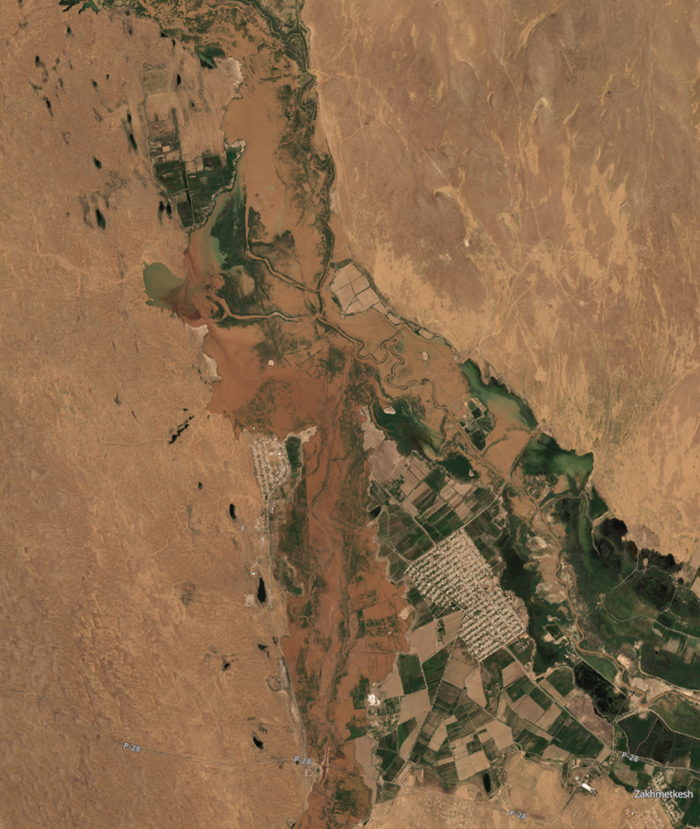
Kushka and Murgab Rivers, Mary province Source
Drought. Driven by climate change and rising domestic consumption, Turkmenistan’s water security is under increasing strain as in other Central Asian countries. A comparison of satellite imagery from July 2018 to July 2024 indicates a 4.14% reduction in the surface area of Sarykamysh Lake. Over this six-year period, the lake's area declined from 4,110 km² to 3,940 km², a net loss of 170 km². The lake is directly dependent on water volume in the Amu Darya River.
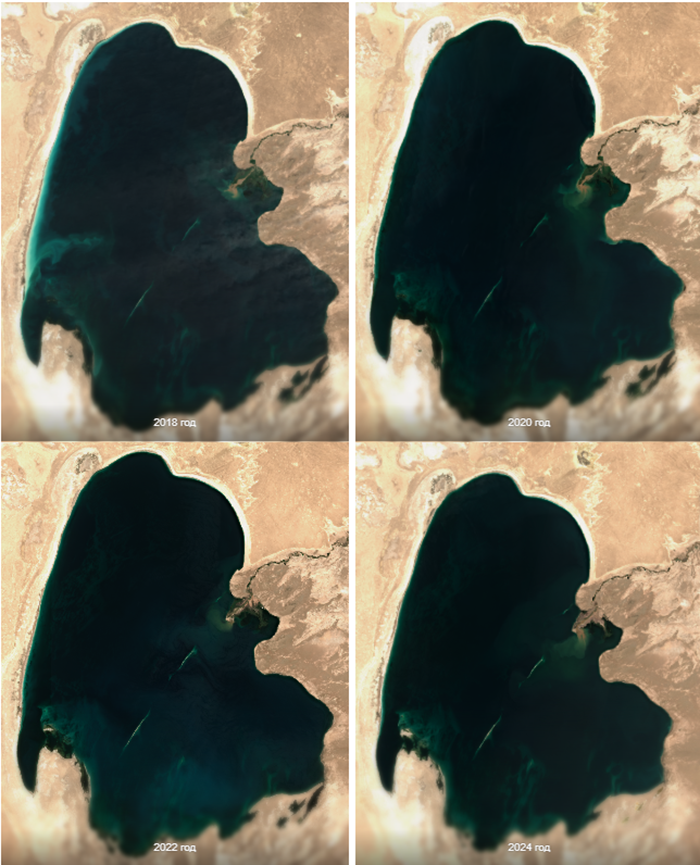
This situation is a result of persistently high temperatures, the 2021-2023 severe drought, and a growing water deficit in the lower Amu Darya River basin in recent decades.
Projects. As part of the USAID-funded “Strengthening Local and National Capacities for Emergency Preparedness and Response in High Earthquake Risk and Natural Hazard Prone Countries of Central Asia” Program, a series of capacity building activities were organized to ensure emergency (July 10-19, all provinces) and natural disaster preparedness (December, Akhal province).
Turkmen experts participated in several events organized under the “Climate risk management in Central Asia” Project (GIZ), including: (1) the kick-off workshop on climate risk assessment and capacity building (February 20, Tashkent); (2) a workshop on the assessment of climate risks and adaptation priorities in the Murgab River basin (July, Mary); (3) the regional annual meeting (December 10, Tashkent).
SDGs in Turkmenistan
Turkmenistan maintained its momentum within the Sustainable Development Cooperation Framework between United Nations and the Government of Turkmenistan, 2021-2025. Recent meetings of the Joint Steering Committee focused on assessing current progress, reviewing UN evaluative recommendations, and finalizing a new Strategic Roadmap to guide the program's next phase through 2026-2030 (March 29; April 4, December 13, Ashgabat).
The Government of Turkmenistan and UN held meetings of the Joint Expert Group on SDG Financing. During the meetings: (1) the 2024 report of the UN Inter-Agency Task Force on Financing for Development was presented; (2) proposed SDG indicators and target values for food systems and food security and the methodology for labeling Turkmenistan's state budget using the SDG Rapid Comprehensive Assessment were discussed (May 3 and July 12, Ashgabat).
Turkmenistan ranked 94 out of 166 countries in the annual Sustainable Development Goals Index published by the UN and the Bertelsmann Foundation.
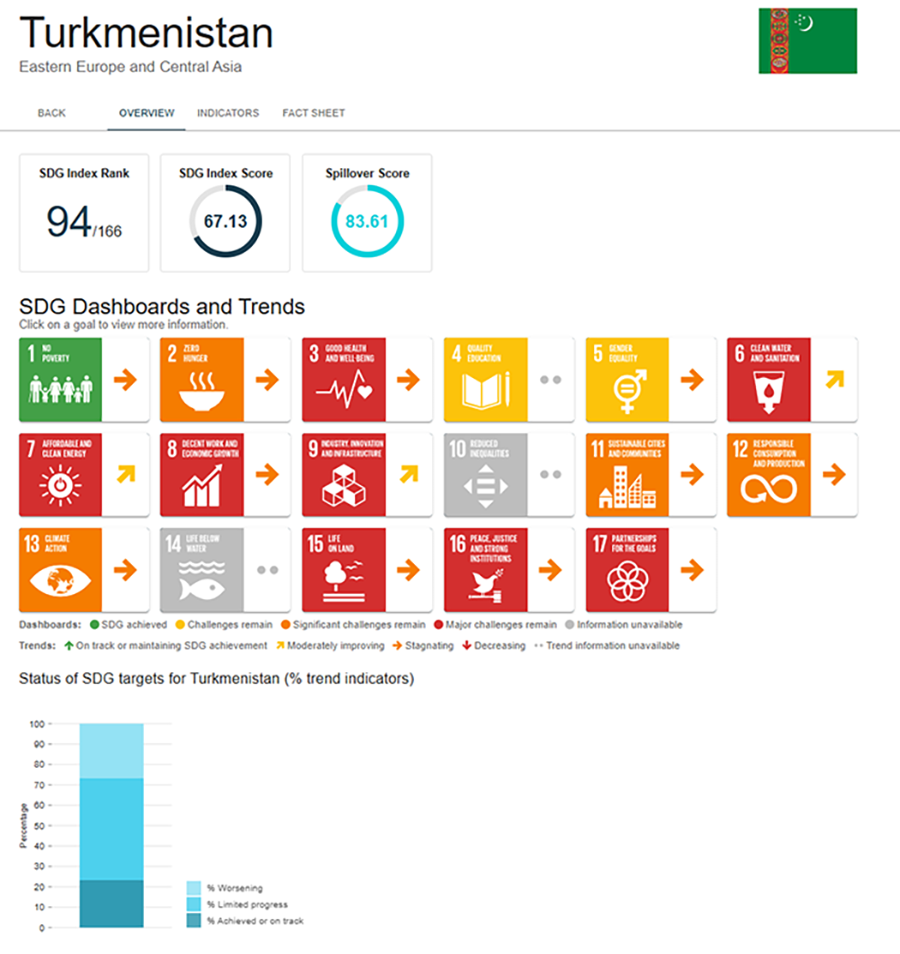
Projects. The 3rd phase of the “Partnering for SDG acceleration” Project (February 9, Ashgabat) was launched and focused on monitoring progress towards the SDGs, examining international practices in financing sustainable development and taking measures to prepare for accession to WTO.
As part of the “Sustainable Development Goals' Young Ambassadors” Project (UNDP): the awarding ceremony was held for the 2022-2024 cohort in advancing the SDGs (February 15, Ashgabat); the new cohort for 2024-2025 was selected and introduced to the UN Office representatives (August 27, Ashgabat). The SDG Ambassadors participated in: (1) series of youth conferences on climate change (September 3, Dashoguz; September 6, Balkanabad; September 9, Mary; September 11, Turkmenabad; September 16, Ashgabat); (2) the meeting “Path to Sustainability: Children and Youth in Action” (November 6-8, Budva, Montenegro).
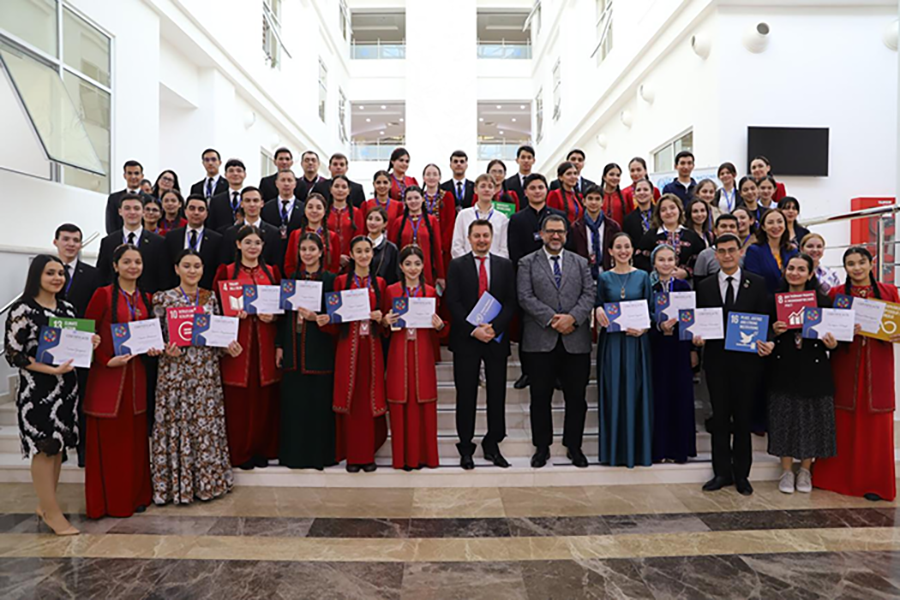
Capacity building. The UNDP Office in Turkmenistan, in partnership with the Institute of International Relations of the Ministry of Foreign Affairs of Turkmenistan, organized a series of educational sessions titled “TurkmenYouth4SDGs”, focusing on the role of youth in advancing the SDGs, climate action and education, ecosystem preservation, sustainable urban development, and responsible consumption and waste management (April 8, April 22, May 23, June 4, June 21).
Ashgabat hosted seminars and trainings for the University teachers (February 5) and media representatives (June 27-28).
International cooperation. The UNDP Office in Turkmenistan and the “Turkmenportal” media portal extended MoU for 2024-2026 to advance the SDGs . The renewed partnership will prioritize empowering women and girls, promoting their participation in digital technologies to ensure equal access to the benefits of the digital age for both women and men (November 15, Ashgabat).
Events. Ashgabat hosted: the international competition “The Role of Youth in Achieving the SDGs” (May-June); the international conference “Joint actions for strengthening international peace and sustainable development” (December 11).
The Turkmen delegation participated in: (1) the UNECE Regional Forum on sustainable development, where the Permanent Mission of Turkmenistan to the UN Office in Geneva organized a side event “Involving youth in the processes of achieving the SDGs: global and national political challenges” (March 13 and 14, Geneva, Switzerland); (2) ECOSOC Forum on Financing for Development Follow-up (April 22-24, New York, USA); (3) Forum “Youth for a Sustainable Future in Central Asia” (October 28-29, Almaty, Kazakhstan).
Cooperation on the Caspian Sea
Turkmenistan takes a proactive position in developing balanced solutions to Caspian issues. Throughout the year, meetings of the Interdepartmental Commission of Turkmenistan on Caspian Sea were held to discuss the results of its work in 2023, Action Plan for 2024, fulfilment of decisions and agreements adopted at the meeting of the Heads of the Caspian littoral States, and planned activities related to the Caspian Sea Day; the “Caspian Ecological Initiative” set forth by the Turkmen President during the plenary meeting of the 78th session of the UNGA was discussed as well (March 31, July 28, Ashgabat).
The Turkmen delegation participated in the meetings of the High-Level Working Group for the Caspian Sea, where a methodology for laying straight baselines in the Caspian Sea and the progress on the draft five-sided documents were addressed. Following the meetings, a Communique was adopted (May 6-7, Baku, Azerbaijan; June 24-26, Tehran, Iran; October 22-23, Astana, Kazakhstan).
International cooperation. The Ministry of Environmental Protection of Turkmenistan signed a MoU with the Blue Marine Foundation to protect biodiversity and environment and promote their conservation in the Caspian Sea (April, Ashgabat).
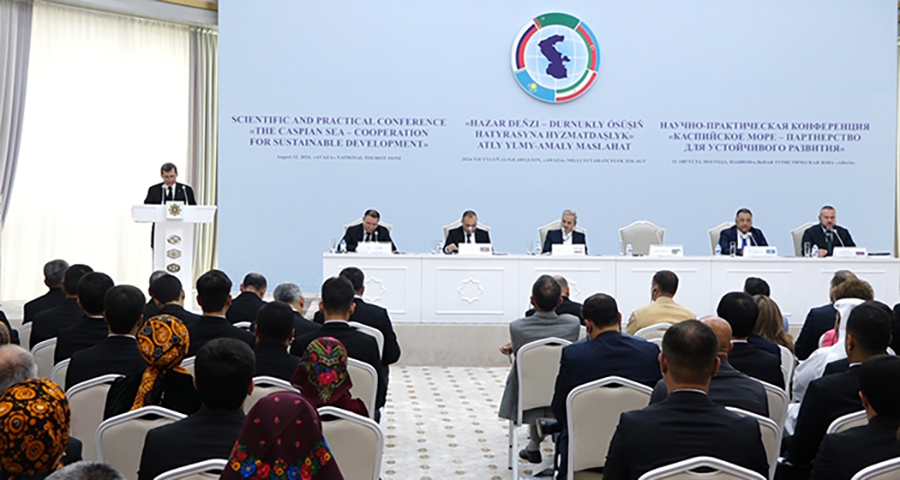
Events. Turkmenistan hosted the scientific-practical conference “Caspian Sea: Partnership for Sustainable Development” (August 12, Turkmenbashy) and a roundtable “The Caspian Sea is a sea of peace, trust and cooperation” (August 14, Ashgabat).
The Turkmen delegation participated in: (1) the 9th Caspian Media Forum (August 16-17, Astrakhan, Russia); (2) meeting of Foreign Ministers of the Caspian littoral states (September 18, Moscow, Russia); (3) International Caspian Digital Forum (October 31-November 1, Kaspiysk, Dagestan, Russia); (4) Caspian Sea officials meeting on “Lowering Caspian Sea Levels amid Climate Change” (November 18, Baku, Azerbaijan); (5) 8th (28th) session of the Coordinating Committee for Hydrometeorology of the Caspian Sea (CASPCOM) (November 26, online); (6) preparation meetings on the “Blueing the Caspian Sea” Project (December 4-6, Astana, Kazakhstan); (7) 8th session of the Commission for the Conservation and Rational Use of Aquatic Biological Resources of the Caspian Sea (December 17-19, Astrakhan, Russia).
Foreign Policy and International Cooperation
In 2024, Turkmenistan pursued a foreign policy grounded on neutrality, peacefulness, and constructive cooperation. This involved over 20 high-level international visits and participation in key global summits, culminating in the signing of 238 cooperation documents.
Working and official visits. During the year, the President of Turkmenistan paid visits to Russia (May, October 7-8, October 24, December), Kazakhstan (August, September), and Malaysia (December).
Key developments in the foreign policy of Turkmenistan in 2024
Turkmenistan’s foreign policy prioritizes strong regional partnerships and enhanced multilateral engagement via the UN. These diplomatic efforts are paired with a commitment to sustainable development through large-scale infrastructure initiatives.
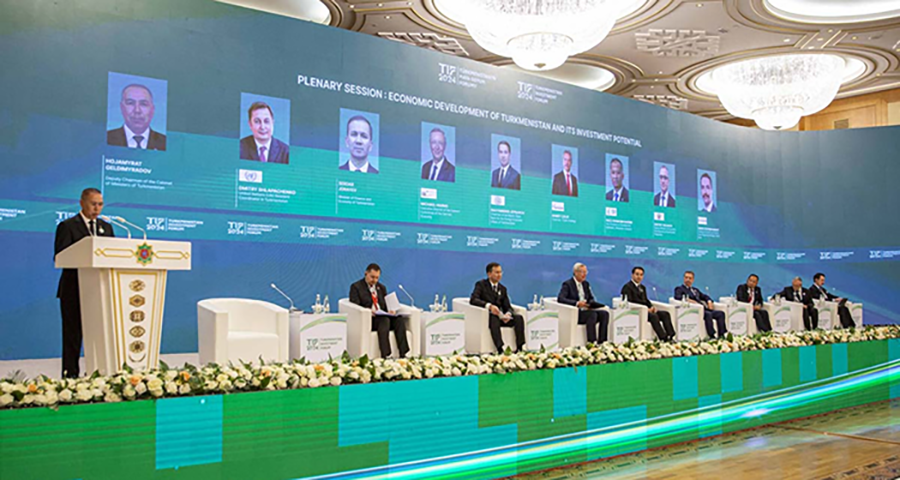
Ashgabat hosted: (1) 15th meeting of the Council of Elders of the OTS (March 12); (2) Turkmen-Afghan business forum, where the parties presented basic principles and approaches to sound water management in the region (March 4); (3) meeting of the CIS Council of Heads of Government, where members approved the Concept of Cooperation in the Energy Sector till 2035 and its priority action plan and the Concept of Cooperation in Hazardous Waste Management and its priority action plan for 2024-2029 (May 24); (4) Turkmenistan Investment Forum/TIF 2024 to discuss the prospects for energy sector development in Turkmenistan and projects on RES and sustainable resource use (September 10-11); (5) International Forum “Interrelation of Times and Civilizations – Basis of Peace and Development” dedicated to the 300th anniversary of Magtymguly Fragi. The final document of the Forum is published in six official languages of the UN as an official document of the UNGA 79th session (October 11).
At the World Smart City Expo 2024, Arkadag city got Smart City Excellence Award, Foreign city award, and For the Great Contribution to the World Smart City Expo 2024 award (September 4, Goyang, Republic of Korea).
Development of alliances and strategic partnerships. During the official visit of the Kazakh President to Turkmenistan, a declaration “On Strengthening Friendship and Deepening a Multifaceted Strategic Partnership” was signed (October 10, Ashgabat, Turkmenistan). See Cooperation between the Countries of Central Asia on Water and Other Matters
President of Turkmenistan enacted the following laws for the ratification of: (1) the Agreement between the Government of Turkmenistan and the Government of the People's Republic of China on international road traffic (March 30); (2) the Protocol to the agreement between Turkmenistan and the EU and its Member-States (July 13); (3) the Agreement between the Government of Turkmenistan and the Government of the Republic of Kazakhstan on mutual investment promotion and protection (November 30); (4) the Agreement between the Government of Turkmenistan and the Government of Mongolia on international road traffic (November 30).
Additionally, President of Turkmenistan signed laws for the accession to the following international instruments: (1) the Protocol to the Eurasian Patent Convention of September 9, 1994 on the Protection of Industrial Designs signed in 2019 (July 13); (2) the UN Convention on Transit Trade of Inland States (November 30); (3) the Multilateral Agreement for the Establishment of an International Think Tank for Landlocked Developing Countries (November 30).
The Turkmen delegation participated in the: (1) 2nd Ministerial Meeting of the Strategic Dialogue “Cooperation Council of the Arab States of the Gulf - Central Asia” (April 15, Tashkent, Uzbekistan); (2) XV International Economic Forum “Russia-Islamic World: Kazan Forum2023” (May 16, Kazan, Russia); (3) ministerial conference in the “Central Asia – Italy” (May 29, Rome, Italy); (4) meeting of the EU-Central Asia High-Level Political and Security Dialogue (June 5, Brussels, Belgium); (5) 6th Consultative Meeting of the Heads of State of Central Asia (August 9, Astana, Kazakhstan); (6) 2nd Central Asia-Germany high-level meeting (September 17, Astana, Kazakhstan); (7) XVI BRICS Summit (October 24, Republic of Tatarstan, Russia); (8) 14th annual meeting of Deputy Foreign Ministers of Central Asia (November 26, Tashkent, Uzbekistan); (9) 5th meeting of Central Asia-China Foreign Ministers (December 1, Chengdu, PRC).
Promotion of the national interests and reinforcement of the country’s image
EU. Turkmenistan and the EU signed a protocol to the Partnership and Cooperation Agreement (March 18, Brussels, Belgium). The joint Conference of Turkmenistan and the EU “30 years of cooperation between Turkmenistan and the European Union: working together for a better future” (May 14, Ashgabat) and the 23rd meeting of the Turkmenistan-EU Joint Committee were held. The parties discussed energy, environmental protection and sustainable development, as well as water management, methane emissions reduction, regional environmental issues and prospects for RES development (December 4, Brussels, Belgium).
UN. Turkmenistan has established the Turkmenistan-UN Strategic Advisory Council to coordinate the preparation, selection, and approval of projects with specialized UN agencies and to develop related proposals for the Turkmen Government (March 7, Ashgabat). Throughout the year, three meetings were convened to approve the 2025–2027 Roadmap for SDG Reporting in Turkmenistan. Participants also outlined the next steps for establishing the UN Regional Center for Climate Change Technologies in Central Asia and drafting the Sustainable Development Cooperation Framework between Turkmenistan and the UN for the 2026–2030 period (May 3, July 16, December 6, Ashgabat).
At Turkmenistan's initiative, the UN adopted two resolutions: (1) A/RES/78/266 “International Year of Peace and Trust, 2025” (March 21, New York, USA); (2) A/RES/79/5 “Zone of peace, trust and cooperation of Central Asia” (October 24, New York, USA).
The UNGA published as official documents of the78th and 79th sessions: (1) the national position statement delivered by the President of Turkmenistan at COP28 А/78/676 (December 1-2, 2023, Dubai, UAE); (2) a summary document of the side event entitled “High-level dialogue on transport and energy connectivity for increasing development financing: the United Nations Decade of Sustainable Transport 2026-2035 – Ashgabat Platform for Energy Connectivity” А/78/875 (April 23, New York, USA); (3) summary report of the international meeting of Experts on Enhancing Energy Connectivity: Fostering Collaboration and Achieving Sustainable Development A/79/594 (October 16-17, Ashgabat); (4) Final Declaration of the high-level meeting of the Group of Friends of Sustainable Transport A/79/636 (November 27, Ashgabat); (5) the outcome document of the anniversary meeting of the State parties to the Treaty on a Nuclear-Weapon-Free Zone in Central Asia entitled “Enhancing cooperation between existing nuclear-weapon-free zones” (December 5, Ashgabat).
Turkmenistan has been elected as a Vice-Chair of the UNGA 79th session during the 87th plenary meeting (June 6) and a member of the ECOSOC for 2025-2029 (April 9).
The Turkmen delegation participated in the 2024 SPECA Economic Forum and the 19th session of the SPECA Governing Council (November 26-28, Dushanbe, Tajikistan).
CIS. The Turkmen delegation participated in the meetings of: (1) the Council of the Heads of State (October 8, Moscow, Russia); (2) the Council of Heads of Government (December 12, Moscow, Russia); (3) the Council of Foreign Ministers (April 12, Minsk, Belarus; October 7, Moscow, Russia); (4) the Economic Council (March 29, September 20, November 29, Moscow, Russia); (5) an informal Summit of the Heads of State (December 25, St. Petersburg, Russia).
SCO. Chairman of the Halk Maslahaty of Turkmenistan took place in the SCO Summit (July 4, Astana, Kazakhstan). The Turkmen delegation participated in the 23rd meeting of the Council of Heads of Government (Prime Ministers) of the SCO Member-States (October 16, Islamabad, Islamic Republic of Pakistan).
Sources:
The official web-sites of: Ministry of Foreign Affairs of Turkmenistan, Permanent Mission of Turkmenistan to the UN, State Committee for Water Management of Turkmenistan, Ministry of Justice of Turkmenistan, Ministry of Energy of Turkmenistan, Ministry of Economy and Finance of Turkmenistanа, Academy of Sciences of Turkmenistan.
Information agencies:
turkmenistan.gov.tm,
tdh.gov.tm,
turkmenportal.com,
oilgas.gov.tm,
orient.tm,
arzuw.news,
www.parahat.info
ashgabat.in
Development and support
Scientific-Information Center ICWC