
Section 5. Key water developments in the countries of Central Asia
5.5 Republic of Uzbekistan
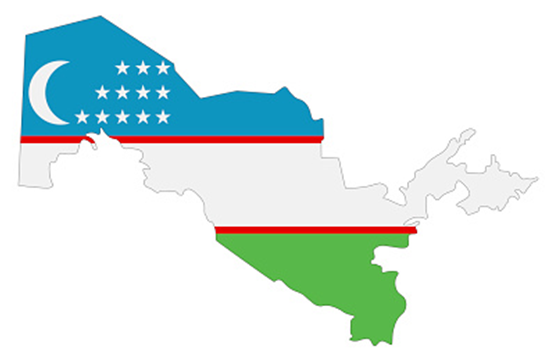
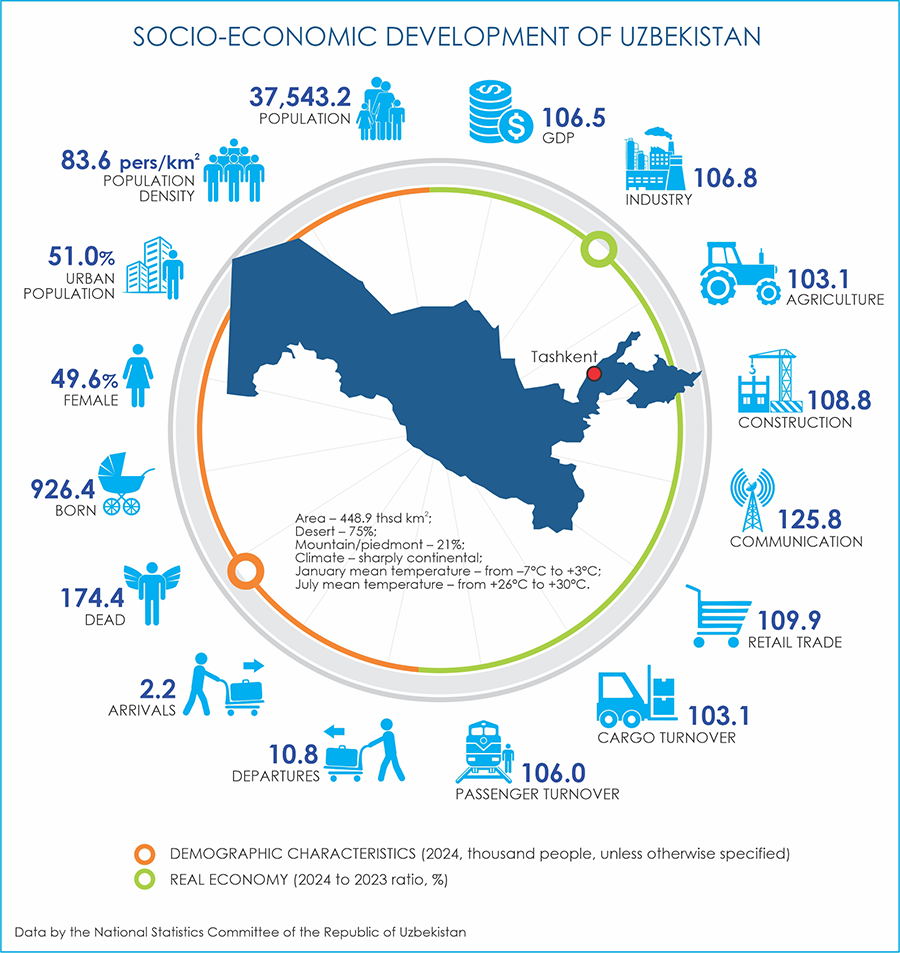
Water sector
Water resources. Uzbekistan’s average annual water consumption ranges between 51 and 53 billion m3, with approximately 80% (roughly 41 km3/year) sourced from transboundary rivers. While the nation’s natural fresh and brackish groundwater deposits have a potential yield of 27.6 km3/year, these resources are unevenly distributed across the territory. Current water demand is satisfied through a mix of surface water (50.9 km3/year), usable groundwater (0.5 km3/year), and recycled collector-drainage water (1.6 km3/year). Sectoral water allocation is heavily dominated by agriculture (90–91%), followed by the municipal sector (4.5%), industry (1.4%), fisheries (1.2%), and thermal power (0.5%).
Latest developments in legislation. The following legal documents were approved in this sector: (1) PP-5 of 05.01.2024 “On measures for the improvement water management system and increase of water-use efficiency at the lower level” that led to abolition of 155 District Irrigation Departments and 161 special water management services. On their basis, 159 district bodies of the SE “Water Supply Service” were established and the main tasks of the Service were determined; (2) PKM-79 of 09.02.2024 “On measures in support of activities of the SE “Water Supply Service”; (3) UP-74 of 07.05.2024 “On priorities for introduction and development of a modern management system in the water sector”, which defines key areas of activity of the Ministry of Water Management and of water reform. New independent legal entities were established under the Ministry: Agency for Operation of Water Facilities, Department for Implementation of Water Projects, Central Dispatch and Water Balance Service, Center for Water Management Reforms, etc. The institutional framework of the Ministry, Agency and Departments were also approved; (4) ZRU-981 of 22.10.2024 to amend ZRU-837-XII of 06.05.1993 “On water and water use”. It adjusts the tasks and mandate of the SE “Water Supply Service”.
Water management system. In 2024, 500 water management facilities were transitioned to the private sector under Public-Private Partnerships (PPP). Simultaneously, the construction and reconstruction of 10,000 km of irrigation and drainage networks led to a 510,000-ha reduction in saline land area. Infrastructure upgrades also included the modernization of 555 km of canals across 75 sites, with 433 km lined with concrete via state funding. Complementing these efforts, local authorities and agricultural clusters spearheaded the concreting of an additional 13,500 km of on-farm irrigation canals.
Operational efficiency has been significantly enhanced through digitalization: the 'Smart Water' system was deployed at 11,446 facilities, Diver devices were installed at 6,953 sites, and 1,709 pumping stations were equipped with online monitoring controls. Furthermore, 67 major water facilities achieved full automation.
Water-saving technologies. In 2024, the adoption of water-saving technologies expanded by 849,000 ha. This growth was primarily driven by the implementation of drip irrigation (84,900 ha), sprinkler systems (37,200 ha), and discrete (surge) irrigation (30,600 ha), alongside laser leveling on 522,800 ha. As a result, the total area under water-saving practices has reached 2 million ha, including 560,000 ha of drip irrigation. Looking ahead to 2025, the government aims to bring an additional 500,000 ha under these technologies.
To support this transition, the suvkredit.uz digital platform was launched in 2024 to facilitate loans for water-saving projects. These financial packages offer a five-year term, including a two-year grace period, at a competitive interest rate of 14% per annum.
Projects. In 2024, by order of the Center for Implementation of Foreign Investment Projects in the Water Sector, 385.8 billion UZS were allocated for 3 projects with the participation of international financial institutions. By request of the Nukus branch of the IFAS, 25 billion UZS were allocated for one irrigation facility.
As part of: (1) the “National Water Resources Management in Uzbekistan” Project (SDC), an agreement for Project Phase III was signed and assistance was provided to draft a new Water Code; (2) USAID Regional Water and Vulnerable Environment Activity, a demo tour to Uzbekistan for Tajik specialists was organized (October 28-31); (3) “Climate-Sensitive Water Resources Management in Central Asia” Project (GIZ), computers to the Inspection for Control over the Safety of Water Management Facilities and Water Use were handed over and a regional workshop on the improvement of water quality in the Amu Darya River basin was held (December 4); (4) “Strengthening the Capacity for Safe Management of Transboundary Water Resources in Central Asia using Innovative Information and Communication Technologies” Project (GIZ, CESDRR), field studies on the Ugam and Zarafshan Rivers were held; (5) “Water Resources Management in the Fergana Valley, phase-II” Project (WB), 160 km of canals in Andizhan, Namangan, and Fergana provinces were rehabilitated.
Capacity building. Trainings were held: (1) for water experts and farmers on amendments made by the Decree PP-5 of 05.01.2024, on the procedure for the use and advantages of the suvkredit.uz platform (January 11, Takhiatash; February 1, Ishtikhon; March 14, Toylok; April 4, Nurabad; April 25, Payyaryk); (2) on installation and phased testing of the Diver devices (January 31, Samarkand province); (3) empowering women in water sector (June 24).
Throughout the year, the School of Water Workers offered trainings for farmers and water experts.
Events. Tashkent hosted: (1) opening ceremony of the “School of Water Workers” (February 3); (2) international conference “Contemporary Developments in Afghanistan: Implications on Central Asia” (February 20); (3) 8th annual international congress and exhibition: Hydropower Central Asia and the Caspian (March 14-15); (4) panel discussion “Water management: role of the state, business and society” as part of the Invest Forum (May 2); (5) a workshop on “Development of the national green sukuk framework for Uzbekistan” followed by a two-days “Islamic finance and sukuk/green sukuk training program” (October 16-18); (6) a scientific practical conference “Water in Central Asia: the future in cooperation” (November 8); (7) 3rd meeting of the Regional Working Group on a mutually beneficial water-energy mechanism (December 10).
Regional and international cooperation. In 2024, Uzbekistan held regular meetings of joint working groups and water management commissions with Kazakhstan, Kyrgyzstan, Tajikistan, and Turkmenistan to discuss the matters related to water abstraction from transboundary canals and coordinated operation of reservoirs. See Cooperation between the Countries of Central Asia on Water and Other Matters
The Uzbek delegation participated in the: (1) meeting of the IFAS Board (September 18, Astana, Kazakhstan); (2) 86th (April 12, Shymkent, Kazakhstan) and 87th (November 6, Ashgabat, Turkmenistan) meetings of ICWC; (3) 12th and 13th meetings of the Working Group on Institutional and Legal Improvement of IFAS (September 4, Astana and December 12-13, Almaty, Kazakhstan). See International Fund for Saving the Aral Sea
The meetings with the ICID President (March 17) and the head of the Nile Sugar (September 30) took place in Tashkent.
Drinking Water Supply
According to AO Uzsuvtaminot, the population’s access to centralized drinking water supply increased from 77.2% to 80.9%. In 2024, centralized supply reached an additional 1.1 million people, while service quality was improved for 2.9 million people.
A SCADA system has been fully implemented in Tashkent, allowing for the remote management of pumping equipment and the real-time transmission of pressure and flow data to a central control room. This digital rollout is now expanding to several other provinces.
Furthermore, since December 1, all payments for water and sewerage services have transitioned exclusively to electronic channels.
Latest developments in legislation. Several legal documents were approved in 2024: (1) PKM RUz No.93 of 16.02.2024 “On approval of the Regulation on issuing state social orders for the provision of drinking water supply and sanitation services in rural settlements lacking access to centralized drinking water supply”; (2) PKM RUz No. 517 of 19.08.2024 on amendments to certain Government decrees in connection with improvement of the drinking water supply and sewerage system; (3) PP RUz No.308 of 30.08.2024 “On measures for development of public-private partnership in the Republic of Uzbekistan in 2024-2023” to involve private companies in modernizing and managing water supply and sanitation networks in each region until the end of 2028.
Uzbekistan is the first in Central Asia to join the UN Protocol on Water and Health . Its objective is to protect human health and well-being through sustainable water management and by preventing and controlling water-related diseases.
Projects. In 2024, 20 infrastructure projects were implemented to expand drinking water and sanitation systems. These initiatives resulted in the installation of 926 km of water supply pipelines and 146 km of sewage networks. As part of: (1) the “Improvement of drinking water supply for Namangan City” (EBRD) Project, it is planned to reconstruct “Jiydakapa” water facility; internal networks and pumps were upgraded; and, woks on repairing 49 artesian wells, installing new pumps and replacing main units with seven modern energy efficient ones were completed; (2) the “Bukhara Water Supply and Sanitation” Project, Navbakhor and Buzachi water distribution facilities in Karaulbazar district are under reconstruction; AO Bukhoro Suv Taminot paid a working visit to Turkey; (3) the “Modernization of the water supply system and road network in the city of Samarkand” (ABDF) Project, 6 pumping stations in the city, at the Chuponota and Dakhbet water facilities are reconstructed; (4) the “Improvement of drinking water supply by sourcing water from the Tupalang reservoir” Project, 147 km of the network were laid and the quality of water supply was improved for 1.1 million people (40% of the region's population) in several districts of Surkhandarya province; (5) the “Improvement of drinking water supply in Jizzakh province by sourcing water from the Zarafshan River” Project, drinking water supply was improved fpr 286,000 people in Jizzakh, Dustlik, Pakhtakor, and Mirzachul districts; (6) the “Reconstruction of water supply systems in cities and districts of Tashkent province” Project, Kodiriya water treatment facility was upgraded to improve drinking water supply to Kibray, Tashkent, and Zangiata districts, ensuring that 8,000 people received access to centralized drinking water supply and improving service quality for another 265,000 people.
Within the framework of the launched UNECE “Strengthening action in Uzbekistan on water and sanitation and protection of water resources from accidental pollution in the face of climate change” Project, the following events were convened: (1) kick-off meeting (March 14); (2) 1st meeting of the Interdepartmental Working Group on safety of tailings dumps and prevention of accidental water pollution in Uzbekistan to discuss ToR and WG members, approve the 2024-2025 Action Plan, and participate in workshop on application of the assessment methodology on the territory of the tailings dump No. 2 of the Almalyk Mining and Metallurgical Combine (September 24-26, Tashkent and Tashkent province).
Events. (1) roundtable on implementation of the PPP-based program under the “Uzbekistan-2030 Strategy” (February 29); (2) launch of the American Noble Science Inc project for implementation of the Digital Twin system to monitor water infrastructure in real-rime and ensure rapid decision-making and proactive management at the “Salar” water facility (March 16); (3) opening ceremony of the “Obishirsoy” water facility (May 16); (4) meeting with media and bloggers (July 12); (5) press conference with AO Surkhandarya Suv Taminot (August 1) on “Preventing and addressing illegal water and sewer connections” (August 15); (6) European Economic Days in Uzbekistan (November 6).
AO Uzsuvtaminot participated in: (1) the 10th World Water Forum (May 20-21, Bali, Indonesia); (2) a meeting of the Intergovernmental Commission (June 4, Paris, France).
Capacity building. Trainings were held on/for: (1) “Transfer of HR departments to a centralized management system” (January 14, Fergana); (2) assessing wastewater treatment operators (February 28, Jizzakh province); (3) “Improving legal literacy of sector specialists and new approaches to working with media” (March 19, Tashkent); (4) operators of water facilities (July 5, Shakhrisab district); (5) civil protection and preparation for autumn-winter season (August 10, Khorezm province); (6) AO Samarkand Suv Tanimot (August 11, Samarkand); (7) heads and press services of regional water supply enterprises (August 25-28, Tashkent province); (8) AO Khorazm Suv Taminot (November 30, Khorezm province).
AO Uzsuvtaminot participated in a capacity building workshop for the Uzbek Ministry of Water Management. The program included lectures on the following themes: (1) China's water management strategy, practice and cooperation; (2) experience and practice in water management in Zhejiang province; (3) small hydropower development in China; (4) pumped storage power generation; (5) Belt and Road international cooperation in water management (November 20, Hangzhou, China).
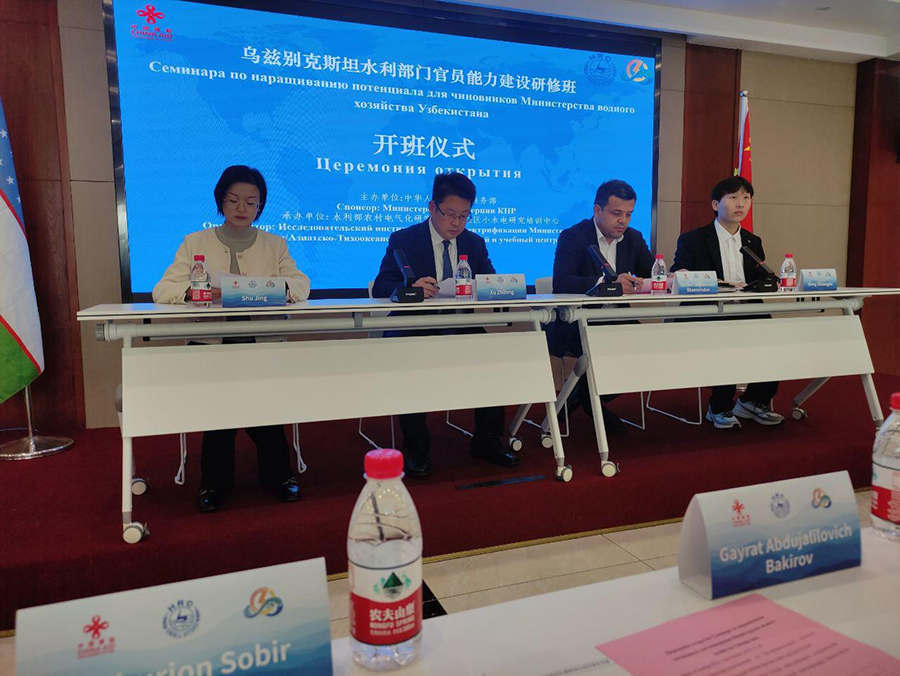
AO Uzsuvtaminot’s representatives participated in trainings in Turkey on water storage and distribution, wastewater treatment, water loss accounting, etc.; visited Ankara Su Kanalizatsiya Idarasi and Konya Su Kanalizatsiya Idarasi (September 15-21); signed a MoU with the Tashkent State Transport University on training of highly qualified personnel (August 8, Tashkent).
International cooperation. Several documents were signed in 2024: (1) following to ealier MoU with the Spanish Almar water solutions, an agreement for the submission of technical and financial project proposal, development of design documentation, and commencement of construction; (2) MoU with the Turkish Akfen Su on a joint PPP-based project; (3) agreement with Abu Dhabi Sustainable Water Solutions on a joint modern treatment facility project with a capacity of 1 million m3 per day and a 42-km long sewer collector using SCADA and GIS in Kuyichirchik district, Tashkent province; (4) Roadmap with Egyptian Hassan Allam Holding for a PPP-based project in Kashkadarya, Samarkand, and Jizzakh provinces.
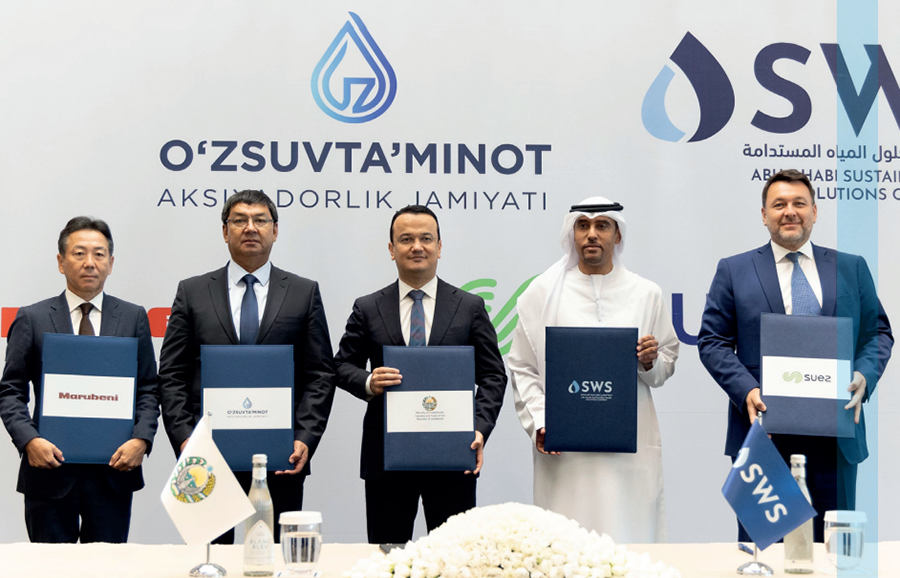
Source: Aqua Journal (July-August)
A number of meetings were organized with: (1) AIIB (January 22, May 2); (2) French Suez (February 21, May 2) and Eiffage Génie Civil (Match 15); (3) ADB (March 12, August 5); (4) Swiss Embassy (March 20); (5) Ministry of Economy, Trade and Enterprise of Spain (April 15); (6) Spanish IDOM, MAI, Hidroconta, WEG (April 16) and IDOM (April 20); (7) K-Water Academy (April 17); (8) Russian SIBUR Xolding (April 18); (9) American Nobel System (April 23); (10) Chinese Beijing Enterprises Water Group (April 22), Hainan Runsen Xinxiang Investment Group (May 20); (11) Japan (June 11); (12) KPMG company (June 12); (13) Saudia Miahona (July 1); (14) EBRD (July 18); (15) French Development Agency (July 31); (16) Korean KMAC (September 24).
Agriculture
In 2024, the agricultural sector yielded 9 million tons of grain and over 3 million tons of cotton. Additionally, production of vegetables and cucurbits exceeded 16 million tons.
Effective from 2024, the tax rate for water abstracted from surface and underground sources for irrigation and aquaculture is set at 100 UZS per cubic meter. This unified rate applies also to dekhkan (smallholder) farms, and individuals with private plots.
According to the Ministry of Agriculture, the sector's scale has expanded between 2021 and 2024. The country now encompasses over 785,500 dekhkan farms, 671 agricultural clusters, 91,700 commercial farms, and 5.5 million household plots.
Latest developments in legislation. Approved documents:
• Laws (1) ZRU-903 of 02.02.2024 “On protecting soils and increasing their fertility”. When carrying out urban planning, geological exploration, mining and other non-agricultural activities, the fertile soil layer shall be removed by the entities performing these works and exported to places determined by the executive authorities for storage; (2) ZRU-995 of 08.11.2024 “On agricultural cooperatives”.
• Decrees: (1) UP-151 of 30.09.2024 “On additional measures to introduce new market mechanisms in agroindustry and to create industrial orchards and vineyards”, which provides for the establishment of the Agency for Agroindustry Development and the State Trust Fund for Agroindustry Development and Support . The main areas of activities of the Agency have been determined. To implement the Decree, PP-344 of 30.09.2024 “On the organization of the activities of the Agency for Agroindustry Development at the Ministry of Agriculture” was approved. Starting January 1, 2025, the following subsidies will be introduced: up to 16 million UZS per ha for installing drip irrigation in intensive orchards and vineyards; from 40,000 to 250,000 UZS, depending on the diameter of water pipes, for implementing water-saving technologies; (2) UP-164 of 22.10.2024 “On additional measures to further improve state control system in agroindustry” providing for the transfer of the Agroindustry Control Inspectorate from the Uzbek MA to the Cabinet of Ministers while maintaining the current financing procedure. The Inspectorate has also been assigned additional tasks.
• Resolutions: (1) PP-146 of 01.04.2024 “On measures to fulfill the tasks identified in the framework of the dialogue of the President of the Republic of Uzbekistan with entrepreneurs engaged in growing, production and export of agricultural and food products”, which establishes the Republican Commission for Exports of Agricultural and Food Products, alongside the Roadmap for implementation; (2) PP-153 of 05.04.2024 “On measures to increase incomes and ensure the employment of young people by allocating land to them, as well as the development of new lands”, which ensures that local authorities allocate 60,000 ha of reserve land for online auctions and rental by youth for 30 years to organize dekhkan farms using “one area - one product” principle with financial support measures; a system covering the full cycle from production to sales is being implemented; (3) PP-238 of 27.06.2024 “On measures to further support poultry sector and introduce modern genetic technologies and cooperation system”; (4) PP-304 of 28.08.2024 “On additional measures to support agricultural enterprises”, providing for a reduction in the tax burden on business entities by simplifying the requirements of tax legislation and improving tax administration; (5) PKM-574 of 13.09.2024 “On financial measures to support raw cotton producers”, which sets subsidies of 1 million UZS per ton to producers of raw cotton sold through accredited commodity exchanges. This measure applies to raw cotton only and excludes the output of integrated cotton-textile enterprises and seed cotton. A minimum price for the 2024 harvest is set at 6.8 million UZS per ton, etc.; (6) PP-413 of 02.12.2024 “On measures to further improve public administration in agriculture”; (7) PP-431 of 12.12.2024 “On measures to further increase the level of agricultural mechanization”.
New appointments. Sh.Khaydarov was appointed the Head of the Agriculture Department of the Tashkent province; B. Eshchanov – Director of the Institute for Advanced Studies and Retraining in the area of agriculture.
Strategies and programs. The “Agricultural Development Strategy of the Republic of Uzbekistan for 2020–2030” is continued. Under Government Decree PP-227 (June 20, 2024), aimed at accelerating agricultural and food sector reforms, a dedicated Project Office - the Center for Projects in Agriculture and Food - was established. This center is tasked with overseeing key strategic areas and a newly approved Roadmap for priority development. Furthermore, to bolster human capital and technical capacity, a specialized center for agricultural training and retraining, along with three state-of-the-art laboratories, will be established in the Samarkand, Fergana, and Tashkent provinces.
The “Agricultural Development Strategy of the Republic of Uzbekistan for 2020–2030” is continued. Under Government Decree PP-227 (June 20, 2024), aimed at accelerating agricultural and food sector reforms, a dedicated Project Office - the Center for Projects in Agriculture and Food - was established. This center is tasked with overseeing key strategic areas and a newly approved Roadmap for priority development. Furthermore, to bolster human capital and technical capacity, a specialized center for agricultural training and retraining, along with three state-of-the-art laboratories, will be established in the Samarkand, Fergana, and Tashkent provinces.
FAO presented the National Program of Action for the Digitalization of Agriculture in Uzbekistan. Developed at the request of the Ministry of Agriculture, this initiative stems from the “Preparing the Grounds for Digital Transformation” project. Following a comprehensive assessment of the sector's current digital maturity, a National Digitalization Strategy was finalized (February 20, Tashkent).
The Expert Commission on Crop Varieties convened to modernize the State Register. The commission reviewed 58 grain varieties and hybrids, including 48 varieties of soft wheat, 4 of hard wheat, 3 of triticale, and 3 of barley. These selections were evaluated for formal inclusion in the register as promising candidates for future large-scale cultivation.
Agroclusters. The following Presidential Decrees were adopted: (1) UP-15 of 18.01.2024 “On additional measures for the improvement of procedures for leasing agricultural land plots”; (2) UP-103 of 22.07.2024 “On measures for the improvement of financial and economic condition of enterprises in cotton-growing sector”, which provides for the extension of the repayment deadline preferential loans allocated in 2023 until April 1, 2025; return of interest payments at the expense of the State Support Fund for Agriculture for clusters that fully repaid loans before 01.12.2024; extension of debt payment schedule deadlines to 1 year, etc.
The agricultural ministries of Uzbekistan and Tajikistan agreed to establish a joint agricultural cluster and increase agricultural trade to $1 billion.
Projects. The key technical and economic indicators, alongside the forecast disbursement schedule, have been officially approved for the Islamic Development Bank-funded “Integrated Rural Development” (Phase 2) project (PP-141 of 28.03.2024).
As part of (1) the “Sustainable forest management in the mountainous and valley areas of Uzbekistan” (FAO/GEF) project, a campaign on tree planting was organized (March 22); trainings in modern methods of continuous monitoring and inventory of forest ecosystems, improving forest management technologies and developing a common forestry information system in Uzbekistan were offered (April, Kashkadarya province; June, Namangan province; July, Syrdarya province); a workshop on determination of carbon dioxide in Uzbekistan’s forests was held (December 20, Tashkent); (2) “Supporting an inclusive transition to a green economy in the agri-food sector and development of a “climate-smart” Uzbek Agriculture Knowledge and Innovation System” (EU/UNDP) project, a contest “Youth and Innovative Development of Agriculture”; transferred water quality sensors to the Research Institute of Fisheries was held; field visits to Innovation Groups (IGs) in Fergana province, focusing on pioneering agricultural and aquacultural practices were organized; a workshop on the use of Geoportal was held; (3) “Supporting self-reliance through climate resilient agriculture in the Aral Sea Region” (UNDP/Japan) project, 100 farmers and entrepreneurs on “One Village - One Product” (OVOP) and “Kaizen” methods as part of a series of trainings in pilot areas got trained; a decentralized wastewater treatment system using Japanese Johkasou technology is installed. For details, see https://www.undp.org/uzbekistan/publications/main-achievements-japan-funded-project-december-2024?utm_source=chatgpt.com; (4) “Supporting an inclusive transition to a green economy in the agri-food sector and development of a “climate-smart” Uzbek Agriculture Knowledge and Innovation System (UAKIS)”/EU-AGRIN (EU/UNDP) project, modern equipment was handed over to the Research Institute of Fisheries (March 5, Tashkent province); solar drip irrigation system in Akkurgan district was commissioned (August, Tashkent province); a field expedition and training sessions at the demonstration site were offered for farmers, experts in agronomy and public representatives (October 11-16, Fergana province).
The “Integrated Natural Resources Management in Drought-prone and Salt-affected Agricultural Production Landscapes in Central Asia and Turkey”/CACILM-2 (FAO/GEF) project was completed. In 2024, the 'Soil Doctors' program was launched in Bukhara in collaboration with the Global Soil Partnership (GSP). This initiative aims to train 100 farmers in sustainable land management, supported by a four-day national 'train-the-trainer' session. Regional advancements continued in Bukhara with a seminar on the AquaCrop model, focused on optimizing irrigation through predictive modeling. Meanwhile, in Kashkadarya, a 10-hectare sprinkler irrigation system was commissioned at the Kamashi branch of the Southern Research Institute of Agriculture, designed to reduce water consumption by 30–50%. FAO provided the Tashkent State Agrarian University (TSAU) with laboratory equipment valued at $17,500, including a nuclear magnetic resonance spectrometer and soil moisture sensors. Additionally, a new GIS laboratory was inaugurated at the Bukhara Institute of Natural Resources Management, following a concluding technical workshop in October.
AKB Agrobank has inaugurated the 'Agro In Vitro' project in the Gallaaral district of the Jizzakh province. This $20 million complex, spanning 20.4 hectares, utilizes advanced genetic and breeding technologies to produce high-yielding, virus-free fruit and ornamental seedlings. The facility features a world-class laboratory and a fifth-generation greenhouse ranked as the fifth most energy-efficient globally. Its innovative design significantly reduces operational costs, cutting heating expenses by up to 30% and cooling requirements by up to 70% (June 7).
FAO launched the following projects: (1) Sustainable Agricultural Mechanization Strategy, to assist the development of agricultural engineering and increase the level of mechanization in agriculture. Tashkent hosted a kick-off meeting (February 29) and international workshop, where FAO presented results of the analysis of the current state of agricultural mechanization (November); (2) “Assessing the Impact on Food Systems, Land Use, and Restoration in Uzbekistan” (Kashkadarya, Khorezm provinces, and Republic of Karakalpakstan), to implement best practices for sustainable landscapes and value chains for wheat. The project includes the Action Plan approved by the PP-277 of 10.06.2022 to combat land degradation.
Capacity building. The following capacity building activities were organized: (1) seminar “Strengthening social partnership in agroindustry and implementing sectoral collective agreements and newly adopted agreements” (January 25, Tashkent); (2) training on innovative agricultural methods, new technologies and methodologies for farm managers in the Republic of Karakalpakstan (February 2, Nukus); (3) workshop “Qualitative preparation of statistical and analytical information and strengthening mutual integration” (February 13, Tashkent); (4) IOFS training “Seeds of Tomorrow: Innovations and Testing for Resilient Agriculture in Central Asia: Uzbekistan” (May 11, Karshi).
Events. Uzbekistan hosted: (1) 19th international exhibition AgroWorld Uzbekistan 2024 (March 12-14, Tashkent); (2) scientific practical conference on the Netherlands Fruit Solutions in Uzbekistan project (April 18, Samarkand); (3) Uzbekistan-Japan Food Industry Development Forum (June 24); (4) International Forum on Food Security and Sustainable Development Goals for Landlocked Developing Countries (September 5-6, Tashkent); (5) Central Asia Forum on the Role of Women in Science, Innovation, Food Security and Sustainable Development dedicated to the International Day of Rural Women (October 4, Tashkent).
The Uzbek delegation participated in the: (1) international exhibition “Green Week-2024” (January 19-28, Berlin, Germany); (2) 60th International Agricultural Exhibition (February 26-27, Paris); (3) 91st Global Congress of the International Association of the Exhibition Industry (November 22, Cologne, Germany).
Regional and international cooperation. IFAD has opened a representative office in Uzbekistan (June 15, Tashkent). See International Fund for Agricultural Development
Meeting were held with: (1) Ambassadors Extraordinary and Plenipotentiary of the Republic of Tajikistan (January 12), France (February 23), Republic of Ghana (March 15), Islamic Republic of Iran (March 15), Germany (March 29), Republic of Benin (September 13), and Kingdoms of Morocco (September 19); (2) GIZ (February 2), Indian Nath Bio-Genes Ltd. (March 12) and Turkish Arbel Group (March 28); (3) Minister of Agriculture of Belarus (March 18); (4) Republic of Korea (June 20), Ministry of Agriculture and Forestry of Turkey (September 10, September 16) and Korean Society of Mechanical Engineers (September 23); (5) Minister of Agriculture and Food of Rostov province, Russia (September 23).
MoU were signed between: (1) State Scientific and Design Institute “Uzdavyerloyikha” at the Uzbek MA and the Korean Ko-Uz Drone Alliance; (2) Chinese Academy of Agricultural Sciences and Uzbek MA.
Energy
In 2024, national electricity production reached 1.5 billion kWh, following a 2023 output of 77.9 billion kWh. Exports rose significantly to 115.9 million kWh (a 51.3% increase year-on-year), while imports remained stable at 121.9 million kWh (up 0.3%).
The year was marked by a substantial expansion in generation capacity, with 2,787.9 MW of new facilities commissioned. This capacity comprises 1,000 MW of solar, 800 MW of wind, and 22.7 MW of hydroelectric power, alongside 965.2 MW from thermal sources. Additionally, two 150 MW energy storage systems were integrated into the grid.
Infrastructure resilience was further bolstered through the overhaul of 29,495 km of distribution networks and 10,221 transformer substations. New construction added 2,896 km of power lines and 649 transformers. In the gas sector, 168.2 km of high- and medium-pressure networks, along with 455 distribution points, were modernized or reconstructed.
New appointments. M.Khodzhaev was appointed Chairman of the AO Khududgaztaminot Board; F.Nabiev – Director of the Research Institute of Renewable Energy under the ME; Zh.Obidzhonov – Chairman of the AO Uzenergosotish Board; O.Akhunov – First Deputy Chairman of the AO Thermal Electric Stations Board.
Latest developments in legislation. Approved laws: (1) ZRU-939 of 07.08.2024 “On Electricity Sector”, which sets procedures for production, transmission, distribution, storage, purchase and sale, import and export of electricity; status, rights and obligations of power market participants; (4) ZRU-940 of 07.08.2024 “On energy saving and rational use and improved energy efficiency”, which enshrines basic principles, standards and mechanisms for state regulation in the area.
The Cabinet of Ministers approved the following Decrees: (1) No. 426 of 16.07.2024 “On measures to train and retrain personnel in the field of fuel and energy”, which establishes the Center for retraining and advanced training of personnel in the energy sector, with territorial branches; (2) No. 690 of 19.10.2024 “On procedure for conducting audits of consumers of fuel and energy resources and energy consumption by buildings and structures”.
Events. Tashkent hosted: (1) the 8th annual international Congress and Exhibition: Hydropower Central Asia and Caspian (March 13-14); (2) 3rd International Investment Forum, where the projects of Kambarata-1 HPP and Yavan HPP were presented (May 2-3); (3) Uzbekistan Energy Week (May 14-16), with 26th International Exhibition and Conference “Oil and Gas of Uzbekistan - #OGU 2024” (May 14-16); Power Uzbekistan 2024 – 17th International Exhibition on Energy, Energy Saving, Nuclear Energy, Alternative Energy Sources and 4th International Energy Conference (May 14-16); GETCA 2024 – a specialized international exhibition “Renewable Energy Sources” (May 14-16); (4) Conference “Prospects for Higher Technical Education in the Context of Scientific and Technical Development” (May 25). Samarkand hosted the international conference “Prospects for Peaceful Use of Nuclear Energy for Sustainable Development of the OIC Member-States: International and National Experience” (December 5).
The Uzbek delegation participated in: (1) the 29th Baku Energy Forum (June 4-6, Baku, Azerbaijan); (2) 17th international conference and exhibition “Electricity Production Using Solar Photovoltaic Stations and Smart Energy”, where a cooperation agreement was signed between Yashil Energy LLC, Malaysian Fabalous Sunview and Chinese Huawei Tech. Investment Tashkent to jointly develop green energy in Uzbekistan and construct small power plants with a total capacity of 50 MW on buildings and structures of social sphere, etc. (June 13-15, Shanghai, China).
Regional and international cooperation. An agreement between the Uzbek and Azerbaijan Governments on deepening energy cooperation was approved (PP-134 of 19.03.2024).
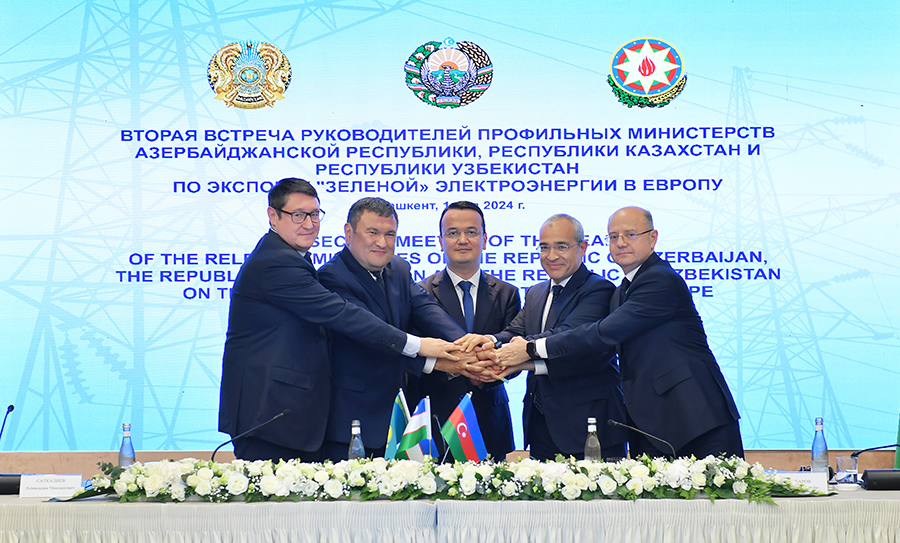
The following meetings were organized: (1) representatives of energy sector from Kazakhstan, Kyrgyzstan and Uzbekistan met to discuss measures to overcome energy shortages, ensure sustainable operation of water and energy systems of countries, etc. (See Cooperation between the Countries of Central Asia on Water and Other Matters); (2) 2nd meeting of the Energy Ministers from Azerbaijan, Kazakhstan and Uzbekistan, where the parties discussed green energy exports via Azerbaijan to Europe; a MoU was signed to unite energy systems of these countries (May 1, Tashkent); (3) 1st meeting of the energy ministers of the CA and Azerbaijan, following which a communiqué was signed. Azerbaijan, Kazakhstan and Uzbekistan signed a MoU to lay an energy cable along the bottom of the Caspian Sea (August 6, Astana).
A number of cooperation documents were signed: (1) agreement between the AO Uzenergoengineering and China Institute of Electric Power Planning and Engineering (EPPEI) to establish a joint venture in planning, engineering and consultation in the electric power industry and an international educational institution; (2) MoU between the Uzbek ME and the Austrian Federal Ministry of Finance to deepen cooperation; (3) agreement between the Uzeltekhsanoat Association, AO BESK, ERSO holding and the Union of Industrialists and Entrepreneurs of Bashkortostan to modernize power grid infrastructure of Uzbekistan, introduce best practices for managing grid facilities, and create digital energy infrastructure and intelligent accounting systems for electric energy, etc.
USAID transferred to the CDC Energy modern hardware and software ($1.4 million) to modernize the Center as a regional system operator in the context of growing integration of RES and formation of a Central Asian regional electricity market (January 10, Tashkent).
Meetings were held with: (1) Qatari Al Mirqab Capital (January 22, online), Saudia AcwaPower (May 22, Tashkent), Turkish Cengiz Holding and Kalyon Holding (June 28, Tashkent); 2) representatives of Turkmenistan (August 30, Ashgabat, Turkmenistan) and IAEA Director-General (December 4, Tashkent).
Hydropower
According to the AO Uzbekgidroenergo, Uzbekistan has 77 HPPs with a total capacity of 2,256 MW. This includes 14 large, 26 medium, 20 small, and 17 micro plants. In 2024, these HPPs generated 8.2 billion kWh of electricity.
Latest developments in legislation. The Government Decree No. 252 of 12.07.2024 “On accelerating measures to reform the hydropower sector” approves the 2024-2028Hydropower Development Program. By 2028, it is planned to build HPPs and PSPs with a total capacity of 3.3 GW. Current capacity will be increased from 2.2 to 5.5 GW; annual power generation is to reach 15.7 billion kWh.
HPP construction and modernization. According to the AO Uzbekgidroenergo, a number of small HPPs were commissioned in 2024, including: (1) Ugam-1 (1.48 MW), Ugam-2 (1.63 MW), Ugam-3 (1.69 MW) on the Ugam River in Bostanlyk district, Tashkent province. Ugam-3 is equipped with modern units and fully automated control; (2) Akhangaran (2,5 MW; 6.6 million kWh) is equipped with a highly efficient hydraulic unit in Tashkent province; (3) Zarchob-1 (3 MW; 13.3 million kWh) and Zarchob-2А (3 MW; 13.3 million kWh) on the cascade of the Tupalang reservoir in Surkhandarya province.
Micro HPPs (1) Shokhimardon with 2 units (2.2 MW, 13 million kWh) on the Koksu River in Fergana province; (2) Pastdargam-3 (760 kW) on Dargom Canal in Samarkand province; (3) Kumkurgan (2.7 million kWh) in Surkhandarya province; (4) Vodil (430 kW; 2.17 kWh) on the Shokhimardansai River in Fergana province.

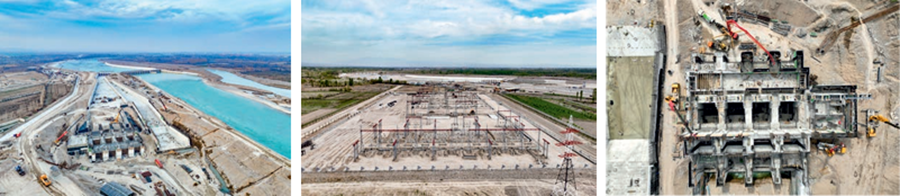
Work is under way on the Lower Chatkal HPP (90 MW), Pskem HPP (400 MW) in Bostanlyk district, Tashkent province, and 3 small HPPs (Rabat, Chappasuy and Tamshush HPPs, total of 24 MW) on the Aksu River in Kashkadarya province, etc.
The construction of a cascade of 6 HPPs (228 MW) started on the Naryn River in Namangan province through local design and contracting organizations (March 25). Implementation terms: HPP-1 and cascade substation: 2024–2025, HPP-2: 2025–2026, HPP-3 and HPP-4: 2026–2027, HPP-5 and HPP-6: 2027–2028. The AO Uzbekgidroenergo and Turkish DOLSAR Engineering signed an agreement on construction (June 5, Ankara, Turkey).
It is planned to: (1) modernize 5 HPPs (total capacity 30 MW) located in Tashkent and Samarkand provinces by the South Korean company; 2) construct an HPP in Izbaskan district, Andizhan province, etc.
The Russian Dealan Energo LLC started supplying micro HPPs to Uzbekistan. Their partial manufacturing in Uzbekistan is also considered.
Regional and international cooperation. Uzbekistan, Kyrgyzstan and Kazakhstan signed a tripartite agreement on preparation to the construction and operation of the Kambarata-1 HPP . See Cooperation between the Countries of Central Asia on Water and Other Matters
The AO Uzbekgidroenergo signed: (1) an agreement with Masdar (UAE) to implement of pumped storage projects in Uzbekistan (March 13, Tashkent); (2) a MoU with the Ozaltin Holding (June 5, Ankara, Turkey).
Thermal power
AO Thermal Electric Stations is the main producer of thermal power (more than 70%).
By the end of 2024, TPPs saved 1 billion m3 of gas (against the plan of 700.5 million), generated 31.9 billion kWh of electricity and supplied consumers with over 11 million Gcal of heat. Under the localization program, $21 million was saved on imports and investments of $646.1 million were attracted. At the AO Navoiy TPP, the training center was organized.
TPPs construction and modernization. In 2024: (1) two 64-MW CCGTs were commissioned at the Tashkent heating plant; (2) a cogeneration boiler house with a gas piston engine (1.2 MW) and 2 Bosch boilers were built in Almazar district, Tashkent; (3) the remaining part (500 MW) of the new TPP in Syrdarya province was commissioned; (4) a new plant with a capacity of 400 MW was launched in Nishan district, Kashkadarya province.
Work continues on adding two CCGTs (1,065 MW) at the Talimarjan TPP, while construction of a new 650 MW CCGT has started at the Navoyi TPP.
Alternative Energy
The Joint venture LLC Sanoat Energetika Guruh (Saneg) has become the first company in Central Asia to implement a methane emissions reduction project and to register with the Emissions Trading Agency (DEHSt) governed by the German Ministry of the Environment.
Latest developments in legislation. Approved legal documents: (1) PKM-13 of 08.01.2024 “On regulation and development of energy supplies based on RES”, which provides for the launch of the Green energy information system by February 1, 2024 to remotely input data on installed RES, their capacity and production, as well as monitor solar panels in real time; (2) ZRU-906 of 07.02.2024 to amend certain legislative acts on further development of RES; (3) UP-79 of 24.05.2024 “On measures to improve the system of state management and control in the field of subsoil use, industrial, radiation and nuclear safety, as well as the use of nuclear energy”, which provides for the establishment of a Committee for Industrial, Radiation and Nuclear Safety and an Atomic Energy Agency under the Cabinet of Ministers, as well as a Mining and Geology Inspectorate of the Ministry of Mining and Geology; (4) PP-213 of 05.06.2024 “On measures to introduce a national transparency system for transition to green economy in the Republic of Uzbekistan” in support of a new online platform of the National Transparency System and its integration with the Green economy platform; (5) PP-263 of 17.07.2024 on measures for generation of alternative thermal energy from medical waste.
Action Plan on Carbon Neutrality in Uzbekistan's Electricity Sector. Uzbekistan has become the first country to receive a payment ($7.5 million) from the World Bank for verified carbon credit sales in the energy sector. Facilitated by the iCRAFT project, the payment rewards a 500,000-ton reduction in CO₂ emissions.
To implement the ISO 50001 standard for energy management, the national O'z DSt ISO 50001:2018 standard was approved.
For the 2025–2027 period, the government has outlined plans to implement a series of waste-to-energy (WtE) plant construction projects.
Regional and international cooperation. On the sidelines of COP29, an agreement was signed with Kazakhstan, Azerbaijan and Saudia Arabia on joint export of green energy to Europe.
The following events were organized: (1) international scientific practical conference “Challenges and Prospects for Nuclear Energy in Uzbekistan” (October 15, Tashkent); (2) international conference “Prospects for the peaceful use of nuclear energy in sustainable development of the OIC Member-States: international and national experience”, where additions to the Framework Country Program between the Atomic Energy Agency under the Cabinet of Ministers of the Republic of Uzbekistan (Uzatom) and International Atomic Energy Agency (IAEA), MoU between Uzatom and the World Nuclear Association, MoU between Uzatom and the Institute of Nuclear Physics of the Uzbek Academy of Sciences were signed.
Solar power. SPPs were launched in Pap district, Namangan province (200 MW to 500 MW); Buka (50 MW to 263 MW) and Yukorichirchik districts (200 MW), Tashkent province; AO Angren TPP (100 kW).
As part of the “Solar House” program, residents of Uzbekistan sold more than 12 billion UZS of green electricity, of which 2.8 billion in Khorezm province, 1.9 billion in Republic of Karakalpakstan, and 1.4 billion in Tashkent.
The adopted Government decrees included: (1) No.125 of 14.03.2024 on construction of a 300-MW SPP and a 75-MW energy storage system in Kashkadarya province through PPP; (2) No.189 of 24.05.2024 on construction a 500-MW SPP and overhead power lines in Pap district, Namangan province; (3) No.190 of 24.05.2024 on construction a 263-MW SPP and overhead power lines in Buka district, Tashkent province.
The construction of a 500-MW SPP by Tepelen Group Holding Limited (UAE) in Tamdym district, Navoyi province and a 500-MW SPP in Pap district, Namangan province is underway.
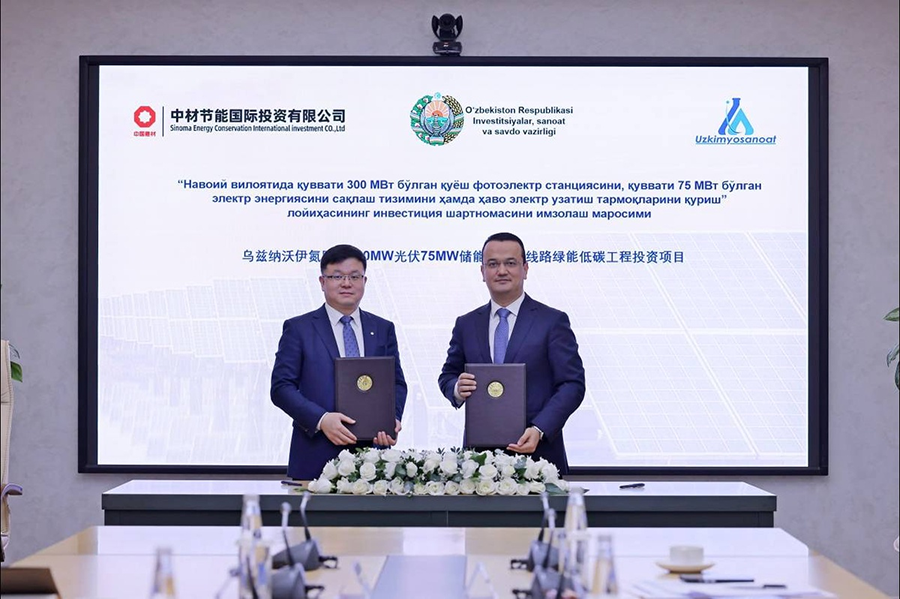
Signed documents: (1) Cooperation agreement between АО Toshkent Invest Kompaniya and Chinese Guangdong Zomman Energy Technology Co. Ltd for a 100-MW SPP through investments; (2) investment agreement with the Chinese Sinoma EC International Investment Co.,Ltd for a 300-MW SPP and 75-MW power storage systems in Karmana district, Navoyi province; (3) loan agreement between ADB and Abu Dhabi Future Energy Company (Masdar) for a 250-MW Nur-Bukhara SPP and 126-MWh battery energy storage system in Bukhara province.
French Voltalia began construction of a 100-MW SPP in Tuprakkala district (February 29, Khorezm). The UN Secretary-General Antonio Guterres visited the RiverSide SPP.
Wind power. Electricity generation from wind farms reached 799.2 million kWh. Commissioned plants: (1) Zarafshan (400 MW) in Tomda district, Navoyi province; (2) 2 WPPs (200 MW each) in Peshka and Gijduvan district, Bukhara province.
The approved Government decrees included: (1) No. 168 of 07.05.2024 on construction of a 250-MW WPP and overhead power lines in Samarkand and Jizzakh provinces (Alpha); (2) No. 169 of 07.05.2024 on construction of a 250-MW WPP and overhead power lines in Samarkand and Jizzakh provinces (Beta); (3) No. 276 of 22.07.2024 on construction of a 300-MW WPP in Nurata district, Navoyi province.
Two wind plants were started in the Republic of Karakalpakstan: a 1-GW WPP in Kungrad district and a 200-MW WPP with a 100 MW storage system in Beruniy and Karauzyak districts. An agreement was signed with Masdar to construct a 1,000-MW WPP in Uchkuduk district, Navoyi province. EBRD is to build a 20-MW electrolyzer and 52-MW WPP to produce $55 million of renewable hydrogen.
Nuclear power. Rosatom's engineering arm, AO Atomstroyexport, and Uzbekistan’s Uzatom signed a contract to construct a low-power nuclear plant in Jizzakh province. The project will employ six Russian RITM-200N reactors, each at 55 MW (May 27, Tashkent). Rosatom will act as the general contractor; the construction site has underwent necessary studies.
Environment and climate change
Latest developments in legislation. Laws were adopted to amend certain legislative acts in the field of: (1) ecology and environmental protection (ZRU-904 of 06.02.2024); (2) flora and fauna (ZRU-1004 of 21.11.2024).
Approved Resolutions:
• Presidential Decrees: (1) UP-106 of 23.07.2024 “On establishment of the Climate Council under the President of the Republic of Uzbekistan”, which approved the Roadmap for the National Strategy for Climate Change Mitigation and Adaptation; (2) UP-149 of 26.09.2024 “On measures to ensure transparency and further improvement of the management system in ecology and environmental protection”; (3) UP-224 of 24.12.2024 “On additional measures to improve state control in the field of industrial, radiation and nuclear safety”.
• Decrees of the Cabinet of Ministers: (1) PKM-101 of 24.02.2024 “On approval of the regulation on the Public Environmental Inspector”; (2) PKM-126 of 12.03.2024 “On measures to protect pastures and groundwater, as well as to combat pasture degradation”, which initiates a strategy for protection of pastures and groundwater, mapping of more than 21 million ha of pasture and hayfields based on the results of inventory in 2024-2028; (3) PKM-666 of 11.10.2024 “On introduction of a satellite radar system to monitor seismic resistance of reservoir dams”, in line of which the results of monitoring by the Uzbekkosmos Agency will be integrated into respective e-platform; (4) PKM-783 of 25.11.2024 “On measures to reduce the harmful impact of industrial enterprises on environment” aimed to install 347 automated air pollution monitoring stations.
• PP-338 of 24.09.2024 “On priority measures to combat dust storms and improve air quality”, which approved the National Program for Combating Dust Storms and Mitigating their Negative Consequences in 2024-2030.
Strategies, programs and projects. As part of the “Uzbekistan-2030 Strategy” (UP-158 of 11.09.2023), a five-year “Food System, Land Use and Restoration Impact”/FOLUR (FAO/GEF, $5,992,661, Republic of Karakalpakstan, Kashkadarya and Khorezm provinces) project was launched. A kick-off workshop (September 13, Tashkent) and a training for farmers on soil protection and resource saving agriculture were organized (November, Kamashi district, Kaskhadarya province).
As part of the “Uzbekistan-2030 Strategy” (UP-158 of 11.09.2023), a five-year “Food System, Land Use and Restoration Impact”/FOLUR (FAO/GEF, $5,992,661, Republic of Karakalpakstan, Kashkadarya and Khorezm provinces) project was launched. A kick-off workshop (September 13, Tashkent) and a training for farmers on soil protection and resource saving agriculture were organized (November, Kamashi district, Kaskhadarya province).
Ongoing interventions: (1) Eco-schools Uzbekistan implemented by Zamin in cooperation with the Foundation for Environmental Education (FEE, Denmark) and involving 258 schools in Uzbekistan, 10 of which were awarded the highest award – the Green Flag; (2) “Conservation and Sustainable Management of Lakes, Wetlands, and Riparian Corridors as Pillars of a Resilient and Land Degradation Neutral Aral Basin Landscape Supporting Sustainable Livelihoods” /Aral Sea Wetlands (GEF/UNDP) project, which held the 1st meeting of the Project Coordinating Board; signed a MoU with the Acharya University Uzbekistan (Bukhara province); purchased professional equipment and technical means and ATVs for Protected Natural Areas.
New projects: (1) “Restoration of Sustainable Landscapes in Uzbekistan” (WB, IDA, PROGREEN) , as part of the RESILAND CA+ Program. 2 meetings of the Regional Advisory Committee were held (October 10, Tashkent; December 10, online); (2) “Technical Assistance for Sound Management of Hazardous Chemicals” (FAO/EU). A kick-off meeting (May 1); trainings on pesticide registration procedures (May 6-10) and management of the life cycle of pesticides (September) were held.
Aral Sea Region. The: (1) “Environmental Restoration of the Aral Sea II”/ERAS-II (USAID) project held a Conference and the 4th meeting of the Uzbek-Kazakh Working Group (November 20-21, Almaty, Kazakhstan); study tour to Kyzylorda province for the International Innovation Center of the Aral Sea Region (IMCI) under the Uzbek Ministry of Ecology (February 5-10, Aralsk, Kazakhstan); young artist competition; (2) “Ecologically oriented development in the Aral Sea Region”/ECO ARAL (GIZ) project transferred equipment to Sudochye and Saigachiy reserves and organized pre-assessment workshop for FAIRWILD certification and a visit of the BMZ representative; (3) “My garden in the Aral Sea” project planted 20 thousand seedlings on 20 ha. The project area has been expanded by another 20 ha; (4) “Green Rehabilitation Investment for Republic of Karakalpakstan to address impacts of the Aral Sea crisis” (KOICA/GGGI) project led to signature of a MoU between the GGGI and Uzbek MA (January 30, Tashkent), an agreement between GGGI and IICAS on Microgreens training to support women with disabilities (May 6, Tashkent), and a framework agreement between the Uzbek Ministry of Economy and Finance and GGGI to promote green economic growth and sustainable development in Uzbekistan (November 14, Baku, Azerbaijan); developed “White Paper on Policy recommendations on sustainable landscapes, climate-smart agriculture, and forestry development for human well-being in the Aral Sea Region” (June 21, Tashkent); conducted a study tour to the Aral Sea GRIP in Karakalpakstan (November 7, Nukus).
From August 24 to September 5, an international scientific expedition conducted a comprehensive study of the Aral Sea ecosystem.
MPHSTF for the Aral Sea Region. Newly launched projects included: (1) “Enhancing Climate-Resilient and Safe Water, Sanitation, Hygiene, and Health Services for the Most Affected Communities in Four Districts of Karakalpakstan” (UNICEF, Muynak, Kungrad, Bozatau and Takhtakupyr districts), following which more than 15,000 people will have access to safe drinking water, more than 3,000 – to improved services in medical institutions, over 70 children – to modern educational and sanitary-hygienic facilities; (2) “Expanding the knowledge and skills of communities in the Aral Sea region to solve environmental problems through innovative approaches in managing air, land and water resources” (UNDP/FAO, Muynak, Kungrad and Takhtakupyr districts), aimed to develop practical solutions to nature management and increase community adaptation to climate change.
Capacity building. Workshops were organized on: (1) Peaceful Forest initiatives for land restoration, sand and dust storm prevention and natural resource sharing (March 12-15); (2) rights to water (March 26); (3) strengthening economic, financial and technological aspects of water security in Uzbekistan (December 11). The Central Asian University of Environmental and Climate Change Studies/Green University was opened based on the hub-and-spoke model.
Events. The National Center for Climate Change under the Ministry of Ecology, Environmental Protection and Climate Change of the Republic of Uzbekistan has developed: (1) Sustainable Cities Index on air quality, land use, water consumption, transport, energy, waste and sanitation (https://greencities.uz/en/) ; (2) pilot environmental master plans for Bukhara and Samarkand incorporating general information (geography, climate, infrastructure, population, economy, etc.), percentage of the population actively involved in environmental protection, evaluation of strategic industries according to the Sustainable Cities Index, and action plans on priority areas.
The following events were organized: (1) roundtable on the Aral Sea Region (January 10, Nukus); (2) “Central Asia at Climate Change Negotiations: COP28 Outcomes and Plans for COP29” (February 10, Tashkent); (3) 14th Meeting of the Conference of the Parties to the Convention on the Conservation of Migratory Wildlife Species (CMS COP14) (February 12-17, Samarkand), where Uzbekistan was awarded the honorary prize “For its contribution to promoting environmental connectivity for 2024-2026”, the “One Health for Central Asia” (February 13) and the Global Partnership on Ecological Connectivity (GPEC) (February 14) projects were launched, and MoU on cooperation in the field of wildlife conservation on the Ustyurt Plateau between Uzbekistan and Kazakhstan and MoU on Conservation of Migratory Birds of Prey in Africa and Eurasia between Uzbekistan, Kyrgyzstan and Kazakhstan were signed; (4) international scientific and practical conferences “Goodwill Ambassadors of the Aral Sea Region” (April 17, Nukus), “Environmental Impacts of the Desiccation of the Aral Sea” (April 22-23, Tashkent) and on climate change and adaptation (May 6-7, Tashkent).
The Uzbek delegation participated in the: (1) high-level meeting of environmental ministers of CA and OSCE Secretary General (March 4, Ashgabat, Turkmenistan); (2) SCO Forum on Green Development (July 8-9, Sindao, PRC); (3) meeting of the IPA CIS Expert Advisory Board on Ecology and Environmental Management (October 18, Saint Petersburg, Russia); (4) COP29 (November 11-22, Baku, Azerbaijan), where the Uzbek President presented the country’s initiatives to achieve carbon neutrality, expand green energy, create International Centre for Climate Loss and Damage Assessment; the Forum on youth-led actions on climate change was organized jointly by the Uzbek and Azerbaijani sides. At the Forum, Uzbekistan, Azerbaijan, Hungary, Kazakhstan, Kyrgyzstan, Tajikistan, and Turkey signed an International Strategy to promote a culture of sustainable development and engage children and youth in 2024-2030 climate agenda; (5) regional consultative meeting to discuss the establishment of the UN Special Program for the Aral Sea Basin (November 30-December 1, Ashgabat, Turkmenistan); (6) 16th session of the Conference of the Parties to the UN Convention to Combat Desertification (December 2-13, Riyadh, Saudi Arabia); (7) 44th session of the Executive Body for the Convention on Long-range Transboundary Air Pollution (December 13, Geneva, Switzerland).
Regional and international cooperation. The following cooperation documents were signed: (1) an agreement between the Uzbek and Chinese Governments on environmental cooperation; (2) MoU between the State Center for Environmental Expertise and the Russian company HPBSolution LLC to build capacities of the staff and develop a methodology for calculating greenhouse gas emissions; (3) an agreement on establishment of a “Joint laboratory for the research, development, and demonstration of technologies of the Green Aral Sea region” between the Xinjiang Institute of Ecology and Geography and the International Innovation Center of the Aral Sea Region.
In Tashkent, meetings were held with: (1) German government’s Special Commissioner for climate protection (February 2); (2) Tadweer company (Abu Dhabi) (February 5); (3) ICBA Director General (February 21); (4) JICA representative in Uzbekistan (April 17).
The 4th meeting of the Russian-Uzbek working group took place between the Ministry of Ecology, Environmental Protection and Climate Change of the Republic of Uzbekistan and the Ministry of Natural Resources and Ecology of the Russian Federation. As a result, a Joint Activity Program for 2024-2026 was signed. The parties also agreed to hold the next meeting in Moscow in 2025 (April 25, Tashkent).
SDGs in Uzbekistan
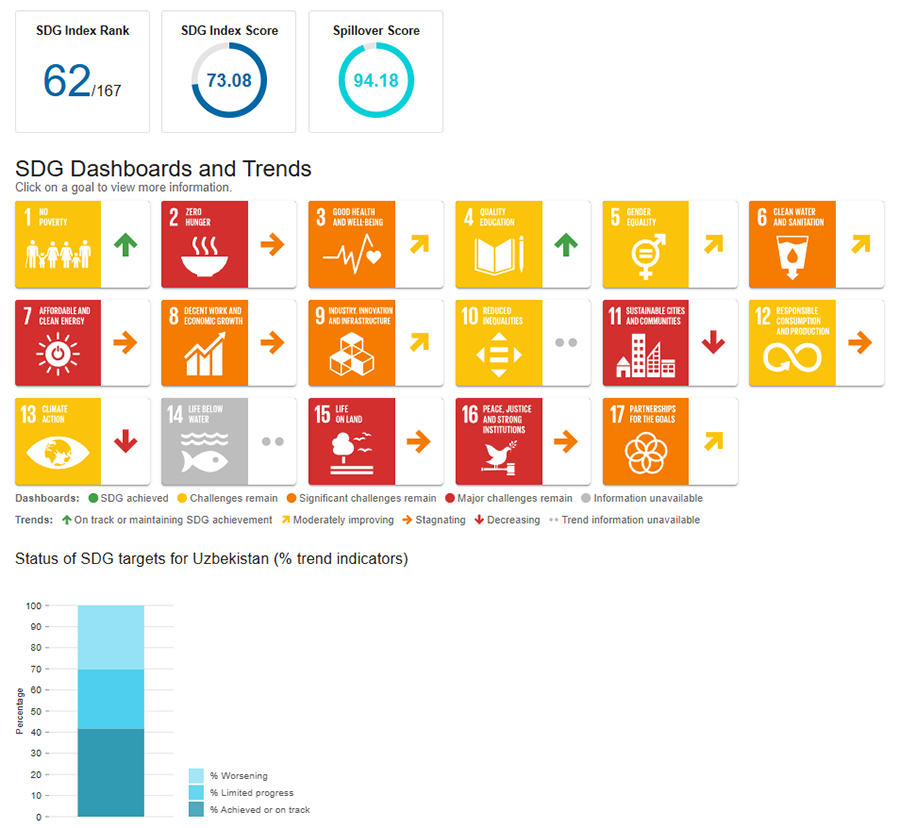
The Uzbekistan-2030 Strategy is fully aligned with the SDGs, serving as a roadmap for implementation. The Parliamentary Commission is responsible for monitoring implementation of the national SDGs. In 2024, 69% of the state budget was allocated towards their achievement.
Uzbekistan was ranked 81st out of 167 countries in the annual sustainable development rating.
The collection “Sustainable Development Goals in the Republic of Uzbekistan” has been published. This report analyzes national indicators from 2019 to 2023, providing a data-driven assessment of the country’s progress in achieving the SDGs.
Projects. As part of the “Improving the competence of civil society in the field of the Sustainable Development Goals and strengthening the partnership of civil society institutions in Uzbekistan” (“Yuksalish” movement, Korean INGO “Global Civic Sharing”/KOICA) Project, several events were organized, including: the seminars for representatives of NGOs in the Republic of Uzbekistan and Karakalpakstan to increase understanding of the SDGs; schools of NGOs on “SDGs and methodology for their monitoring” (June 25-28); a roundtable on “Achieving SDGs, Sharing Experiences, and the Role of NGOs in Developing an Effective Strategy” (October 16).
The “Tax for SDGs” (UNDP) project was completed: a tool for coordinating the tax system with the SDGs was developed; the Tax Inspectors without Boarders (TIWB) Program was launched jointly with the OECD to achieve Gender Equality Seal. A learning workshop on “Taxation for the Sustainable Development Goals” was conducted (August 14-16, Tashkent).
Events. Tashkent hosted the: (1) international roundtable on “Uzbekistan's Progress in Poverty Reduction: Analysis and Findings” (February 23); (2) International Forum on Food Security and Sustainable Development Goals for Landlocked Developing Countries (September 5-6); (3) International Sustainable Lifestyles Festival (September 19-20).
The Uzbek delegation participated in the: (1) 148th Assembly of the Inter-Parliamentary Union (March 23-27, Geneva, Switzerland); (2) meeting of specialists from statistical services of the CIS countries on SDG Statistics (April 17-18, Moscow, Russia); (3) Asia-Pacific Ministerial Conference on the Beijing+30 Review (November 19-21, Bangkok, Thailand).
Emergencies
In 2024, Uzbekistan recorded 87 emergency incidents, a 34% decrease from 2022. The decline was visible across both major categories: man-made incidents fell to 60 (down from 76), while natural disasters were reduced to 27 (down from 55).
Latest developments in legislation. Adopted legal documents:
• (1) PKM-121 of 07.03.2024 “On approval of the regulation on monitoring activities in the field of storage, transportation, use and disposal of chemicals (products) with a high risk of fire and explosion”; (2) PKM-304 of 29.05.2024 “ On organization of activities of the Unified Dispatch Service 112”; (3) PKM-569 of 12.09.2024 “On strengthening measures to ensure the safety of citizens, protect public order and prevent possible emergencies during public events”; (4) PKM-789 of 27.11.2024 “On approval of the regulation on centralized administrative management system of telecommunication networks of the Republic of Uzbekistan in emergency situations”.
• (1) PP-161 of 17.04.2024 “On measures to increase the seismic resistance of buildings and structures, as well as to improve seismic hazard monitoring activities”, including the Roadmap; (2) PP-186 of 24.05.2024 “On measures to organize the Committee on Industrial, Radiation and Nuclear Safety under the Cabinet of Ministers”, including main activities and organizational structure of the Committee and the respective Roadmap.
Strategies, plans, and projects. Ongoing interventions include: (1) Strategy for achieving the goals of the Sendai Framework Program for Disaster Risk Reduction for 2015-2030 and National Action Plan for its Implementation , National Action Plan on Climate Change and DRR. Order of the Minister of Emergency Situations No. 144 of 15.05.2024 approves the Regulations on the procedure for compiling and approving safety data sheets for settlements and facilities of the Republic of Uzbekistan to collect data and monitor and analyze risks; (2) Strategy for the Development of Cooperation between Central Asian countries in DRR for 2022-2030.
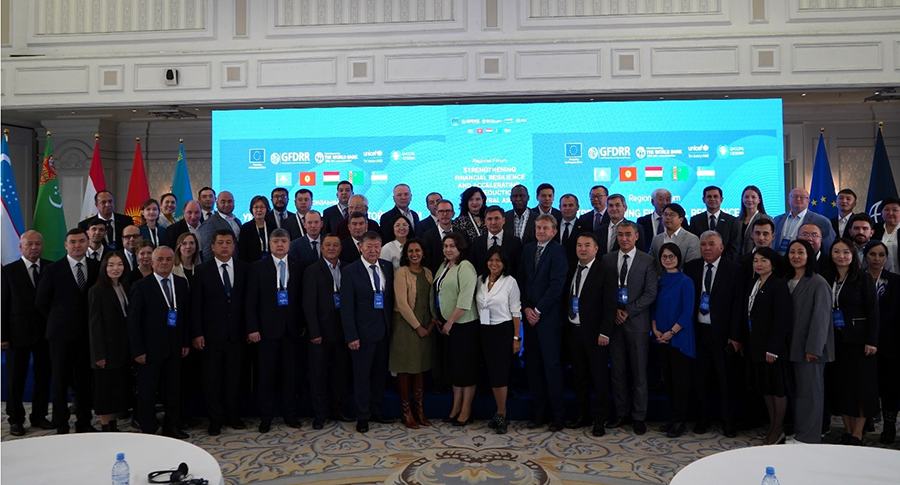
The “Strengthening Financial Resilience and Accelerating Risk Reduction in Central Asia” Project (EU, Global Facility for Disaster Reduction and Recovery/GFDRR, WB, Center for Emergency Situations and Disaster Risk Reduction/CESDRR) was completed. As a result of this project, a regional disaster risk assessment for Central Asia was completed; it incorporates more than 70 publicly available datasets and reporting materials from the World Bank Data Catalog. A Regional Scientific and Technical Council on Emergency Situations was established, and workshops and trainings on disaster risk management were held for different stakeholders. A Regional Forum in Almaty finalized the project activities (October 14-15).
The WB’s “Central Asia Hydrometeorological Modernization, CAHMP-II” project held a regional workshop on the National Capacity Assessment (November 4-6, Samarkand).
The regional “Enhancing Urban Resilience to Disaster Risk and Climate Change in Central Asia” project was launched (UNDP, with support from the Government of Japan, 2024-2027) to build a robust framework for enhancing urban resilience in Central Asia by leveraging regional collaboration and national action plans. A kick-off meeting was held in Tashkent (December 12-13).
Preventive measures. Pursuant to PP-426 of 18.11.2022, the country pursues a program to prevent, predict, and monitor natural disasters. The Government Commission on ensuring the safe passage of floods, mudflows, reducing the threat of avalanches and landslides held several meetings (February 29, April 27, June 12 and November 26). 120 control and observation posts were established in risk areas and SMS notification in mountainous areas was organized. Provincial authorities, in collaboration with relevant departments, conducted 177 exercises on cleaning riverbeds and reinforcing coastlines and dams. These efforts resulted in the concreting of 1,275 thousand m3 of irrigation canals and cleaning of 83.6 km of internal and trunk irrigation networks. As part of the targeted program, engineering and protective work worth of 150 billion UZS was done at 79 facilities.
Regional cooperation. Meeting between the Russian Deputy Minister of Emergency Situations and Uzbek Minister of Emergency Situations (February 19, Tashkent) and negotiations with the Chinese delegation (July 6, Samarkand) were held.
The Uzbek MES participated in the: (1) 1st meeting of the Heads of Emergency Authorities “Central Asia – China” (May 30, XUAR, PRC); (2) 36th meeting of the Interstate Council for Natural and Man-Made Emergencies (June 19, Minsk, Belarus); (3) 13th meeting of the Parties to the Convention on the Transboundary Effects of Industrial Accidents (November 27-29, Geneva, Switzerland).
Foreign Policy and International Cooperation
In 2024, Uzbekistan significantly expanded its global. The President’s 17 international visits set the stage, while delegations led by the Foreign Minister engaged with 53 countries in more than 100 negotiations and 400 meetings. This proactive outreach was reciprocated, with the foreign ministers of 17 countries visiting Uzbekistan. The year’s efforts culminated in the signing of 278 international documents and the establishment of diplomatic relations with 12 new countries, bringing Uzbekistan’s total number of diplomatic partners to 156.
Working and official visits. In 2024, the President of Uzbekistan paid official and working visits to China (January), Russia (February, May, October 7, October 23, December), Tajikistan (April), Turkey (June), Kazakhstan (July, August, September 8, September 17), Azerbaijan (July, November), Turkmenistan (October), Kyrgyzstan (November), Saudi Arabia (November).
Most significant events in the foreign policy of Uzbekistan
Guided by a policy of peace, openness, and mutual benefit, Uzbekistan’s foreign relations focus on regional cooperation, global partnership, and economic diplomacy. The nation prioritizes expanding trade and investment, driving economic modernization, and fostering cultural and humanitarian connections.
Uzbekistan hosted: (1) 3rd Tashkent International Investment Forum (May 2-3, Tashkent); (2) 4th Samarkand Forum on Human Rights (June 13-14, Samarkand); (3) ICTWeek Uzbekistan 2024 (September 17-20, Tashkent); (4) 9th annual meeting of the AIIB’s Board of Directors (September 25-26, Samarkand); (5) FinTech and Banking 2024 (October 3-4, Tashkent); (6) Central Asia Retail Week (October 16-17, Tashkent).
Development of alliances and strategic partnerships. During the state visits of the President of Uzbekistan to Tajikistan and Kazakhstan: (1) a treaty on allied relations and 28 documents were signed (April 18-19, Dushanbe); (2) 1st meeting of the High-level Inter-state Council was held, Strategic Partnership and Alliance Program for 2024-2034 was adopted, and a Joint Statement and 15 documents were signed (August 7-8, Astana). See Cooperation between the Countries of Central Asia on Water and Other Matters
PP-247 of 08.07.2024 “On approval of international treaty” ratified an agreement on joint implementation of the China-Kyrgyzstan-Uzbekistan railway project signed on June 6 in Beijing between the Government of the PRC, Cabinet of Ministers of the KR and the Government of the RUz.
Headed by the President, the Uzbek delegation participated in the: (1) 6th Consultative Meeting of the Heads of State of Central Asia (August 9, Astana); (2) 2nd Central Asia-Germany High-Level Meeting (September 17, Astana); (3) BRICS Summit (October 22-24, Kazan, Russia).
Chairmanship of international organizationsх. In 2024, Uzbekistan chaired: (1) the 1st meeting of the Council of Regions of Uzbekistan and Russia (May 27, Tashkent); (2) the 12th Islamic Conference of Tourism Ministers of the OIC Member-States (June 3, Khiva). Uzbekistan assumed the chairmanship of the Interstate Space Council of the CIS for 2024-2025.
Promotion of the national interests and reinforcement of the country’s image
UN. In 2024, Uzbekistan was elected to the UN Economic and Social Council (ECOSOC) for 2024-2027; Uzbek representatives were elected as a Deputy Member of the Governing Body to the International Labor Organization for 2024-2027 and to the UN Human Rights Committee for 2025-2028. The IFAD Office was launched in Tashkent (June 15). See International Fund for Agricultural Development
The UNGA adopted several resolutions initiated by Uzbekistan: (1) Readiness of the countries of Central Asia to act as a united front and cooperate to effectively resolve and eliminate drug-related problems (June 4); (2) International Day of Dialogue among Civilizations jointly with China (June 7); (3) Promoting sustainable forest management, including afforestation and reforestation, on degraded lands, including in arid areas, as an effective solution to environmental problems (August 13).
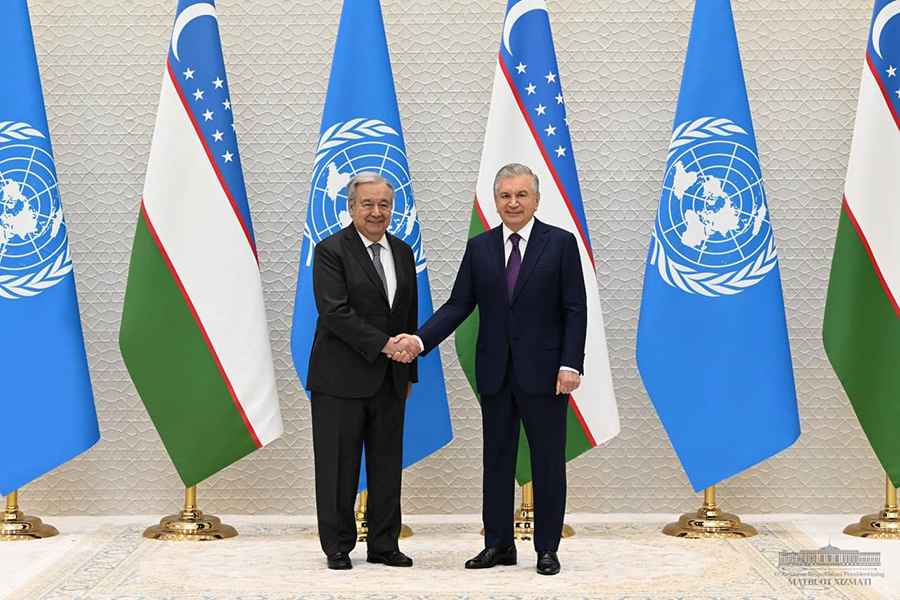
The President of Uzbekistan and the UN Secretary-General met to discuss cooperation on regional transport connectivity, food, energy, and information security. They also reached an agreement to jointly develop a new UN SDGs cooperation framework for Uzbekistan for 2026-2030 (July 1, Tashkent).
CIS. Uzbek delegation participated in the meetings of the: (1) Council of Heads of State (October 8, Moscow, Russia); (2) Council of Heads of Government (December 12, Moscow); (3) Council of Ministers of Foreign Affairs (April 12, Minsk, Belarus; October 7, Moscow); (4) Economic Council (March 29, September 20, November 29, Moscow); (5) 25th meeting of the CIS Intergovernmental Coordinating Council on Seed Production (September 16, Ashgabat, Turkmenistan); (6) informal Summit of Heads of State (December 25, St. Petersburg, Russia).
OTS. The President of Uzbekistan took part in the informal OTS Summit “Building a Sustainable Future through Transport, Connectivity and Climate Action” (July 6, Shush, Azerbaijan); regular meeting of the Council of Heads of State of the OTS (November 6, Bishkek, Kyrgyzstan).
SCO. Uzbek delegation participated in the: (1) 24th SCO summit, where a meeting of the SCO Plus took place (July 3-4, Astana, Kazakhstan); (2) 22nd meeting of Prosecutors-General of the SCO (July 25, Bishkek, Kyrgyzstan); (3) 23rd meeting of the Council of Heads of Government (Prime Ministers) of the SCO Member-States (October 15-16, Islamabad, Islamic Republic of Pakistan).
Tashkent hosted the 19th meeting of the Chairs of Supreme Courts of the SCO Member-States (May 23) and the 19th meeting of the SCO Forum (June 5-6).
In 2024, Uzbekistan enhanced its key trade partnerships with China, Russia, Kazakhstan, and Turkey. Regional integration was advanced through the opening of new checkpoints with Kyrgyzstan and new agreements with Tajikistan and Azerbaijan. Uzbekistan has fully finalized its borders with Kyrgyzstan and has delimited its borders with Kazakhstan, Turkmenistan, and Tajikistan.
Sources:
Official sites of the: President; Legislative chamber of Oliy Majlis; MFA; Ministry of Investment and Foreign Trade; Ministry of Water Management; Ministry of Energy; Goskomecologiya; Ministry of Agriculture; National law database; Institute for Strategic and Inter-regional Studies; EC CIS; CIS Portal
News agencies: Uzdaily.uz, Norma.uz, Dunyo, Sputnik, Kun.uz
Development and support
Scientific-Information Center ICWC