
Section 10. Science and innovations
10.1. Innovations in 2024
Water Saving Technologies
«Smart soil» developed by researchers at the University of Texas at Austin (USA), maintains optimal moisture conditions for plant growth and enables the controlled release of nutrients for effective fertilization. The material incorporates a hydrogel capable of absorbing water vapor from the air at night and gradually releasing moisture to plant roots during the day through a phase transition within the polymer. Calcium chloride included in the composition ensures the gradual release of nutrients. Experimental results demonstrated a 138% increase in crop yields alongside a 40% reduction in water consumption. The technology is particularly promising for arid and water-scarce regions.
The Source Irrigation Control system, developed by Source.ag (the Netherlands), is an autonomous, AI-based solution designed to adjust irrigation in response to weather conditions and plant status. The grower defines irrigation objectives, while the system independently manages the process using AI models enhanced by weather forecasts and plant data to predict water and nutrient requirements. This approach significantly reduces resource consumption, minimizes manual intervention, and accelerates the adaptation of new crop varieties.
Water Treatment and Desalination
Photocatalysts for water treatment have been developed by researchers at the National Laboratory Astana of Nazarbayev University (Kazakhstan). The semiconductor materials used, graphitic carbon nitride (g-C₃N₄) and metal sulfides (MeS), convert solar radiation into chemical energy, which initiates and accelerates the decomposition of pollutants into environmentally safe components. The technology aims to improve access to safe drinking water and reduce overall levels of environmental pollution.
A water treatment technology based on piezocatalysis has been developed by researchers from universities in southern and northern China. Piezoelectric materials, such as ZnO, BaTiO₃ and MoS₂, convert mechanical energy into an electric field, thereby accelerating the degradation of dyes, antibiotics and other hazardous organic compounds. When combined with photocatalysis, the process achieves higher treatment efficiency due to improved charge separation and an expanded operational range of the technologies.
A cost-effective and efficient method for removing micro- and nanoplastics from water has been developed by researchers at the University of Sao Paulo (Brazil). The approach is based on the use of magnetic iron oxide nanoparticles with immobilized enzymes – lipases and polydopamine. This natural polymer, derived from hormone-like molecules, exhibits unique adhesive properties similar to those found in mollusk proteins. The nanoparticles bind to plastic particles, which can then be easily removed from the water using magnetic separation.
A filter made of squid-derived chitin and cellulose, capable of removing up to 99.9% of microplastics from water, has been developed by researchers at Wuhan University (China). The filter captures particles of different types and sizes, including polystyrene (down to 100 nanometers), polymethyl methacrylate, polypropylene and polyethylene terephthalate. The system maintains an efficiency of over 95% even after repeated use and demonstrates high resistance to most contaminants, although certain chemical substances may reduce its performance.
An autonomous system for desalinating groundwater has been developed by the Massachusetts Institute of Technology (USA). The system features high energy efficiency and enhanced productivity, achieved through its ability to adapt dynamically to variations in solar irradiance. The electrodialysis system responds to changes in sunlight within fractions of a second, enabling battery-free operation and allowing desalination settings to be adjusted up to five times per second. A prototype tested in New Mexico produced up to 5 000 liters of water per day, supplying up to 3 000 people, while relying on more than 94% of the energy generated by its own solar panels.
The compact Ecobot water-cleaning robot, developed by the startup Ecopeace (South Korea), is a 5×5 m autonomous unit capable of filtering between 100 000 and 500 000 liters of water per day. Powered by solar energy, the system is equipped with AI to monitor eight water quality parameters in real time. The robot detects pollution and addresses it directly on site, preventing further degradation of the aquatic environment.

A highly efficient technology for removing oily contaminants from water has been developed by researchers at Zhejiang University (China). The so-called Janus Membrane Channel method demonstrated strong performance indicators: oil recovery reached up to 97%, water removal efficiency was approximately 75%, while the overall degree of water purification approached 99,9%. The method is based on the use of a pair of semipermeable membranes, one hydrophilic and the other hydrophobic, separated by a channel with an adjustable width ranging from 4 to 125 mm, allowing optimization of the separation process. The confined space between the membranes enhances phase separation, enabling high extraction efficiency with minimal residual impurities.
A solar-powered technology for seawater desalination that prevents salt accumulation has been developed by researchers at the University of Waterloo (Canada). The device, composed of nickel foam with a polymer coating and pollen particles, absorbs solar radiation and evaporates water within a closed-loop system. The system produces up to 20 liters of fresh water per square meter and operates without clogging due to a self-cleaning mechanism similar to backwashing in swimming pool filtration systems.
A solar-powered technology for desalinating saline groundwater has been developed by a team of researchers from King’s College London (United Kingdom) in collaboration with the Massachusetts Institute of Technology and the Helmholtz Institute for Renewable Energy Systems (Germany). The system employs specialized membranes to direct salt ions into a brine stream, after which the saline fraction is separated from fresh water suitable for drinking. The system consistently produces potable water using solar energy alone and delivers cost savings of up to 20% compared with conventional desalination methods. Flexible control of voltage and the flow rate of saline water through the system enables adaptation to any level of solar irradiance, making the technology particularly well suited for rural areas.
Water from Air
A household device capable of producing clean drinking water directly from ambient air has been developed by the company DrinkingMaker (USA). The appliance, resembling a coffee machine, captures moisture from the air and purifies it through a six-stage filtration process combined with ultraviolet treatment that eliminates microorganisms. The resulting water is purified to a level of up to 99,9%. An integrated HEPA filter additionally cleans the air used in the process. As a result, the device performs three functions simultaneously: dehumidifying the air, purifying it and generating potable water. The system can produce up to 19 liters of drinking water per day and can be powered by solar panels.

A range of atmospheric water generation devices is offered by the company Aquaria Technologies (USA). The systems are compatible with solar power and are capable of supplying drinking water to both individual households and entire communities. The outdoor Hydrostation dispenser produces up to 500 liters of water per day, sufficient to serve approximately 1 500 people. The household Hydropixel unit generates up to 91 liters per day and requires only a connection to the electricity grid. Water quality meets high standards, while production costs are significantly lower than those of bottled water. All devices are equipped with multi-stage purification systems, including coarse particle filtration, adsorption of harmful substances using carbon filters, and ultraviolet disinfection. Selected models additionally remineralize the water, improving taste and enhancing its nutritional value.

Innovations in Agriculture
Nanocomposite particles designed for incorporation into greenhouse films have been synthesized by researchers at the Institute of Materials Science of Uzbekistan Academy of Sciences. These particles perform a thermoregulation function by converting the ultraviolet component of solar radiation into the near-infrared range, with photon thermal energy corresponding to temperatures of 17-22°C. As a result, even at external temperatures of -3…+7°C, the temperature inside the greenhouse is maintained at +5…+7°C without additional heating (compared to 0…+2°C for conventional films). During hot periods, the internal greenhouse temperature is reduced by 5-8°C. The increased photon flux in the infrared range accelerates photosynthesis, enabling plants to grow 1,5-2 times faster. At the same time, energy consumption is reduced by more than 60%, crop yields increase by 35-50%, irrigation water use decreases by 30% and even to 90%, if with hydrogels. In addition, the mechanical strength of the film increases threefold.
An accelerated crop propagation complex has been launched at Vavilov University (Russia). Within the Laboratory of Plant Genetics and Biotechnology, researchers are developing advanced speed-breeding technologies that significantly shorten breeding cycles and enable the production of multiple plant generations in a single year. The uniqueness of this development lies in the integration of embryo culture and in vitro vernalization, with accelerated plant growth under controlled phytotron conditions.
A technology for growing crops in controlled environments with significantly reduced energy requirements is under developed by researchers at the startup Square Roots (USA). The objective is to eliminate electricity costs typically associated with LED lighting in vertical farms, which account for approximately 20-40% of total operating expenses. This approach is expected to offer a significantly more viable and sustainable solution for low- and middle-income countries. To implement this technology, Square Roots is working with gene-edited (CRISPR) plants capable of heterotrophic growth, allowing them to increase biomass by absorbing carbon from acetate added to irrigation water rather than relying on photosynthesis under artificial lighting. In essence, these plants are able to grow in the dark within a vertical farming system.
An agrorobot that identifies different plant species at various stages of growth by 'touching' their leaves with an electrode has been developed by researchers in China. The device analyzes surface texture and water content that cannot be reliably determined through conventional visual inspection. This enables farmers to optimize irrigation practices and pest management strategies. The contact-based sensing method allows data to be collected independently of lighting conditions and weather variability.
An agricultural drone equipped with a LiDAR laser scanning system has been introduced by the company ABZ Innovation (Hungary). The LiDAR system generates high-resolution, real-time three-dimensional maps of fields, enabling precise terrain tracking and obstacle avoidance while maintaining optimal distance from crops for effective spraying. By using three-dimensional environmental features as reference points, the drones operate reliably even under conditions of weak or degraded GPS signals.
An intelligent breeding platform for processing breeding data has been launched by the Chinese Academy of Agricultural Sciences. The platform demonstrates world-leading performance in terms of data volume handled, processing speed, and data security. Built on AI technologies, the breeding platform offers the following core functionalities: (1) management of germplasm resource information; (2) design and simulation of breeding experiments; (3) mass breeding omics data storage; (4) high-throughput data analysis; (5) intelligent decision support for the development of new crop varieties and hybrids. The platform accurately predicts crop traits and identifies optimal genotypes, significantly enhancing breeding efficiency. To date, it has been tested by breeders from 23 research organizations worldwide.
Alternative Energy
A novel hydrogel capable of producing hydrogen fuel using solar energy by mimicking photosynthesis has been developed by researchers from the Japan Advanced Institute of Science and Technology and the University of Tokyo. The material incorporates ruthenium complexes, platinum nanoparticles, and polymer networks that prevent molecular aggregation, which would otherwise reduce hydrogen production efficiency. This design addresses a key limitation that has hindered previous attempts to develop artificial photosynthetic systems.
A more efficient and cost-effective method for producing green hydrogen through water electrolysis has been developed by a research team from the Ulsan National Institute of Science and Technology and the Korea Advanced Institute of Science and Technology (South Korea). Instead of expensive platinum and iridium, the new catalyst incorporates tungsten and silicon around a ruthenium atom, significantly reducing costs while enhancing catalytic performance through more effective proton adsorption on the catalyst surface. The catalyst demonstrated higher activity in the hydrogen evolution reaction compared with conventional platinum-based catalysts. In addition, a thin tungsten protective layer (5-10 nm) stabilizes the ruthenium catalytic center, improving durability. The approach also results in substantially lower greenhouse gas emissions.
The Solhyd hydrogen panel, designed to produce hydrogen from heat and moisture present in the air, has been developed by researchers at the KU Leuven (Belgium). The device combines a conventional photovoltaic panel with a specialized layer that adsorbs water vapor, which is subsequently split into hydrogen and oxygen under solar irradiation. A key component of the system is a membrane that captures and concentrates water vapor within a conversion chamber. The system is fully autonomous and does not require connection to either a water supply or the electricity grid. A single Solhyd module can produce approximately 6 kg of hydrogen per year under north-western European climatic conditions. The panels achieve a peak efficiency of 15% and are manufactured from high-quality materials, ensuring compatibility with most commercial photovoltaic modules. Each panel can generate up to 250 liters of hydrogen per day, while the annual hydrogen output from a 1 000 m² rooftop installation can reach between 2 and 4 tones.
A technology for harnessing geothermal energy at great ocean depths to extract heat released along tectonic plate boundaries has been proposed by Compagnie Générale de Géophysique-Veritas (France). The company suggests installing a geothermal plant in the North Sea, where geological fractures and magmatic formations could generate energy for 20 million years by extracting just 0,1% of the existing heat, with cheaper facilities and a stable supply. The concept utilizes a 20-km deep borehole developed the Massachusetts Institute of Technology startup. In addition to electricity generation, the process would enable the production of green hydrogen, ammonia, and fresh water at reduced costs and with reliable, continuous supply.
VirtuPVT vacuum hybrid solar collector has been developed by Naked Energy (United Kingdom). The device integrates photovoltaic and solar thermal technologies, enabling the simultaneous generation of electricity and heat. The VirtuPVT technology is up to three times more efficient than conventional photovoltaic panels and is already deployed at a number of sites across the United Kingdom. The collector is designed to withstand internal temperatures ranging from -40°C to 240°C and to operate reliably under extreme weather conditions, meeting the highest industry standards.
Porous hydrogel beads capable of efficiently extracting uranium from seawater have been developed by Chinese researchers. The material is based on polyamidoxime, a compound with a strong affinity for metal ions, and molten paraffin wax. Following cooling and wax removal, porous particles are encapsulated in an alginate–polyacrylic acid matrix. During testing of 3-mm-diameter beads under real marine conditions, 4,79 mg of uranium per gram of beads was extracted from 10 liters of seawater over a 15-day period. In laboratory conditions, the uptake reached 8,23 mg per gram. Overall uranium extraction efficiency ranged from 95,9% to 99,5%.
Use of AI
An AI-based model for medium- and long-term drought forecasting (one year ahead) has been developed by researchers from Skolkovo Institute of Science and Technology and Sber (Russia). The model employs spatio-temporal neural networks and combines advanced AI algorithms with classical analytical methods. The solution has been successfully tested across five regions with diverse climatic conditions, including Poland, the United States (Missouri), Brazil (Goiás), India (Madhya Pradesh), and northern Kazakhstan.
An AI-based flood forecast model has been developed by a research team at Google Research. The model was trained on data from 5 680 river gauging stations, including historical flood records, river water level observations, topographic data, and related datasets. The developers simulated several hundred thousand flood events worldwide. The AI forecasts proved to be at least as accurate as other state-of-the-art short- and long-term disaster forecasting methods, and in some cases even more accurate. Typically, the neural network predicts floods 5-7 days in advance and can generate projections of river water levels and precipitation patterns up to five years ahead. The model has already been integrated into an operational early warning system that provides publicly accessible, real-time forecasts in more than 80 countries through the Flood Hub platform. However, forecast accuracy remains highly dependent on the volume, quality, and diversity of available data. Data inaccuracies resulting from measurement errors or inconsistencies in data collection methods can significantly affect model performance.
10.2. Leading Research Institutes of EECCA Countries
Belarus. Republican Unitary Enterprise “Central Research Institute for Complex Use of Water Resources” (RUE “CRICUWR”)
 RUE “CRICUWR” is an accredited specialized state research institution dedicated to fundamental and applied research sustainable water use and protection. The Institute holds an environmental compliance certificate BY/112 04.19.074.02 00015.
RUE “CRICUWR” serves as a lead organization responsible for maintaining the State Water Cadastre of the Republic of Belarus (SWC). It provides information services to economic sectors by supplying data on water bodies and water resources, including regime, quality, and use of water, wastewater discharges, and prepares informational materials on water resources and their use for international organizations (UN, UNESCO and others).
Activities in 2024
Research RUE “CRICUWR” focuses its activities on: (1) addressing socio-economic and environmental policy objectives in Belarus; and, (2) the areas aligned with strategic goals and targets set under the SDGs , National Strategy for Sustainable Socio-Economic Development of the Republic of Belarus for the period until 2030 and the Concept of the National Strategy for Sustainable Development of the Republic of Belarus until 2035 , the Environmental Protection Strategy until 2025 , and in the Strategy for Scientific, Technical and Innovative Development in the Field of Environmental Protection and Sustainable Use of Natural Resources until 2025.
The Institute’s key areas of activity include: (1) development of river basin management plans and water balance assessments; (2) environmental impact assessments for engineering activities within river basins; (3) assessment and forecast of changes in water resource conditions under both natural and human-induced factors; (4) evaluation of the recreational potential and capacity of water bodies; (5) development of environmental protection measures to safeguard and restore surface and groundwater bodies; (6) development and updating of schemes and projects for water protection zones, coastal strips, and sanitary protection zones for water intakes; (7) comprehensive assessments of the ecological state of river basins experiencing significant human impact; (8) maintenance of the State Water Cadastre (SWC) of the Republic of Belarus; (9) provision of postgraduate education and training in relevant fields; (10) engagement in international scientific-technical cooperation.
Capacity building. RUE “CRICUWR” offers advanced training programs in Geoecology (25.03.13) and Land Hydrology, Water Resources, and Hydrochemistry (25.03.05).
As part of the action plan for cooperation between organizations of the Ministry of Natural Resources and Environmental Protection and educational institutions , the Institute carried out the following activities: (1) a practical hydrology session combined with a lecture “The Importance of Preserving Springs as an Element of Environmental Safety”, an environmental and civic-patriotic initiative “Preservation of Springs” (October 31); (2) lecture sessions for gymnasiums “Rational Use of Water Resources” (November 27-28); (3) a practical session for students of specialized engineering-oriented classes of secondary schools (December).
Events. RUE “CRICUWR” organized: (1) 2nd International Scientific-Practical Conference “Current Issues of Efficient and Integrated Water Use”, with the following publication of a conference proceedings volume (March 21-22); (2) a workshop on planned amendments to the water legislation of the Republic of Belarus (September 27).
Representatives of the Institute participated in the following events: (1) the sectoral scientific and practical conference “Harmonization of Regulatory Frameworks for Science-Based Environmental Security Measures and Climate Change Adaptation within the Union State” (January 24, Minsk); (2) Exhibition of Scientific Achievements (January 26, Minsk); (3) the scientific-practical conference “Current Issues and Prospects for the Development of Water Supply and Wastewater Systems in the Modern World” (February 16); (4) the workshop of the Joint Belarusian-Russian Commission on the Protection and Rational Use of Transboundary Water Bodies (September 25-27, Minsk); (5) 28th Belarusian Energy and Environmental Forum (October 15-18, Minsk); (6) 10th session of the Meeting of the Parties to the Convention on the Protection and Use of Transboundary Watercourses and International Lakes (October 23-25, Ljubljana, Republic of Slovenia); (7) 21st International Scientific Conference of Young Scientists “Youth in Science 2024” (October 29-31, Minsk); (8) national environmental festival “One Planet, One Future” (November 8, Minsk).
Publications. Proceedings of the 2nd International Scientific-Practical Conference “Current Issues of Efficient and Integrated Water Use” dedicated to World Water Day (Minsk, 21-22 March 2024) / Ministry of Natural Resources and Environmental Protection; RUE “CRICUWR”; edited by O. V. Kovzunova. – Minsk: National Library of Belarus, 2024. – 114 p., ill. ISBN 978-985-7293-74-2.
Source: RUE “CRICUWR”
Kazakhstan. JSC “Institute of Geography and Water Security”
 JSC “Institute of Geography and Water Security” is a leading research institute of geographical profile in the Republic of Kazakhstan. The Institute’s structure comprises 4 centers: “Water Security of the Republic of Kazakhstan: Problems and Solutions”, “Geoinformation Technologies”, “Geographic Research” and “Information Security, Mathematical and Computer Modeling”, and 8 laboratories, including the Laboratory of Water Resources and the Laboratory of Regional Climate Change , established in 2024. The Institute also operates 3 year-round field research stations located in North Tien Shan, the Aral Sea region and Lake Balkhash region.
The total number of staff at the Institute is 168, including 2, 11 Doctors of Science, 24 Candidates of Science, 12 PhD holders and 12 doctoral candidates. Young researchers make up around 50% of the staff.
Activities in 2024
Research. During the period 2019-2024, the Institute implemented 8 scientific and technical programmes, 18 grant-funded projects and 23 contract-based applied research projects. In 2024, the Institute participated in the project “Reducing vulnerabilities of populations in Central Asia from glacier lake outburst floods in a changing climate” (GLOFCA).
As part of Project AP14869663 “Development of scientific-applied foundations for landscape-agroecological zoning of Turkistan province for balanced land use”, field studies were conducted with the following objectives: (1) surveying landscapes at 17 key sites located across different natural zones from the foothill plains of the Karatau Range in the north to the Hungry Steppe Desert in the south; (2) updating agro-ecological passports of administrative districts; (3) organizing training activities on the regulation of agricultural loads on landscapes used for pastoral and arable farming.
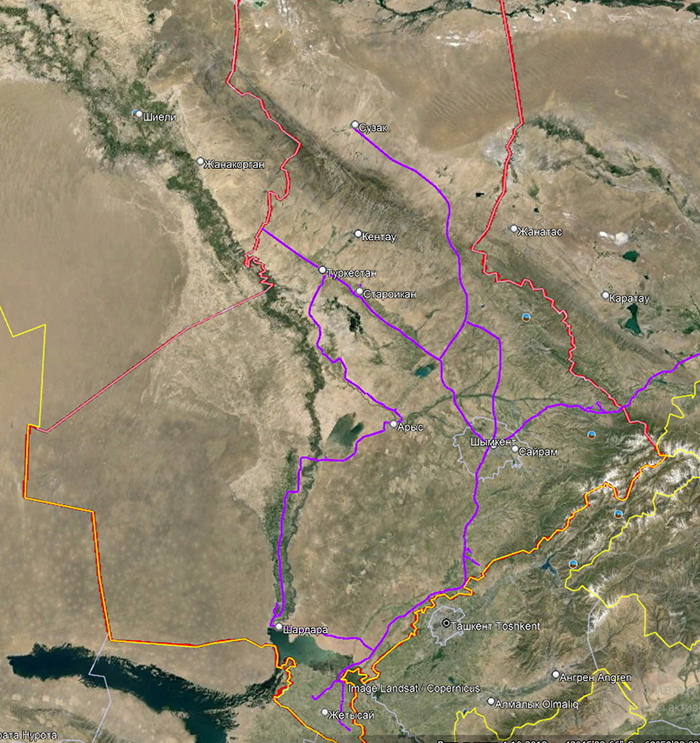
Research roadmap, June 15 - July 15
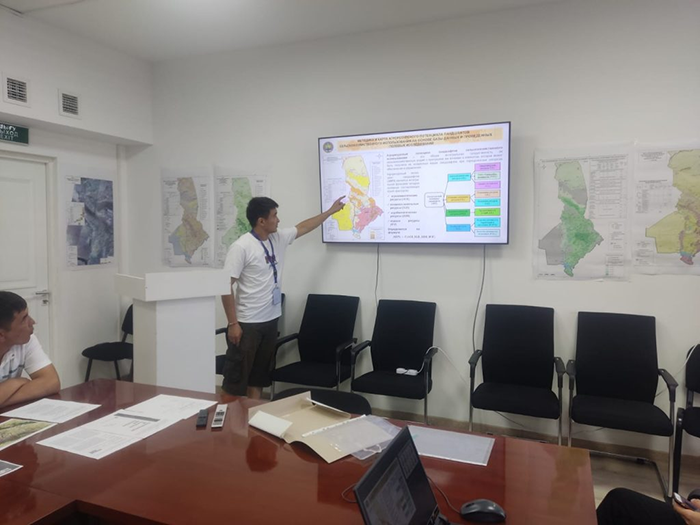
Sauran district, trainings
Events. The Institute organized: (1) a roundtable “The World Is Facing a Water Crisis: The Situation in Kazakhstan in the Aral-Syr Darya Basin”, during which the results of research conducted in the basin were presented, along with specific recommendations to ensure water security (June 14, Almaty); (2) on the sidelines of COP29, jointly with the Institute of Geography named after Academician G. A. Aliyev (Baku, Republic of Azerbaijan), a side event “Realities of the Caspian Sea: Sustainable Development”, addressing key issues related to climate change in the Caspian region, sea-level fluctuations, ice regime and challenges to sustainable regional development. As the outcome of the event, a Memorandum of Cooperation was signed between the institutes (November 11-22, Baku).
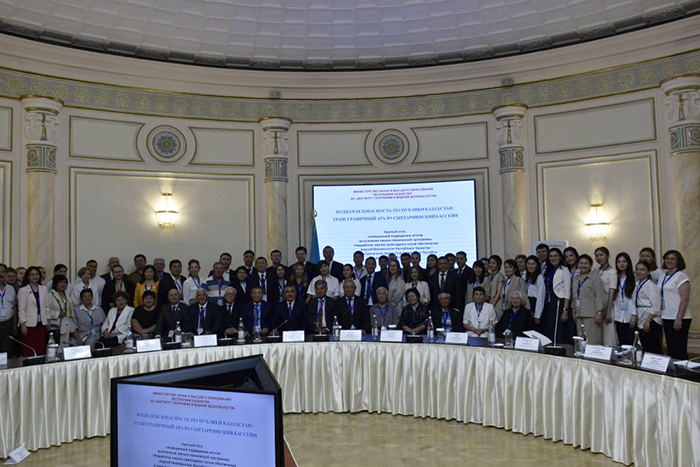
June 14, Almaty
Representatives of the Institute participated in: (1) the 3rd International High-Level Conference on the International Decade for Action “Water for Sustainable Development”, 2018-2028 (June 10-13, Dushanbe); (2) a Field Day and foresight event “Sustainable Agricultural Development: Efficient and Safe Water Management” (July 17, Almalybak village, Karasai District, Almaty province) and others.
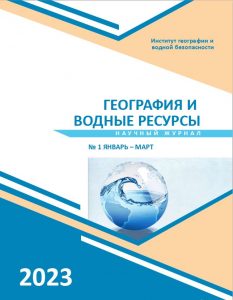
Publications. Since 2007, the Institute has been publishing the scientific journal “Geography and Water Resources”, which was re-included in 2024 in the list of journals recommended by the Science and Higher Education Quality Assurance Committee. In 2024, the journal published 50 articles, including 18 articles indexed in Scopus or Web of Science (Q1-Q3) and 32 articles published in journals recommended by the Committee. In 2024, a nine-volume monograph “Water Security: The Transboundary Aral-Syr Darya Basin” was published.
Source: JSC “Institute of Geography and Water Security”
Kyrgyzstan. Institute of Water Problems and Hydropower of the National Academy of Sciences of the Kyrgyz Republic (IVP&GE of NAN KR)
 IVP&GE of NAN KR was established in 1992. The Institute’s activity is focused on fundamental research and applied technology development in the area of hydrology and hydropower. The Tien Shan Highland Research Center (TShHRC) and the Ala-Archa Polygon for studies of hazardous hydrological processes, and also 6 laboratories operate at the Institute.
The key areas of research include: (1) monitoring the outburst hazard of high-mountain lakes; (2) studying regional patterns of formation, regime, distribution, interconnection, and protection of surface and groundwater; (3) development and justification of groundwater management schemes in the eastern part of the Chui Valley based on non-stationary geofiltration models; (4) studying hazardous exogenous hydrogeological processes in the Tien Shan; (5) development of a geoinformation system for monitoring water and land resources in Kyrgyzstan.
Researchers continuously monitor the status of potential outburst lakes in the Ala-Archa River valley through regular stationary measurements of key hydrometeorological parameters.
Activities in 2024
Research. The Institute is engaged in the project “Strengthening the Resilience of Central Asian Countries by Enabling Regional Cooperation to Assess High Altitude Glacio-nival Systems to Develop Integrated Methods for Sustainable Development and Adaptation to Climate Change”, implemented by UNESCO and financed by the GEF through UNDP. The First regional workshop was held in Almaty (April 3-4).
Under a contract with UNESCO, work has been initiated on the construction of a mudflow protection dam near the village of Tuura-Suu. A working meeting involving the Institute’s staff, representatives of the Emergency Situations Department, the Aiyl Kenesh, and specialists of the B. Mambetov Aiyl Okmotu of the Ton District was held in Issyk-Kul province (February 15, 2025). The Institute is tasked with conducting a comprehensive assessment of climatic and hydrological conditions, preparing a debris-flow hazard map, assessing the outburst hazard of mountain lakes in the Ton River valley, determining the potential for their transformation into mudflow, and developing forecasts and recommendations to support the design and construction of a resilient protective dam.
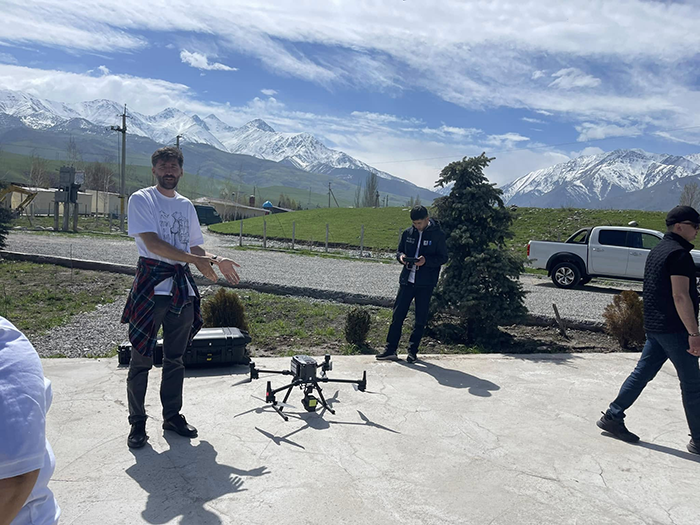
Capacity building. On the basis of TSHMSC , the 4th Summer School-2024 “Integrated Glacier Monitoring and Knowledge Exchange” was held for young researchers, meteorologists, hydrologists, glaciologists, and environmental specialists from Central Asian countries. The programme included field sessions on the Kara-Batkak Glacier and at the Kara-Bulun research station, as well as lectures on “Radiation Balance in Glaciological Modelling”, “Methodological Aspects of Glacier Mass Balance Studies (with the Tuyuksu Glacier as a case study)”, “Use of UAVs for Glacier Monitoring”, “The Importance of Glacier Modelling for Runoff Projections with Selected Local Examples”, “Spatial Analysis of Surface Runoff in the High-Mountain Areas of the Tien Shan and Its Potential Future Changes”, “Radiological Conditions of the Issyk-Kul Basin” and others (August 9-15, Kyzyl-Suu village).
The Institute’s representatives participated in an international workshop organized as part of the project “Capacity development and technology transfer to improve the generation and use of data and information in support of monitoring the environment in Central Asia” . The workshop addressed the results of work on the development of the Eco-Atlas, access to datasets, coordination of inter-agency information exchange protocols with due consideration of sector-specific tasks, as well as comments on the structure of the Atlas and maps (April 17-19). Upon completion, participants were awarded professional development certificates.
Within the framework of the GIZ programme “Transboundary water resources management in Central Asia”, a study visit to Germany was conducted. The visit implied exchanging experiences with leading water and climate research institutes, as well as discussions on innovative approaches to water security and the development of cooperation (November 18-22).
Events. At the IVP&GE of NAN KR, the following events were organized: (1) round tables “Water Resources Challenges in Kyrgyzstan in the Context of Climate Change” (April 23) and “Mountains: Challenges, Opportunities and Prospects for Sustainable Development” (December 16); (2) a scientific-practical conference “Water Challenges and Opportunities for Mutually Beneficial Water-Energy Cooperation among Central Asian Countries”/IV Mamatkanov Readings (October 28).
The staff of IVP&GE of NAN KR took part in: (1) a roundtable “Challenges of Rational Use of Water Resources and Reform of the Water Sector in the Kyrgyz Republic, including the Establishment of a Separate State Authority” (January 18); (2) international scientific-practical conferences “Enhancing Cooperation among Central Asian Countries in the Water-Energy Sector” (April 25-26, Dushanbe, Tajikistan) and “Geographical and Environmental-Economic Challenges of Transboundary Cooperation under New Geopolitical Conditions” (September 2-5, Ulan-Ude, Russian Federation); (3) Ural Scientific Forum dedicated to the 300th anniversary of the Russian Academy of Sciences (April 25-26, Yekaterinburg); (4) Information Technology Forum KIT–2024 (June 7-8, Minsk); (5) the 3rd International High-Level Conference on the International Decade for Action “Water for Sustainable Development”, 2018-2028 (June 10-13, Dushanbe, Tajikistan); (6) National Water Forum, which resulted in the signing of a Declaration on Multilateral Cooperation to promote effective water sector governance in Kyrgyzstan, ensure preservation of Lake Issyk-Kul, economic growth and food security (November 29, Bozteri village, Issyk-Kul province); (7) 3rd meeting of the Regional Working Group on the mutually beneficial mechanism for water-energy cooperation (December 10, Tashkent, Uzbekistan).
Cooperation. A Memorandum of Understanding was signed between the IVP&GE of NAN KR and the Working Group on monitoring the implementation of law on SDGs under the Committee on International Affairs, Security, Defense and Migration of the Jogorku Kenesh of the Kyrgyz Republic, providing for cooperation in joint projects, including those related to the SDGs (June 24).
Media. Interviews on water, climate challenges and related issues were given to: (1) the publishing house “Vecherniy Bishkek”; (2) the editorial office of 24.kg; (3) the news agency Sputnik Kyrgyzstan; (4) Kyrgyz Radio “1”.
Source: IVP&GE of NAN KR
Russia. Federal State Budgetary Institution “Russian Research Institute for Integrated Water Management and Protection” (FSBI “RosNIIVKh”)
 FSBI “RosNIIVKh” was founded in 1969. It consists of the lead institute in Rostov-on-Don and branches in Yekaterinburg, Vladivostok, Chita, Perm and Ufa. Since 2009, the Water Museum has been functioning at the Institute. The Water Sector Professional Development Center (WSPDC) started to function since 2020. FSBI “RosNIIVKh” is a member of EECCA Network of Water Management Organizations.
The mission of FSBI “RosNIIVKh” is to provide scientific and methodological support for the statutory functions of the Federal Agency for Water Resources related to the management of water use and protection, the provision of public services and law enforcement in the field of water.
Activities in 2024
Events engaging FSBI “RosNIIVKh”: (1) 30th and 31st meetings of the Basin Councils of the Lower Ob and Irtysh Basin Districts (May 30, Yekaterinburg); (2) 27th St. Petersburg International Economic Forum “The Foundation of Multipolarity – Shaping New Centers of Growth” (June 5); (3) the Congress of the Hydrobiological Society under the Russian Academy of Sciences (September 16-20, Arkhangelsk); (4) the First Scientific and Practical Conference “On Further Development of Russian-Kazakh Cooperation in the Protection and Use of Transboundary Water Bodies” and the XIV (XXXII) meeting of the Russian-Kazakh Commission on the Joint Use and Protection of Transboundary Water Bodies (November 6-7, Volgograd).
On the base of the carbon testing site “Tsimlyansk Reservoir” , the Institute’s staff will monitor the reservoir’s internal water resources and conduct studies on the carbon balance in anthropogenically altered ecosystems.
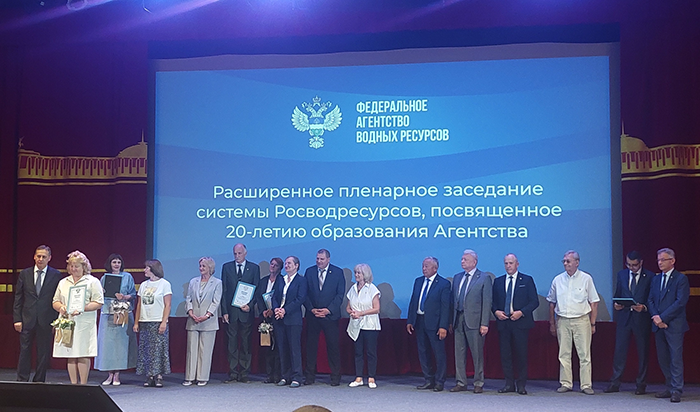
As part of an extended meeting of the Board of the Federal Agency for Water Resources, the staff of FSBI “RosNIIVKh” and its branches were awarded high distinctions (July 5).
Capacity building. A total of 229 specialists from territorial divisions of the Federal Agency for Water Resources completed training at the WSPDC on the following courses: IWRM, Organization of State Monitoring of Water Bodies: Implementation Specifics, Operation of Hydraulic Structures, Regulation of Water Use, Activities of Analytical Laboratories, Information Systems and Platforms of the Federal Agency for Water Resources, Hydrological and Water Management Calculations, Water Management and Water Governance, and Environmental Rehabilitation of Water Bodies.
The staff of FSBI “RosNIIVKh” conducted an open environmental lesson “Water Resources of Rostov province as the Basis for Its Sustainable Development” at a school in the Ust-Donetsky District of Rostov province (March 20). In cooperation with Ekon UrFO and the Administration of the City of Yekaterinburg, an educational project “Water Protection Laboratory” was launched (March 21). A license for educational activities was got for the following fields: Hydrology of Land, Water Resources and Hydrochemistry (1.6.16) and Geoecology (1.6.21).
Publications. The book “River Flow Regimes and Hazardous Hydrological Phenomena in the Territory of Zabaykalsky Krai” authored by FSBI “RosNIIVKh experts was recognized in the “Best Scientific Book” competition in the “Monographs” category.
The scientific and practical journal “Water Management of Russia: Problems, Technologies, Management” (founded by FSBI “RosNIIVKh”) was included in the RSCI Core. In 2024, 6 issues of the journal were published, featuring, articles authored by Institute’s staff. Details are available on: https://waterjournal.ru/archive. The Institute also publishes a bi-monthly water management news review
Source: FSBI “RosNIIVKh”
Tajikistan. Institute of Water Problems, Hydropower and Ecology of the National Academy of Sciences of Tajikistan (IWPH&E of NAST)
 Institute of Water Problems, Hydropower and Ecology was founded in 2002 . The Institute carries out fundamental and applied research in the field of water, hydropower and ecology, including development of climate change adaptation methods, optimization of hydropower operation and water management.
The Institute offers: (1) master’s programs in such disciplines as “Hydraulic engineering”, “Ecology”, “Natural water and wastewater treatment”, “Environmental monitoring”, “Rational use and protection of water resources”, “Energy efficient technologies and energy management” since 2014; (2) PhD programs in such disciplines as “Ecology”, “Hydrology”, “Meteorology”, “Hydraulic engineering and facilities”, “Water resources and water use”, “Construction” since 2017.
Activities in 2024
Research. Research efforts were continued on: (1) “Problems of formation and regulation of solid runoff in waters of Tajikistan and their solution” (2020-2024); (2) “Development strategy and optimization of energy balance. Hydro-coal scenario of energy sector development in Tajikistan” (2020-2024).
As part of the Integrated Rural Development Project (TRIGGER) EU/BMZ, the Institute’s representatives participated in: (1) a training on hydrological modelling tools, including Spatial Processes in Hydrology (SPHY) and Water Evaluation and Planning (WEAP) modelling for the Zarafshan River basin (May 29-30); (2) study tour to Wageningen. The visit included practical training on the application of SPHY and WEAP tools for the Zarafshan River basin under six climate change scenarios, training on the use of unmanned aerial vehicles (UAVs/drones) at Utrecht University, as well as training-of-trainers sessions under the module “Water Allocation and Hydrological Modelling” using SPHY and WEAP tools (August, Wageningen, the Netherlands); (3) a field expedition to the Hydrographic Party Glacier, during which specialists acquired practical skills required for glacier and snow cover monitoring using UAVs (September).
Capacity building. Within the framework of the USAID Regional Water and Vulnerable Environment Activity, the Institute’s experts participated in a study tour to Uzbekistan to exchange knowledge and experience on the safety of hydraulic structures (October 28-31, Uzbekistan). During the tour, participants visited the NRU «TIIAME», State Inspection for the Control and Supervision of Technical Conditions and State Inspection “Gosvodkhoznadzor”, as well as the Tuyabuguz Reservoir and Hydropower Plant and the Upper Chirchik Water Facility. The participants were introduced to Uzbekistan’s regulatory framework for ensuring the safety of hydraulic structures, the operational principles of hydraulic facilities, and related aspects.
Events. The Institute organized: (1) a science and technology forum as part of the 3rd High-level International Conference on the International Decade of Action “Water for Sustainable Development”, 2018-2028, jointly with USAID, SDC and IWMI (June); (2) a scientific and practical round table dedicated to the 33rd anniversary of national independence, during which the Institute’s achievements over the years of independence were discussed (August 13).
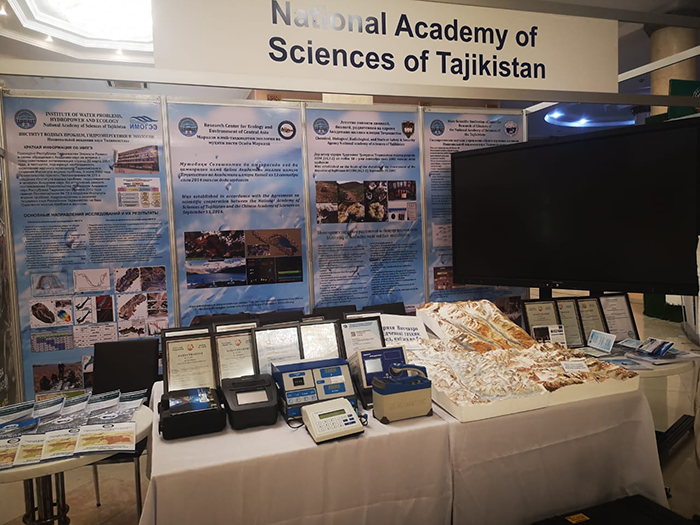
Representatives of the Institute participated in: (1) the 4th Advisory Board meeting of the ICSD (March 27, Astana, Kazakhstan); (2) the 3rd High-Level International Conference on the International Decade of Action “Water for Sustainable Development”, 2018-2028. At the exhibition organized as part of this event, the scientific achievements and research equipment of the Institute were showcased (June 10-13, Dushanbe); (3) 7th International Conference “Debris Flows: Disasters, Risk, Forecast, Protection” (September 23-27, Chengdu, PRC).
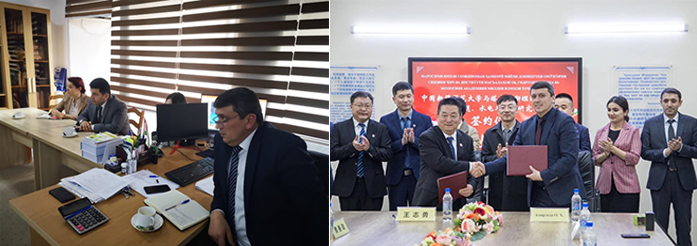
Cooperation. A meeting was held with representatives of the WB, during which the preparation of the Country Climate and Development Report was discussed (January 17). The Institute signed a Cooperation Agreement with Xinjiang Normal University (PRC). The parties will cooperate in various areas, including monitoring and rational use of water resources, renewable energy sources, environmental protection, disaster risk reduction and response, and related fields (January 27).
Publications. 4 issues of the journal «Water Resources, Energetics and Ecology» were published, featuring, scientific articles authored by the staff.
The Institute’s researchers published a total of 86 scientific papers, including 18 articles in international journals, 14 conference papers, 35 articles in national journals and 19 articles in popular science sources. In addition, 9 authors’ certificates (patents) has been got.
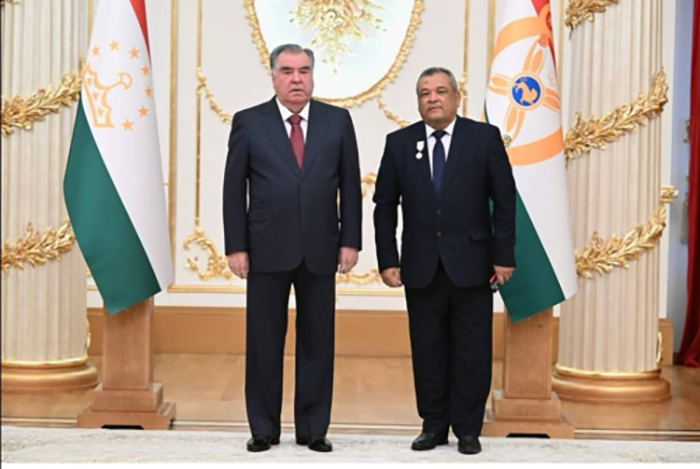
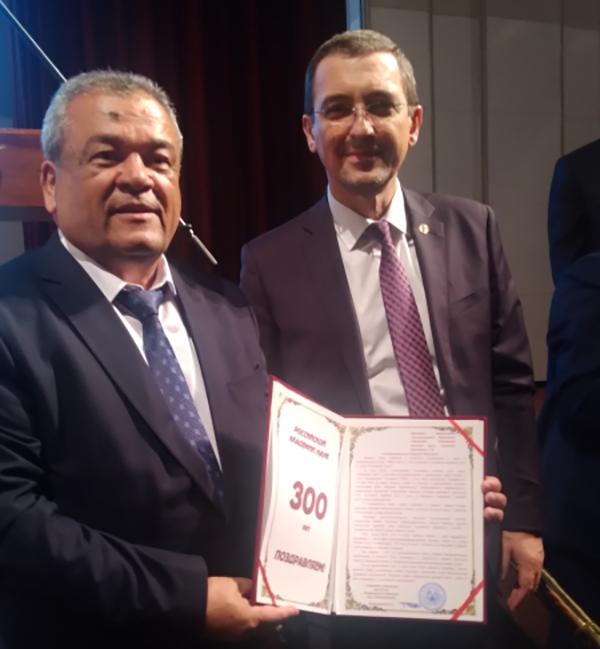
Awards. Professor Ya. Pulatov was awarded the honorary title “Honored Employee of Tajikistan” and, in recognition of outstanding contributions to the development of science, received the jubilee medal “300 Years of the Russian Academy of Sciences”.
The Dissertation Council 6D.KOA-059 at the Institute was awarded the title “Best Dissertation Council” by the Higher Attestation Commission under the President of the Republic of Tajikistan. The Dissertation Council 6D.KOA-059 operates in the following fields of specialization: 25.00.00 – Earth Sciences (6D061000 – Hydrology) and 23.05.00 – Construction and Architecture (6D074400 – Construction and Hydraulic Structures).
Source: IWPH&E of NAST
Uzbekistan. Research Institute of Irrigation and Water Problems (RIIWP)
 RIIWP is a major research institution in the area of water management and land reclamation in Uzbekistan. One of the main areas of Institutes activity is the research and development on water resources and their use. The Institute includes 15 research laboratories, 6 regional centers (Karakalpakstan, Khorezm, Bukhara, Namangan, Samarkand and Surkhandarya), Water Engineering Center and Research Consulting Center for Water Saving Technologies.
The total number of staff at the Institute and its regional centers is 96, including 75 researchers. A total of 59 employees hold academic degrees, including 18 Doctors of Science and 41 Candidates of Science and Doctors of Philosophy (PhD) in engineering sciences. The Institute’s scientific capacity amounts to 78.1%.
Activities in 2024
Research. The Institute carries out research in 28 thematic areas (total budget: 7.3 billion UZS), including 8 applied, innovative and fundamental projects and 30 research, development and experimental design works under national state scientific and technical programs. In addition, two grant-funded projects on adoption of innovative technologies in the water management sector are ongoing, with the support of international financial institutions (total funding $308 thousand). With the financial support from local JSCB “Agrobank”, 6 projects are implemented (total funding 4.5 billion UZS).
Under a contract with the Agency for Innovative Development, The Institute is currently implementing 11 projects, including: (1) “Development of technologies to reduce collector-drainage runoff in Khorezm province”: water-saving measures were developed; (2) “Development of water-saving technologies for rice cultivation under soil and climatic conditions of the Republic of Karakalpakstan and Khorezm province”: drip and sprinkler irrigation technologies were adapted to local conditions; (3) “Development of hydraulic adaptation technology for the hydraulic structures for damless water abstraction from large rivers”: river water abstraction methods, enabling a reduction of technical, energy and financial costs by at least 25%, and a hydraulic adaptation technology were developed; (4) “Establishment and operation of a testing site for water-saving irrigation and salt leaching technologies testing in the Republic of Karakalpakstan”: a testing site was established and optimal irrigation and leaching regimes were identified, taking into account soil and hydrogeological conditions; (5) “Development of a long-term river runoff forecasting model for the Surkhandarya and Kashkadarya River Basins under climate change conditions”: a database for the study area was developed; snow cover dynamics were analyzed using the MODSNOW program; climate scenarios and long-term runoff forecasts (2030-2050) were developed using the SWAT model; (6) “Development of energy-saving technologies to improve performance of pumping stations”: new designs of water intake structures were studied to enhance energy efficiency; (7) “Development of water supply regimes for lakes and reservoirs in Muynak district to improve their hydrological and hydrobiological conditions”: a comprehensive action plan was developed, including irrigation regimes aimed to stabilize the ecological condition of existing water bodies; (8) “Development of a reservoir operation and sedimentation management model using geoinformation technologies”: a 3D model of morphological and topographic changes was created using ArcGIS; modeling guidelines and recommendations for sound water management and sedimentation control were developed; methods for calculating reservoir water balances were improved, taking into account water level fluctuations, sedimentation and losses; (9) “Development of a resource-saving cotton irrigation technology ensuring the optimal soil conditions”: a methodology for assessing soil salinity based on leaf indicators was developed; the mathematical model for cotton water requirements regulation is revised; (10) “Scientific foundations, principles, and modern methods of land reclamation in Uzbekistan”: the principles for water-salt regime regulation were developed and biotechnologies were tested (yield increased to 20%); salt tolerance of new crop varieties was studied; (11) “Patterns of flow regulation and river processes in human-affected river basins”: recommendations for watering regimes of the Amu Darya delta were developed; lake productivity was assessed; and hydrological characteristics of water bodies in Muynak district were analyzed.
Capacity building. In 2024, 8 research staff members successfully defended their dissertations and were awarded academic degrees, while 6 research staff members were conferred the academic titles of “Professor” and “Senior Research Fellow”.
Publications. A total of 86 articles were published, including 43 articles in national journals, 23 articles in journals of the CIS countries and 20 articles in international journals indexed in Web of Science and Scopus.
Two scientific monographs were published: (1) Petrov A. A., Sadiev U. A., Sabirov M. R. Application of Local Materials for Repair and Rehabilitation of Hydraulic Structures. Tashkent: Voris-nashriyot, 2024. 84 p. ISBN 978-9910-8825-1-7; (2) Ikramova M., Ahmedkhodjaeva I., Umarova Sh. Hydromorphological Regime of Reservoirs in Uzbekistan. Tashkent: PUBLISHING HIGH FUTURE OK, 2024. 174 p. ISBN 978-9910-725-16-6.
A textbook was published by Ikramova M. R. Global Climate and Water Availability. Textbook (in Uzbek). Tashkent: Baktria Press, 2024. 144 p. ISBN 978-9910-8845-6-6.
Source: RIIWP
Ukraine. Institute of Water Problems and Land Reclamation of the National Academy of Agrarian Sciences (IWPLR of NAAS)
 IWPLR of NAAS was founded in 1929. The Institute carries out fundamental and applied research in the area of hydraulic engineering, irrigation and drainage, water management, agricultural water supply, land reclamation and environmental monitoring. It deals also with the design of water facilities and water supply and sanitation systems. The Institute includes in its structure 8 research departments, as well as an experimental network, an experimental station, and 2 experimental farms located in different climatic zones of Ukraine. The Institute offers postgraduate and doctoral programs on: 06.01.02 – “Agricultural land reclamation” (technical, agricultural sciences); 201 – “Agronomy” and 192 – “Construction and civil engineering”. In 2022, the Academic Council was established at the Institute for awarding degree of Doctor of Science.
As of 1 December 2024, the Institute’s scientific capacity comprises 104 personnel, including 12 Doctors of Science and 41 Candidates of Science.
Activities in 2024
Research. The Institute serves as the lead institution for the implementation of the NAAS-4 program “Sustainable Water Use, Enhancement of Water Security, Development of Land Reclamation, and Effective Use of Reclaimed Land Under Climate Change” (2021-2025). Under this program, fundamental and applied research is conducted on the following themes with a strong focus on climate change: (1) achievement of water security and reproduction of water resources; (2) rehabilitation and development of irrigation and drainage systems in Ukraine; (3) use of reclaimed land.
Researchers continue working on the improvement of surface and subsurface irrigation technologies, as well as on optimization of methods and rates of mineral fertilizer application in order to increase crop yields and ensuring rational water use.
Ongoing projects: (1) “Modeling diffuse pollution of the Ros River Sub-Basin (Ukraine) and the Eşen River Sub-Basin (Turkey)” jointly with Muğla Sıtkı Koçman University; (2) “Control of Black Sea safety and pollution risks using numerical models” (NATO SPS); (3) “Geospatial intelligence project for environmental damage assessment”/GIEDA, supported by the European Commission.
Capacity building. IWPLR organized professional development courses for research and academic staff on the topic “Modern technologies and technique of land reclamation” (June 25-28, online). The Institute’s staff also completed training at the European Cornell Pump School (December 7-17, Italy).
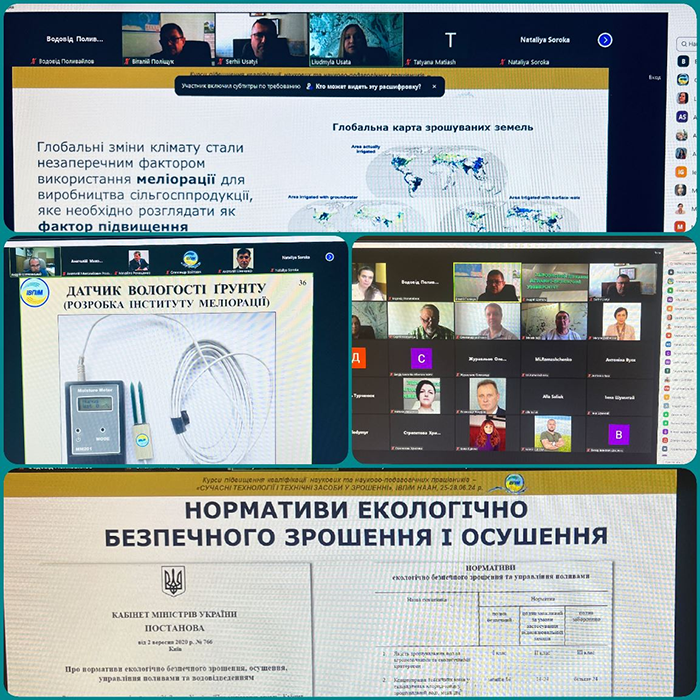
Events. IWPLR organized, jointly with: (1) the Global Water Partnership, the Ts. E. Mirtskhulava Institute of Water Management of the Georgian Technical University and the Koçman University, the 12th International Scientific-Practical Conference “Water for Peace,” following which a conference proceedings volume was published (March 21, Kyiv); (2) the NGO “Women Water Partnership UA” and the International Community-Based Organization “Primavera,” a working meeting on the establishment of a Public Water Initiative (May 14, online).
The VI International Scientific-Practical Conference of Young Scientists “Role of Land Reclamation and Water Management in Ensuring Sustainable Development of Agriculture” was held online (October 10).
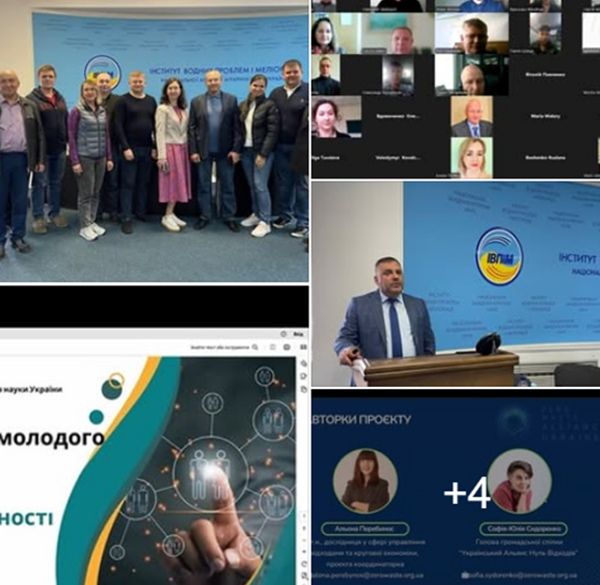
Representatives of the Institute participated and delivered presentations at the following events: (1) roundtables “Environmental Security of Ukraine: National and International Dimensions” (January 25, online), “Challenges and Issues of the Current Agrarian Reality: Land Reclamation, Storage and Processing, Relocated Business” (November 27, Zhytomyr province) and “Empowering the Next Generation in Water Management” (November 26-27, Slovakia); (2) the New York Drought Summit (April 16-17, Ithaca, USA); (3) the events “Water for Peace” (March 22, Vytautas Magnus University, Kaunas) and “Ukraimpulse: Smart Water Ukraine” (June 10, Berlin); (4) the conference “Biochar for the Green Recovery of Ukraine” (May 2-3, NUBiP of Ukraine); (5) the sectoral conference “Restoration of Water Resources as a Concept of Ukraine’s Resilience,” organized within the framework of the AQUATHERM KYIV 2024 exhibition (May 16, Kyiv); (6) the international scientific and practical conference “Modern Vectors of Agricultural Science Development” (September 17, online); (7) the thematic session “Ecology,” which addressed the topic “Water in Ukraine and the World: Local and Global Challenges” (October 1, Lviv); (8) the All-Ukrainian Scientific-Practical Conference “Pearls of the Steppe Region” (November 21).
Publications. (1) V. A. Stashuk et al. Enhancing the Resource Potential of Ukrainian Polissia: A Monograph. 2024. 792 p.; (2) O. H. Tararyko et al. Remote Sensing Monitoring of Erosion-Degraded Agricultural Landscapes: scientific-methodical and practical recommendations. Kyiv: Agrarna nauka, 2024. 82 p.; (3) O. V. Zhuravlev et al. Water exchange and evapotranspiration of crops under irrigation: monograph; edited by acad. of NAAS M. I. Romashchenko. Kyiv: Agrarna nauka, 2024. 132 p.; (4) L. Kuzmych. Sustainable Soil and Water Management Practices for Agricultural Security, and others.
In 2024, two issues of the Journal “Land Reclamation and Water Management” were published.
Source: IWPLR of NAAS
10.3. International Research Institutes Working on Water Issues in Central Asia
Central-Asian Institute for Applied Geosciences (CAIAG)
 CAIAG was established in 2002 following an agreement between the Government of the Kyrgyz Republic and the Helmholtz Centre for Geosciences/GFZ (Potsdam, Germany). The Institute’s primary objective is to conduct and support research in the field of Earth sciences, including the following key areas: geodynamics and geohazards; climate, water and geoecology; engineering infrastructure and data management. CAIAG is a dynamically developing scientific center in Central Asia, applying modern in situ and remote sensing observation methods through networks of meteorological stations, seismic stations, GPS and hydrometeorological monitoring sites to study natural processes. At present, the monitoring network established and maintained with the suppoer of CAIAG comprises 23 permanent stations located across the territories of Kyrgyzstan, Tajikistan and Uzbekistan.
Activities in 2024
Research. The Institute worked on the project “Study of benckmark glaciers of Kyrgyzstan: Abramov, Golubin, Suyek, Petrov, Karabatkan, and Enilchek to assess their balance, morphological and dynamic characteristics, and climatologic and hydrological conditions”. As an outcome of the work, the Catalogue of Glaciers of Kyrgyzstan was published. The Catalogue contains glacier location maps, key morphometric parameters, and an analysis of changes in glaciation.
CAIAG is engaged in: (1) the development of the National Adaptation Plan within the framework of the UNDP project “Advancing the development of a National Adaptation Plan (NAP) process for medium and long-term adaptation planning and implementation in the Kyrgyz Republic”, by conducting assessments of climate risks and vulnerabilities in priority sectors and regions of Kyrgyzstan; (2) the project “Water Efficient Allocation in a Central Asian Transboundary River Basin”/WE-ACT. In particular, CAIAG carries out modernization of hydrometeorological stations in the Naryn and Kara-Darya river basins; conducts analysis of meteorological, glaciological and hydrological data for modeling purposes; established a Lizard data warehouse in Kyrgyzstan; organized a stakeholder workshop “Water Resources in Central Asia under a Changing Climate” (September 11, Bishkek). The staff also participated in a summer school on hydrological modeling with SPHY , conducted by partners from the University of Fribourg (Switzerland) (August 13-14, Bishkek).
Work continues within the framework of the Central Asian Mountain Observatory Network (САМОN).
Capacity building. CAIAG staff participated in: an expedition “Adventure of Science: Women and Glaciers in Central Asia”, focused on climate change adaptation (August 21-30, Ala-Archa National Park); a training on the operating system of the International Charter on Space and Major Disasters (COS-2) and the Charter Mapper program (September 26-27, Bishkek).
Events. CAIAG organized: (1) workshops “Conducting a diagnostic assessment” (May 29-30), “Integrated analysis and assessment of hazards, risks, vulnerabilities, and resilience, as well as an integrated management approach to emergency and disaster management” (June 4) and “Healthy soils and monitoring of soil resources” (December 6); (2) the 17th meeting of the Supervisory Board and the Board of Founders, during which the Institute’s activity report for 2023-2024 was presented and future activities were discussed (October 7); (3) a conference “Past Achievements and Future Challenges of Applied Geosciences in Central Asia” (October 8-9).
Representatives of the Institute participated in: (1) the inaugural session of the Third Pole Climate Forum (CTF 1) and the meeting of the Task Force of the Network of Regional Climate Centers of the Third Pole (SRCC-Network) (June 4-6, Lijiang, China); (2) the regional forum-meeting of heads of emergency departments of Central Asian countries (August 13-15, Cholpon-Ata); (3) a side event on key challenges in glaciation in Central Asia (November 16, Baku, Azerbaijan).
Cooperation. Meetings were held with: (1) Kyle Fielding, Head of the Regional Environmental Office of the U.S. Embassy in Astana and Gulnara Zhumabayeva, scientific affairs officer, during which the current state of glacier cover in the region, the impacts of climate change on glaciers and ongoing monitoring and research activities were discussed (August 22); (2) representatives of Aero Asahi Corporation, focusing on monitoring of natural hazards and risks, information management and the use of 3D city models for more effective emergency management, among other issues (October 24); (3) representatives of the Institute of Seismology named after G.A.Mavlyanov of the Academy of Sciences of the Republic of Uzbekistan and staff of the Center for Advanced Technologies under the Ministry of Higher Education, Science and Innovation of the Republic of Uzbekistan (November 3).
Media. The Institute’s staff gave interviews on climate change, glacier retreat and related topics to “France 24” TV channel for a documentary film on the impacts of climate change on water resources (June 26); Radio “Azattyk” (July 2); “Maral FM” Radio (July 13) and “Kyrgyztelefilm” Studio (September 13).
Source: CAIAG
Development and support
Scientific-Information Center ICWC