
Section 12. Thematic reviews
12.5. Gender Mainstreaming in the Water Sector of Central Asian Countries
In this edition of the Yearbook, members of the Network "Women in Water Management of Central Asia and Afghanistan" provide an analytical review of gender mainstreaming within the region's water sector. This contribution, a first in the publication’s history, marks a significant milestone toward a more inclusive and integrated regional water agenda.
This initiative is a natural continuation of the SIC ICWC’s work to advance gender issues in the region’s water sector, which began in 2007.
The review was prepared by A. Karibay and Zh. Naurozbaeva (Republic of Kazakhstan), M. Seidakmatova (Kyrgyz Republic), Sh. Tulieva (Republic of Tajikistan), R. Berkelieva (Turkmenistan), and F. Kadyrkhodzhaeva (Republic of Uzbekistan), under the general editorship of G. Makhmudova and O. Usmanova.
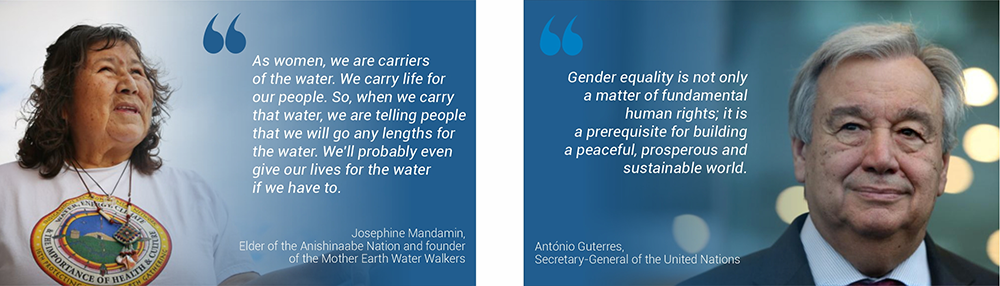
Objective of the review is to analyze how gender issues are integrated into the water sector of Kazakhstan, Kyrgyzstan, Tajikistan, Turkmenistan, and Uzbekistan, and to assess the extent to which these approaches contribute to sustainable and equitable water resources management.
Introduction
Water resources are foundational to the economies, ecosystems, and basic livelihoods of Central Asia. However, the region faces mounting pressure from climate change, surging water demand, and aging infrastructure. Consequently, social equity and gender equality in water governance have emerged as critical pillars of sustainable development.
Women in rural and peri-urban areas of the region bear the primary burden of household water supply and are actively engaged in agricultural water use. However, their representation in water governance bodies remains limited.
Gender equality in water management requires creating environments where both women and men participate equally in planning, decision-making, and monitoring. This integration is essential not only for upholding human rights but also for strengthening the resilience of water supply systems and adapting to climate risks.
Evidence from the World Bank and UNDP highlights that integrating women into water committees and Water User Associations (WUAs) is a key driver of operational success. Such inclusion fosters more equitable water distribution, mitigates local conflicts, and measurably improves service delivery levels in rural areas.
International instruments adopted by the Central Asian countries also underscore the importance of gender mainstreaming:
• The Beijing Declaration and Platform for Action (1995), which placed women’s access to natural resources and participation in their management among its key priorities;
• The Convention on the Elimination of All Forms of Discrimination against Women (CEDAW, 1979), signed and ratified by all countries in the region;
• The 2030 Agenda for Sustainable Development and the Sustainable Development Goals, in particular SDG 5 (“Achieve gender equality and empower all women and girls”) and SDG 6 (“Ensure availability and sustainable management of water and sanitation for all”).
The review is structured by country and examines four key dimensions: 1) the existence and implementation of national gender policies; 2) the extent of gender mainstreaming in water legislation and national strategies; 3) the substantive role and representation of women in water governance institutions; and 4) the barriers and achievements in advancing gender equality.
While there is a region-wide commitment to gender equality, the findings reveal significant disparities in the depth of mainstreaming and the effectiveness of overcoming institutional and socio-cultural barriers. In some countries, progress is anchored by formal quotas in strategic documents and the creation of dedicated women’s platforms; in others, it remains confined to framework declarations.
Detailed country assessments are presented below.
Republic of Kazakhstan
Existence and Implementation Mechanisms of National Gender Policy
In Kazakhstan, the equality of rights and freedoms for women and men is firmly enshrined in the Constitution. Gender equality policy is governed by the Law of the Republic of Kazakhstan “On State Guarantees of Equal Rights and Equal Opportunities for Men and Women” (2009, as amended in 2025). This foundational document is designed to ensure gender parity across all spheres of public and civic life, fostering a culture of equal rights while systematically preventing discrimination on the basis of sex.
Having ratified the Convention on the Elimination of All Forms of Discrimination against Women (CEDAW) in 1998, Kazakhstan consistently reports on its progress to the CEDAW Committee. In 2016, the country reaffirmed its alignment with the Beijing Platform for Action at the UN World Leaders Summit. To operationalize these principles, the Concept for Family and Gender Policy through 2030 was adopted in December 2016, serving as the primary strategic roadmap. Oversight and coordination of gender mainstreaming - spanning public finance to education - are led by the National Commission on Women’s Affairs and Family-Demographic Policy under the President. Current strategic initiatives include a draft Roadmap for Gender-Responsive Budgeting, which focuses on developing specialized planning and auditing instruments. Furthermore, in alignment with its international obligations, the government successfully implemented the National Action Plan for Gender Equality (2020–2022), specifically targeting increased female representation in political and economic decision-making.
Gender Mainstreaming in Water Legislation and Strategies
The new Water Code of the Republic of Kazakhstan, which entered into force on 10 June 2025, reinforces the basin management principle, mandating the participation of all stakeholders, including women. However, explicit mechanisms for gender mainstreaming are not yet detailed within the Code itself. In the absence of sector-specific provisions, the non-discrimination principles enshrined in Article 14 of the Constitution and the 2009 Law on State Guarantees serve as the legal bedrock for gender integration in the water sector.
Furthermore, the Water Sector Development Concept, developed with UNDP support, emphasizes coordination with civil society. This creates significant entry points for gender-sensitive initiatives and underscores the vital role of women in decision-making to optimize water resource management.
Internationally, Kazakhstan’s commitment to the Sustainable Development Goals (SDGs) - particularly SDG 5 (Gender equality) and SDG 6 (Clean water and sanitation) - acts as a catalyst for national strategy. Under SDG Indicator 6.5.1 (Degree of IWRM implementation), the country is actively working to enhance the participation of women and youth. This includes conducting knowledge needs assessments and developing targeted measures to bridge the gap between high-level gender goals and water-related laws and plans.
Role and Participation of Women in Water Governance Institutions
A study by UNDP and UN Women showed that fewer than 40% of citizens correctly understand the concept of gender equality, while entrenched stereotypes reduce women’s willingness to choose technical and managerial professions, including in the water sector. For Kazakhstan, where irrigated agriculture and transboundary rivers play a key role, this area is of particular importance.
While women’s inclusion in water management is of critical socio-economic significance, their actual participation in Kazakhstan remains disproportionately low. In its latest SDG 6.5.1 reporting, the country explicitly categorizes the degree of gender mainstreaming in this sector as 'very low.'
Data from the Ministry of Culture and Information (as of 1 January 2025) reveals a stark contrast between general public sector trends and the water industry. Nationally, women hold 55.8% of public sector positions, with 39.1% in managerial roles. However, the water sector exhibits a persistent gender imbalance: within the structures of the Ministry of Water Resources and Irrigation (est. 2023), Kazvodkhoz, and the Nura Group Waterworks, women represent only 17% of the 10,000-workforce.
The representation of women is most critical within Basin Councils and Water User Cooperatives, which oversee water allocation, irrigation scheduling, and tariff structures. International evidence confirms that without women’s active involvement, management decisions often fail to reflect the practical needs of households and small-scale farmers.
At the same time, despite the lack of systematic collection and analysis of gender-disaggregated data in the water sector, available statistics demonstrate the presence of management potential: according to Forbes.kz, more than a quarter of peasant and farming enterprises are headed by women, whose contribution remains underutilized in water management.
Barriers and Achievements in Advancing Gender Equality in the Water Sector
Advancing gender equality in the sector is hindered by several challenges. The primary barriers include: (1) the absence of direct mandates or quotas within water legislation, leaving women without guaranteed representation in Basin Councils and Water User Cooperatives; (2) underdeveloped gender-responsive budgeting (GRB) practices and a lack of dedicated resource allocation; (3) persistent social stereotypes coupled with a limited pipeline of women possessing specialized technical training; (4) fragmented statistics that impede effective progress monitoring.
Despite these challenges, positive trajectories are emerging:
(1) The 2023–2025 reforms, including the establishment of the Ministry of Water Resources and Irrigation and the new Water Code, provide a modern framework for introducing gender-sensitive approaches; (2) national quotas and targets for gender equality, embedded in strategic documents through 2030, do not yet directly extend to the water sector but lay the groundwork for their future implementation.
Conclusion
Kazakhstan possesses a robust regulatory and institutional framework for gender equality; however, this potential remains under-realized within the water sector. While the new Water Code offers a window of opportunity for gender-sensitive governance, it currently lacks the codified mechanisms necessary to guarantee women’s participation. Furthermore, sociological data confirm that deep-seated stereotypes and a lack of awareness continue to hinder women’s entry into technical and managerial roles. To ensure sustainable progress, it is necessary to:
1. Enshrine minimum participation quotas for women within basin councils and related governance structures through targeted subordinate legislation.
2. Integrate GRB frameworks to ensure that resource allocation is directly linked to gender-equitable outcomes.
3. Establish a systematic process for the collection, analysis, and public reporting of gender-disaggregated data in water management.
4. Enhance women’s professional capacity through specialized technical training and mentoring programs.
This synergy of legal, institutional, and educational interventions will effectively embed gender perspectives into water management, ultimately driving the success and resilience of sectoral reforms.
Kyrgyz Republic
Introduction
The Kyrgyz Republic has established a robust legislative and strategic framework for advancing gender equality, anchored by the Law on State Guarantees of Equal Rights and Equal Opportunities (2006) and various international commitments.
However, the substantive participation of women in water management remains constrained. Analysis reveals that existing legislation lacks explicit mechanisms for engagement, while traditional practices and entrenched social norms continue to impede the institutionalization of women’s roles within the water sector. The Kyrgyz Republic has established a robust legislative and strategic framework for advancing gender equality, grounded in the Equal Rights Law (2006) and international commitments.
However, the actual participation of women in water resources management remains limited. Analysis shows that the legislation lacks clear mechanisms for engagement, and that traditional practices and social norms continue to hinder the strengthening of women’s roles in water sector institutions.
Existence and Implementation Mechanisms of National Gender Policy
Kyrgyzstan has consistently strengthened its national gender policy framework for nearly three decades. Since 2006, the Law “On State Guarantees of Equal Rights and Equal Opportunities for Men and Women” has provided the legal foundation for integrating gender equality across economic and social sectors, including agriculture and natural resource management.
As of 2025, two overarching strategic documents guide this agenda: the National Strategy for Achieving Gender Equality through 2030 and the National Development Strategy (2018–2040). Both frameworks include specific provisions for ensuring gender sensitivity in the natural resources sector, expanding women’s economic empowerment, and bolstering their representation in local governance.
Internationally, the Kyrgyz Republic solidified its commitments by ratifying the UN Convention on the Elimination of All Forms of Discrimination against Women (CEDAW) in 1997 and adopting the 2030 Agenda for Sustainable Development in 2015. The country also remains a committed party to the Beijing Declaration and Platform for Action. Implementation is spearheaded by the National Council on Family and Gender Policy under the Cabinet of Ministers, supported by specialized gender units within ministries and local self-governance bodies. These activities are sustained through a combination of state budgetary allocations and strategic partnerships with international organizations, including the UNDP and the World Bank.
Gender Mainstreaming in Water Legislation and Strategies
The Water Code of the Kyrgyz Republic (2005) and the Law on Water (1994) contain no direct mechanisms for gender mainstreaming or specific guarantees of equal participation of women in water management. Article 6 of the Water Code only mentions the participation principle: “all stakeholders shall participate in the planning and decision-making process”, without clarifying who constitutes a stakeholder within the context of this document.
Significantly, the National Water Strategy through 2040 already integrates approaches that account for social and gender dynamics in water management. The Strategy explicitly mandates that “special attention must be paid to ensuring the participation of all stakeholders, including women and youth, at all levels” and emphasizes the need to align water policy with the interests of women and vulnerable groups. To operationalize this, the document envisages specific budgetary allocations for gender-sensitive climate adaptation, such as training for women farmers in drought-prone regions. A key milestone in the Strategy is the provision to ensure that women’s representation in irrigation and pasture management structures reaches at least 30%. However, despite these progressive formulations, the concrete implementation mechanisms, including formal quotas and targeted recruitment programs, remain under development. Consequently, the substantive integration of these gender perspectives into national water legislation and day-to-day regulations remains limited.
Role and Participation of Women in Water Governance Institutions (WUAs, Water Councils, etc.)
Women are pivotal to water management at both household and agricultural levels. Research by Jenniskens (2022) underscores that projects designed and implemented with full female participation are measurably more sustainable and effective. Studies by the IUCN and the Women’s Federation for World Peace further confirm that women are key stewards of water and land, making critical daily decisions on resource allocation and conservation. Their involvement fosters innovation and cooperative solutions across both formal and informal governance structures, including at the transboundary level.
The advancement of gender equality in the water sector of the Kyrgyz Republic is reflected in the country’s international commitments. According to national reporting on indicator 6.5.1 “Level of IWRM implementation,” Kyrgyzstan rates the indicator of gender mainstreaming in water resources management at only 30 out of 100, indicating the need for significant improvement.
Statistical evidence highlights an underrepresentation of women in managerial roles. In 2023, women constituted only 8% of Water User Association (WUA) members (23,400 out of 296,000). Out of nearly 500 WUAs nationwide, only three are headed by women, and only one regional WUA Support Office (Naryn) is under female leadership. A similar disparity persists in Basin Councils, where female participation remains minimal despite recommendations calling for a 20% minimum threshold.
Ultimately, the meaningful inclusion of women at the decision-making level is not a formality; it is essential for ensuring that development policies accurately reflect and address the needs of women and girls.
Barriers and Achievements in Advancing Gender Equality in the Water Sector
The barriers to advancing gender equality in Kyrgyzstan’s water sector are multifaceted and systemic. Based on situational analysis and available research, the following primary obstacles have been identified: (1) insufficient application of gender-responsive budgeting; (2) traditional water management structures that remain male-dominated and lack mechanisms for inclusive leadership; (3) at the local level, women face overlapping barriers based not only on gender but also on social status and age; (4) socio-cultural and institutional barriers.
While the state recognizes these challenges and has launched various initiatives to support women in water management and entrepreneurship, progress remains uneven. Currently, the most substantive results are largely driven by international development programs implemented in partnership with government agencies.
Conclusion
In summary, while the Kyrgyz Republic has established a sophisticated regulatory framework and aligned itself with global gender mandates, the water sector requires more decisive action to achieve genuine gender equality. The country’s strategies contain undeniably progressive provisions; however, their impact remains stifled by a lack of operational mechanisms, robust monitoring systems, and dedicated financial pathways.
Therefore, only comprehensive and consistent efforts by the state, donors, and communities themselves can ensure a narrowing of the gender gap and create conditions for broader women’s participation in water management.
Republic of Tajikistan
Introduction
In Tajikistan, the principle of gender equality - enshrined in Article 17 of the Constitution - is increasingly recognized as a cornerstone of sustainable water management. This is particularly vital given that agriculture accounts for over 90% of the nation’s water consumption, a sector where women’s roles have become progressively central.
The strategic necessity of expanding women’s participation in water management is codified in key national frameworks, including the Water Sector Reform Program (2016–2025) and the Syr Darya Basin Water Management Plan (2021–2025). Within these documents, women’s involvement is framed not merely as a matter of equity, but as a functional prerequisite for operational sustainability and management effectiveness.
While the state actively promotes women’s forums, capacity-building seminars, and professional exchanges, profound structural and cultural barriers remain. High rates of male out-migration have placed a double burden on rural women, yet their influence is often curtailed by limited access to information, financial resources, and formal decision-making platforms. Overcoming these entrenched gender stereotypes is essential to crafting an equitable water policy that ensures resilient resource access and participation for all stakeholders.
Existence and Implementation Mechanisms of National Gender Policy
Tajikistan maintains a sustained commitment to gender equality and inclusive development, with the principle of equal rights firmly anchored in Article 17 of the Constitution. The adoption of the Sustainable Development Goals (SDGs) has catalyzed a comprehensive policy shift, integrating social, economic, and environmental dimensions into a unified approach. The Republic is actively reinforcing its legislative framework by operationalizing the Beijing Platform for Action and embedding gender priorities into core national instruments. Central to this effort are the National Development Strategy (NDS) through 2030 and the National Strategy for Enhancing the Role of Women (2021–2030). Notably, the NDS-2030 treats gender equality as a critical cross-sectoral priority, establishing a systemic foundation to dismantle gender barriers within the broader context of sustainable development.
Gender equality is also designated as a distinct priority within the Regional Socio-Economic Development Programs (2021–2025), extending down to the municipal and district levels. These localized programs mandate specific interventions designed to broaden women’s participation in socio-economic life, ensure equitable access to resources and education, and foster women’s entrepreneurship. By embedding these targets into regional planning, the state aims to systematically reduce gender disparities across all sectors of the local economy.
Gender Mainstreaming in Water Legislation and Strategies
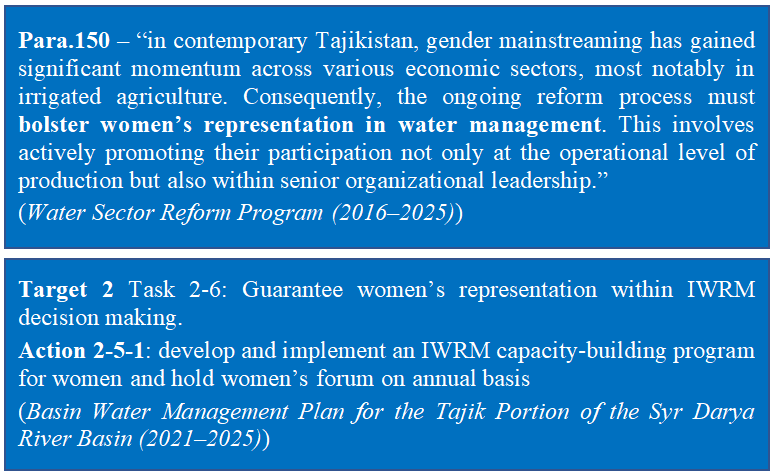
In Tajikistan, the gender dimension of sustainable water management is systematically integrated into several pivotal strategic frameworks. The Water Sector Reform Program (2016–2025) and the Basin Water Management Plan for the Tajik Portion of the Syr Darya River Basin (2021–2025) explicitly prioritize the enhancement of women’s capacity and their inclusion in decision-making. These documents frame gender-balanced participation as a fundamental prerequisite for operational effectiveness and long-term sector sustainability.
At the constitutional level, Article 17 of the Constitution of the Republic of Tajikistan enshrines the principle of gender equality, providing a legal foundation for advancing the gender agenda across all sectors, including water management. While the National Water Strategy of the Republic of Tajikistan through 2040 (adopted in February 2025) does not categorize gender as a standalone priority, it explicitly guarantees the “right of every person to clean drinking water" and mandates an inclusive approach to resource provision” (Chapter 3). This reflects a commitment to non-discrimination and equitable access for all social groups, including women. Consequently, gender considerations are treated as an integrated, structural component of integrated water resources management rather than a peripheral policy area.
Role and Participation of Women in Water Governance Institutions
Tajikistan has established several national mechanisms to operationalize the third principle of IWRM: the inclusive participation of all stakeholders, including women. A key instrument in this effort is the series of Women’s Forums convened by the Government on the sidelines of major international summits. Notable examples include the Women’s Water Forum, held in conjunction with the International Decade for Action “Water for Sustainable Development” 2018–2028 (2018, 2022, 2024), and the Women’s Forum on Glacier Preservation (May 2025). Furthermore, women’s dialogues within the National Commission on Irrigation and Drainage (2022, 2024) provide a sustained platform for amplifying women’s leadership. These venues are essential for sharing best practices, advancing the gender agenda, and ensuring that women’s recommendations are formally integrated into international conference outcomes.
At the basin level, robust mechanisms have been operationalized to institutionalize women’s participation in water governance. A primary example is the Basin Water Management Plan for the Tajik Portion of the Syr Darya River (2021–2025), which defines specific targets and metrics for gender mainstreaming (Task 2-6, Action 2-6-1). Supported by the Ministry of Energy and Water Resources, the establishment of the Syr Darya and Kofarnigan Basin Women’s Forums represents a significant milestone. These platforms serve as multi-stakeholder hubs, convening female water users, WUA members, local authorities, and academic representatives. By meeting ahead of Basin Council sessions, these forums ensure that women’s technical recommendations and social priorities are formally integrated into Council decisions. Ultimately, these basin-level initiatives foster participatory governance, facilitate knowledge exchange, and empower both women and youth to lead in sustainable, inclusive water management.
Local-level efforts focus on empowering women water users (targeting not less than 30% representation) through training sessions, field visits, and exchanges. These programs bridge the gap in technical expertise - such as water accounting and conservation technologies - while simultaneously fostering leadership skills and legal awareness. These initiatives strengthen women’s role in decision-making and expand their capacities within local water management institutions.
Barriers and Achievements in Advancing Gender Equality in the Water Sector
Advancing gender equality in Tajikistan - particularly in rural areas - is hindered by a complex intersection of structural, cultural, and socio-economic barriers. Key challenges include: (1) high rural-to-urban migration; (2) limited access of women to natural resources, including water and financial resources, as well as to decision-making processes in traditionally male-dominated spheres (water and agriculture, local governance); (3) gender stereotypes and social norms limiting women’s participation in public life; (4) insufficient implementation of laws and mechanisms for equal resource rights; (5) low levels of women’s knowledge on water and land use (agronomic practices, seed selection, rational water use), which limits their competitiveness. Although women formally own land, in practice they often lack timely access to irrigation water, which forces them to transfer land use rights to men or lease out their land.
Furthermore, educational attrition, particularly after grade 9, severely restricts women's entry into technical and managerial career paths.
Notwithstanding these hurdles, Tajikistan is witnessing a positive shift toward gender mainstreaming within the water sector. Facilitated by state support and international cooperation, new capacity-building initiatives strengthen the roles and voices of women and youth in water management. The institutionalization of basin-level platforms and national dialogue mechanisms has created a vital space for female leadership positioning women as agents of change. Ultimately, this "bottom-up" empowerment not only expands individual opportunities but also bolsters the overall climate resilience and operational efficiency of rural water management systems.
Conclusion
The gender transformation of Tajikistan’s water sector is transitioning from normative declarations to tangible, practical outcomes. A robust regulatory framework, coupled with the emergence of participatory platforms, has created a fertile environment for women’s leadership at all levels. Through state-led initiatives and international partnerships, women’s forums and specialized training programs are shaping a new generation of women leaders and strengthen their role in decision-making.
However, systemic barriers remain deeply entrenched. Addressing these requires a multi-dimensional strategy to dismantle socio-cultural biases, rectify resource disparities, and mitigate the institutional impacts of male out-migration. Overcoming these barriers requires comprehensive measures: strengthening gender policy mechanisms, improving gender statistics, changing social stereotypes, ensuring equal access to education and professional advancement for women and youth, and improving management practices.
Ultimately, mainstreaming gender into every phase of water planning and management will not only reduce inequality but also improve the efficiency of water use. By elevating the roles of women and youth, Tajikistan secures a strategic advantage in achieving sustainable development, community resilience, and long-term climate security.
Turkmenistan
Existence and Implementation Mechanisms of National Gender Policy
Turkmenistan’s gender policy is anchored in its Constitutional framework, national legislation, and a series of strategic state mandates. Articles 19 and 20 of the Constitution establish the bedrock of this policy by enshrining gender equality and prohibiting discrimination on the basis of sex. A pivotal legislative milestone is the Law “On State Guarantees of Equal Rights and Equal Opportunities for Women and Men” (2015), which provides the legal architecture for advancing gender equity.
To translate these legal guarantees into measurable progress, the government utilizes National Action Plans (NAP) for Gender Equality. The current NAP for 2021–2025 outlines a comprehensive multisectoral strategy, prioritizing: strengthening the legislative framework, gender-responsive health care, equal access to education, combating violence, expanding women’s economic rights, and increasing their participation at all levels.
Institutional mechanisms for policy implementation include:
• The Cabinet of Ministers of Turkmenistan, which defines the strategic direction of state policy;
• The Interdepartmental Commission on the Fulfillment of International Obligations, which oversees the development and monitoring of the National Action Plan;
• The Women’s Union of Turkmenistan, a public organization dedicated to elevating the status of women;
• The Mejlis (Parliament), which enacts legislation and reflects growing female representation.
Implementation and monitoring involve conducting targeted activities and preparing periodic reviews and assessments of the National Action Plan. These processes are often carried out in collaboration with international organizations and involve the submission of national reports to the UN Committee on the Elimination of Discrimination against Women (CEDAW).
Consequently, Turkmenistan maintains a comprehensive legislative framework and institutional architecture to implement its national gender policy, supported by active monitoring and reporting on progress in this field.
Gender Mainstreaming in Water Legislation and Strategies
While direct references to gender in sectoral water legislation are limited, the existing legal and institutional framework provides a foundation for integrating gender aspects into water management.
The Law of Turkmenistan “On State Guarantees of Equal Rights and Equal Opportunities for Women and Men” (2015) aims to ensure gender equality across economic, political, social, and cultural spheres. Although specific references to the water sector are absent from publicly available excerpts, the law establishes a legal basis for addressing gender issues within sectoral legislation and strategies.
Gender aspects are addressed through the National Action Plan for Gender Equality for 2021–2025. Conducted studies, such as the MICS-6 (“Health and the Status of Women in the Family in Turkmenistan”), have identified disparities in access to resources, including water, between men and women.
International organizations (UN, OSCE, UNDP, etc.) actively promote gender equality in natural resource management. Their activities include: (1) conducting consultations and seminars on the gender dimensions of water management and climate change adaptation; (2) developing recommendations for the collection and analysis of gender-disaggregated data in the water and agricultural sectors to account for the needs and vulnerabilities of different groups; and (3) raising awareness of women’s roles in water management while developing their professional skills.
Turkmenistan is implementing IWRM principles with the support of international partners. A key reference point is the Dublin Principles (1992), which recognize that women play a central role in the provision, management, and safeguarding of water.
Role and Participation of Women in Water Governance Institutions
Comprehensive and systematized information regarding the role and participation of women in Turkmenistan’s water governance institutions remains limited. Nevertheless, based on available data and broader trends in Central Asia, several key conclusions can be drawn.
At the international and regional levels, the vital role of women in the provision, management, and conservation of water resources is increasingly recognized. A gender-sensitive approach is known to improve the effectiveness and sustainability of water management. However, consistent with regional trends, women in Turkmenistan remain underrepresented in formal water governance structures at all levels. Social stereotypes that characterize the water sector as a predominantly “male” domain continue to restrict women’s active participation in decision-making.
A significant challenge is the lack of gender-disaggregated statistics, which complicates an objective assessment of women’s participation in water management. Even when women hold formal membership - particularly in rural areas - they often face barriers to accessing information, training, and meaningful influence over decision-making processes.
The existing regulatory framework, strategic initiatives, and ongoing projects provide a foundation for ensuring equal participation across various sectors, including water. However, while women’s economic activity rate in Turkmenistan is approximately 48%, their representation in leadership positions remains limited. Formally equal access to education does not always result in equal participation in technical and agricultural professions, where men continue to predominate.
Despite the lack of specific data on women’s involvement in water governance institutions, it is evident that their active engagement offers considerable benefits. This is due to their unique knowledge, experience, and direct stake in the sustainable management of resources at the household and community levels.
Barriers and Achievements in Advancing Gender Equality in the Water Sector
Analyzing barriers and achievements in advancing gender equality in Turkmenistan’s water sector requires a consideration of both national trends and the specific characteristics of water management. Turkmenistan’s Constitution and the Law “On State Guarantees of Equal Rights and Equal Opportunities for Women and Men” provide a legal basis for gender equality that theoretically extends to the water sector.
Despite these regulatory foundations and initiatives, the water sector - and specifically agriculture, the country’s largest water consumer - continues to face several challenges: (1) entrenched gender stereotypes that limit women’s participation in management at the level of farms and water management organizations; (2) low representation of women in leadership and technical positions; and (3) a lack of gender-disaggregated data, which complicates an objective assessment of water policy effectiveness from a gender perspective.
Despite the regulatory foundations and initiatives, the water sector – and agriculture in particular, the country’s largest water consumer – continues to face challenges: (1) entrenched gender stereotypes limiting women’s participation in management at the level of farms and water management organizations; (2) low representation of women in leadership and technical positions in the water sector; (3) a lack of gender-disaggregated data, which makes it difficult to objectively assess the effectiveness of water policy from a gender equality perspective.
There is growing recognition that women’s involvement can enhance the efficiency and sustainability of water management. Official discourse frequently notes that gender policy advancement is pursued with regard to national cultural characteristics and the traditional role of Turkmen women, emphasizing their importance as both keepers of the home and active participants in the country’s development.
However, to achieve meaningful progress in securing substantive gender equality in the water sector, further efforts are required to refine relevant legislation, strengthen implementation mechanisms, and overcome persistent social norms and stereotypes.
Conclusion
Turkmenistan possesses a regulatory framework and institutional mechanisms that provide a foundation for integrating gender aspects into water management. International projects and national initiatives are already contributing to raising awareness, developing women’s competencies, and gradually strengthening their role within the natural resources sphere.
However, women’s participation in the water sector remains constrained by social stereotypes, insufficient representation in governance structures, and an absence of gender-disaggregated data. To achieve further progress, it is necessary to strengthen practical policy implementation mechanisms, expand women’s representation in decision-making, and ensure more systematic consideration of gender factors in sectoral planning.
Republic of Uzbekistan
Existence and Implementation Mechanisms of National Gender Policy
In recent years, Uzbekistan has demonstrated sustained political will to strengthen the institutional and regulatory framework for gender equality. The 2019 adoption of the Laws “On Guarantees of Equal Rights and Opportunities for Women and Men” and “On the Protection of Women from Harassment and Violence” marked a turning point in the development of state gender policy.
In 2021, the Strategy for Achieving Gender Equality in Uzbekistan through 2030 was approved, implemented in partnership with UNDP, the Senate of the Oliy Majlis, and the Gender Commission. The Strategy envisages ensuring equal rights and opportunities for women and men in political and electoral processes; expanding women’s participation in public administration; and integrating gender approaches into the education system. It also focuses on strengthening women’s socio-economic rights - including access to financing, land, and property - while introducing gender-sensitive planning and budgeting. Particular attention is devoted to mainstreaming gender aspects into climate change adaptation policy.
Uzbekistan’s significant reforms in women’s rights were recognized by the World Bank, as reflected in the country’s improved position in the “Women, Business and the Law” index (rising from 139th in 2019 to 134th in 2020). The establishment of the National Dialogue of Women Leaders of Uzbekistan and the Republican Women’s Council has expanded the number of women in leadership, fostered leadership qualities in women and girls, and created mechanisms for overcoming gender stereotypes. Additionally, UNDP initiated the “Gender Equality Seal” to incentivize institutional changes and the adoption of gender-sensitive practices in public administration.
As a result, according to the National Voluntary Review on the SDGs, the share of women in leadership positions in Uzbekistan has reached 29.2%.
Gender Mainstreaming in Water Legislation and Strategies
In the context of global climate challenges and ongoing reforms in the agricultural and water sectors, Uzbekistan is taking significant steps to integrate gender perspectives into water management policy. A primary milestone in this process was the approval of the Gender Strategy for the Water Sector of Uzbekistan for 2025–2030.
This Strategy is grounded in a number of key documents, including the Constitution of the Republic of Uzbekistan, the Law “On Guarantees of Equal Rights and Opportunities for Women and Men”, and the national strategies “New Uzbekistan – 2026” and “Uzbekistan – 2030,” as well as the country’s international obligations under the SDGs. It is aimed at removing existing barriers, ensuring equal access to resources, training, and decision-making. The core objectives of the Strategy include: (1) increasing women’s participation in water management at all levels; (2) ensuring the gender sensitivity of water policy; (3) expanding women’s economic opportunities within the sector; (4) creating an inclusive and safe working environment; (4) developing gender-disaggregated statistics and conducting gender audits; (5) introducing gender-responsive budgeting.
The Strategy identifies six priority areas: (1) institutional strengthening of sectoral gender policy; (2) women’s representation in decision-making; (3) gender-sensitive design; (4) expansion of women’s economic opportunities; (5) social protection and safe working conditions; and (6) information and awareness-raising.
The implementation of the Strategy is expected to achieve the following outcomes by 2030:
• An increase in the share of women among water sector management staff to at least 30%;
• Improved gender sensitivity across all water programs and projects;
• Expanded access for women to training, employment, and financing;
• Increased public awareness of the importance of gender equality within the framework of sustainable development.
Role and Participation of Women in Water Governance Institutions
Women’s representation in Uzbekistan’s water sector remains comparatively low, despite their significant roles in agriculture, domestic water use, and local-level resource management. According to 2021 estimates, women constitute only approximately 7% of the water sector workforce, and their representation in management positions is less than 3% (76 individuals). This trend persists among young specialists, where women occupy approximately 8% of positions.
Notably, while nearly 9 million women reside in rural areas and are actively engaged in agricultural production, they head only 6.5% of the country’s more than 85,000 farming enterprises. This disparity between potential and actual participation highlights the insufficient engagement of women in agricultural development and water governance, underscoring the need for targeted support measures.
To ensure equal opportunity within the state water management system, the Strategy outlines practical measures to expand women’s representation in Water User Associations (WUAs), water councils, and scientific institutions. These efforts are expected to enhance decision-making quality and the overall sustainability of water management.
Barriers and Achievements in Advancing Gender Equality in the Water Sector
In recent years, progress in advancing gender equality has been notably strengthened; however, several obstacles remain that affect the sustainability and depth of these gains. The most significant barriers include: (1) socio-cultural norms that limit women’s professional activity; (2) the underrepresentation of women in governance, despite their high engagement in domestic and agricultural water use; (3) a lack of gender-disaggregated data, which complicates needs assessments and the evaluation of policy effectiveness; and (4) limited access to land, finance, modern irrigation technologies, and professional networks, all of which reduce women's capacity to innovate and participate in sustainable water management. Collectively, these factors impede the full realization of the gender agenda and necessitate a systemic approach.
Among the key achievements, the following are noteworthy: (1) the development and adoption of the Gender Strategy for the Water Sector; (2) progress in developing gender action plans and expanding training opportunities for women in water conservation, irrigation, and resource management; (3) strengthening of women’s participation in local-level governance, such as basin councils, and a gradual increase in the number of women in leadership; and (4) increased public awareness and political support for gender initiatives.
Conclusion
Uzbekistan demonstrates sustained political will to advance gender equality, transitioning from formal norms toward practical implementation mechanisms. The adoption of foundational laws and the development of the Gender Strategy for the Water Sector for 2025–2030 confirm a commitment to integrating gender principles into water management and ensuring substantive opportunities for women to participate in decision-making, professional development, and resource access.
Despite persistent barriers, the institutional framework is gradually strengthening, with mentoring programs and gender budgeting gaining traction and the number of women in leadership positions on the rise.
By 2030, Uzbekistan aims to increase the share of women in water sector leadership to at least 30%, ensure equitable access to training and resources, and institutionalize gender-sensitive approaches across all water management programs. This transition is viewed not merely as a move toward equality, but as a strategic precondition for sustainable water management, improved sector performance, and the country’s enhanced climate and social resilience.
Key Findings and Recommendations
The analysis indicates that while Central Asian nations have established the foundational frameworks for gender-sensitive water policy, a significant gap remains between policy and practice. Although national strategies and regulatory acts formally recognize the importance of women’s participation in water and natural resource management, their practical integration remains inconsistent, particularly at the basin and local levels. Currently, gender mainstreaming relies heavily on fragmented initiatives - such as forums, trainings, mentorship programs and dialogue platforms - rather than a systemic institutionalization within broader water sector reforms. To cultivate a more inclusive and resilient water sector in Central Asia, the following actions are recommended:
1) Shift public and professional perceptions to overcome entrenched biases that view the water sector and technical disciplines as exclusively "male" domains.
2) Enhance the attractiveness of careers in water management by ensuring competitive compensation, robust social protections, and clear professional development pathways.
3) Support women and youth in pursuing specialized education and leadership roles. This should include formalized mentoring, vocational training, and targeted incentives to attract the next generation of water professionals.
4) Improve the precision of sectoral analysis by ensuring the systematic collection and reporting of gender-disaggregated data, reflecting the actual roles of men and women in water governance.
Ultimately, achieving substantive gender equality in Central Asia’s water sector requires a holistic approach that aligns political will with institutional reform, sustainable financing, and community engagement. Executing these measures will ensure the meaningful participation of women and youth, thereby securing the long-term effectiveness and sustainability of water management across the region.
References
1. Law of the Republic of Kazakhstan (of 8 December 2009) “On State Guarantees of Equal Rights and Equal Opportunities for Men and Women” (current version) – the basis for gender mainstreaming in sectoral policies.
2. Government of the Republic of Kazakhstan, On the Implementation of the Presidential Directive on the Modernization of the Water Sector and the New Water Code, 2025 – official explanation of the objectives and instruments of the new edition.
3. The Astana Times, New Water Code Sets Framework for Smarter Resource Use in Kazakhstan, 10 June 2025.
4. UNDP Kazakhstan, Public perception of gender equality and expansion of women’s rights and opportunities in Kazakhstan, 2024.
5. The Astana Times, UNDP, UN Women Research Public Perception of Gender Equality…, 8 March 2024.
6. National IWRM Progress Report 2023. Kazakhstan Country Report – IWRM Data Portal.
7. Ministry of Water Resources and Irrigation of the Republic of Kazakhstan, More than 10,000 people work in the country’s water industry: Kazakhstan celebrates the Day of Water Sector Workers today, 2024.
8. SIWI / Women in Water Diplomacy Network, 2024 Year-in-Review / After Action Report, 2024.
9. Forbes Kazakhstan, Women’s entrepreneurship in Kazakhstan: the visibility of success, 2024.
10. UNEP-DHI, Kyrgyzstan Country Report – IWRM Data Portal, 2024.
11. Ministry of Justice of the Kyrgyz Republic, Regulatory Legal Act, Edition No. 159472, 2024.
12. Ministry of Agriculture, Water Resources and Processing Industry of the Kyrgyz Republic, Gender Assessment of WUA Activities, 2023.
13. Ministry of Agriculture, Water Resources and Processing Industry of the Kyrgyz Republic, Press conference on the significance of science for agriculture and irrigation, 2022.
14. CAWater-Info, Water Resources Strategy of Kyrgyzstan through 2040, 2018.
15. Ministry of Foreign Affairs of the Republic of Tajikistan, Constitution of the Republic of Tajikistan, 2016.
16. Republic of Tajikistan, National Review on the Implementation of the Beijing Declaration and Platform for Action, 2019.
17. Ministry of Justice of the Republic of Tajikistan, Legislative Act No. 24741, 2018.
18. Government of Khatlon province, Socio-Economic Development Program of Khatlon province for 2021–2025, 2021.
19. Ministry of Justice of the Republic of Tajikistan, Legislative Act No. 18389, 2015.
20. Ministry of Energy and Water Resources of the Republic of Tajikistan, National Water Strategy of the Republic of Tajikistan through 2040 (paras. 47–48), 2025.
21. Basin Women’s Forum of the Syr Darya River, Established in 2019 with the support of SDC, 2019.
22. Green Central Asia, Women’s Voices in the Age of Climate Change, 2025.
23. Law of the Republic of Uzbekistan “On Guarantees of Equal Rights and Opportunities for Women and Men,” Law of the Republic of Uzbekistan No. ZRU-562 of 2 September 2019 (amended and supplemented as of 9 April 2025). Available at: https://lex.uz/docs/4494873
24. Resolution of the Senate of the Oliy Majlis of the Republic of Uzbekistan No. PS-297-IV of 28 May 2021. Available at: https://lex.uz/ru/docs/5466725
25. “Uzbekistan reaches the ranks of top-five improvers in World Bank’s Women, Business and the Law 2024 Study.” World Bank press release, 4 March 2024. Available at: https://www.vsemirnyjbank.org/ru/news/press-release/2024/03/04/uzbekistan-reaches-the-ranks-of-top-five-improvers-in-the-world-banks-women-business-and-the-law-2024-study
26. Launch of the National Dialogue of Women Leaders of Uzbekistan. UNDP Uzbekistan press release. Available at: https://www.undp.org/ru/uzbekistan/press-releases/zapuschen-nacionalnyy-dialog-zhenschin-liderov-uzbeksitana
27. Order of the Ministry of Water Management of the Republic of Uzbekistan No. 72 of 22 April 2025.
28. Gender Strategy for the Water Sector of Uzbekistan for 2025–2030.
29. “International Forum: What is the role of women in agriculture?” UZA – Uzbekiston Milliy axborot agentligi, 2023.
Development and support
Scientific-Information Center ICWC