
Section 5. Key water developments in the countries of Central Asia
5.4. Turkmenistan
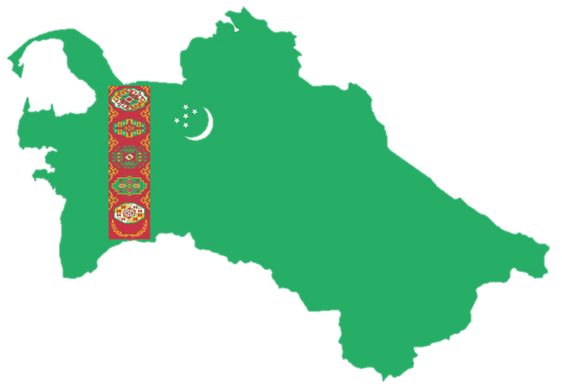
Water Sector
Water Resources. Turkmenistan’s water resources are primarily derived from surface runoff, with the Amu Darya River accounting for 88% of the total supply. Other significant sources include the Murgab (6.5%), Tejen (3.5%), and the Atrek, Sumbar, and Chandyr rivers (1.4%). Smaller watercourses from the northeastern slopes of the Kopetdag mountains contribute 0.6%, supplemented by minimal amounts of groundwater and collector-drainage water. As all major rivers in Turkmenistan are transboundary, approximately 95% of the country's surface water originates outside its borders.
National programs. Turkmenistan continues implementing its 2019–2025 Social and Economic Development Program, the “Program of the President of Turkmenistan for Socio-Economic Development of the Country in 2022–2028” and the “Revival of a New Era of a Powerful State: National Program for Socio-Economic Development of Turkmenistan in 2022–2052”, aimed at integrated water resources management and cooperation among riparian countries. Within the framework of these programmes, measures are implemented to conserve water, develop additional water reserves, prevent salinisation, and improve land, based on scientifically sound and advanced methods of irrigation and water use. In particular, (1) design work is underway for the construction of the second and third “15 Years of Independence” reservoirs on the Karakum River, with capacities of 4.0 billion m³ and 3.0 billion m³, respectively; (2) jointly with Uzbekistan, construction of a filtration-proof wall in the area of the Sultansanjar dam is ongoing; projects for reconstruction (Phase II) of the main Ozerny and Daryolik collectors have been implemented. At the same time, cooperation on training of local water professionals is developing. Currently, approximately 2,000 students from Turkmenistan study at the National Research University “Tashkent Institute of Irrigation and Agricultural Mechanization Engineers” (NRU TIIAME).
Projects. As part of the project “Climate-responsive and gender-sensitive basin management” (GIZ), the country's water professionals participated in regional training sessions on the practical application of IWRM principles (Dushanbe, 4 November; Tashkent, 25 November).
Implementation of the Blue Peace Central Asia Phase II (SDC/IWMI Sub-contract, 2025-2029) has commenced. The Project aims to strengthen transboundary water cooperation among the Central Asian countries. “Drops of the Future: Regional Youth Workshop Water-Food-Energy Nexus” was held in Ashgabat (29-30 January). Project stakeholders participated in the training session “Water Challenges in Central Asia” in Tashkent (13 November) and an interregional workshop of the networks “Women in Water Management in Central Asia and Afghanistan” and “Women in Water Diplomacy in the South Caucasus” (26 November).
Capacity building. Representatives of Turkmenistan’s government authorities, research institutions, and agricultural organizations acquainted with Australia’s best practices in modernization of irrigation systems and digital water management, as part of the CAWEP program. They also explored opportunities to adapt technologies, including the Total Channel Control system, to the conditions of the Karakum Main Canal (12-20 July).
Several seminars and meetings on water diplomacy were held at the Training Centre for Diplomacy Priority Areas of the Institute of International Relations under the Ministry of Foreign Affairs of Turkmenistan.
Events. The following events were held: International Scientific and Practical Conference “Rational use of natural resources in agriculture” (Dashoguz, 23 April) and International Day of the Amu Darya River (Ashgabat, 4 September).
Representatives of Turkmenistan participated in (1) several workshops in Tashkent, including: (а) on the results of the third reporting cycle on SDG 6.5.2 and the use of these data to advance transboundary cooperation in Central Asia (12-13 February); (b) on Water Diplomacy (28 March); (c) on “Water Challenges in Central Asia” (13 November) and the International Conference “Water Diplomacy in Central Asia: Trust, Dialogue and Multilateral Cooperation for Sustainable Development” (10 April); (2) the International Symposium on Water Problems and Natural Disasters (Tokyo, Japan, 5 March).
Regional and international cooperation. During the 5th session of the Uzbek-Turkmen Intergovernmental Water Commission, participants discussed modernizing water facilities, bank protection on the Amu Darya, and the rational use of water resources. As a result, the parties agreed on joint actions on digitalization of water accounting, the exchange of experience in water-saving technologies, and joint research and training (Turkmenabad, 13-14 March). See Cooperation between the Countries of Central Asia on Water and Other Matters.
The 91st Meeting of the ICWC was held in Ashgabat (13 November). The delegation of Turkmenistan participated in: (1) 88th (Dushanbe, 29 January), 89th (Samarkand, 5 April) and 90th (Borovoe, Kazakhstan, 14 August) ICWC meetings; (2) meeting of the IFAS Board (Astana, 10 October); (3) 14th Meeting of the Working Group on institutional and legal improvement of IFAS (Dushanbe, 2-3 June, online). See International Fund for Saving the Aral Sea.
Drinking Water Supply
As part of the “Village” Program and the “General Program for Clean Drinking Water Supply to Settlements”, modern water treatment plants have been commissioned in all regions of the country: in Akhal distrit (daily capacity of 10 thousand m3), Balkan velayat - the complex with pumping stations of the 1st and 2nd lift (30 thousand m3), Lebap velayat (5 thousand m3, with digital control), and Mary velayat (20 thousand m3 from groundwater) (28 March). A seawater desalination plant with a capacity of 20 thousand m³ per day has been launched in Balkan velayat (2 November).
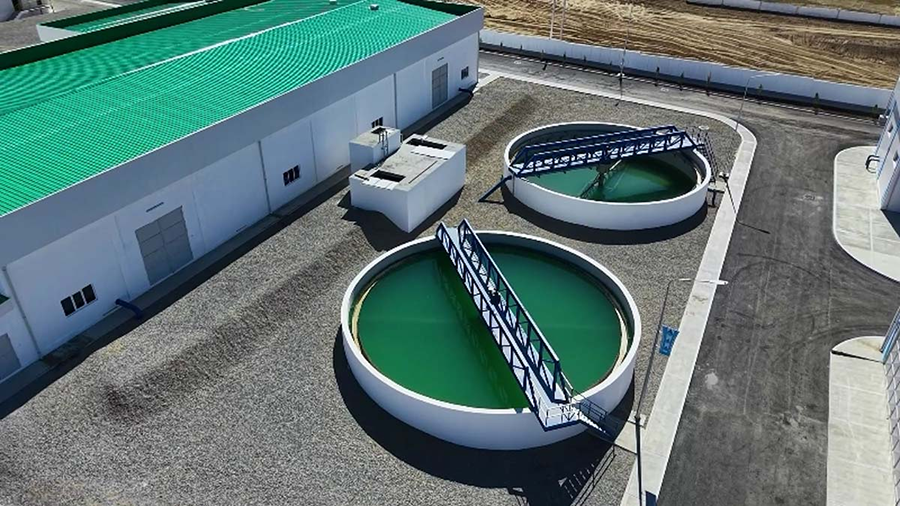
The Dashoguz, Balkan, and Ahal Hydrogeological Field Offices of the “Turkmengeology” State Corporation continue searching for new groundwater sources, assess their reserves and chemical composition, and regularly monitor the condition of existing wells.
As part of the Project “Improving Water, Sanitation, Hygiene and Health through Implementation of the Programme of Work of the Protocol on Water and Health” (UNECE–WHO/Europe), an analysis of access to safe drinking water and measures to reduce health risks was conducted. Based on the results, the WHO Country Office organized a national meeting on water, sanitation, hygiene (WASH) and health (Ashgabat, 17 December).
Agriculture
2025 Results. The production rate growth in agro-industry amounted to 113.2%, while agricultural GDP increased by 7%. More than 1.4 million tons of wheat and over 2,100 tons of silkworm cocoons were handed over to the state fund. Total food exports increased by 30%, including a 5% increase in fresh fruits and vegetables.
National programs. The agricultural development in line with long-term strategies and state programmes for socio-economic development focuses on enhancing food security, promoting sustainable nature management, developing the agro-industry and improving the living standards of rural population.
New procurement prices were established for the 2024 harvest to support farmers (PPT of 09.02.24). Producers have also gained greater access to preferential lending, modern agricultural machinery, fertilizers, and agricultural processing facilities. New greenhouse facilities are built and put into operation.
The sector’s scientific contribution has been reflected in the development of a biocomposite injector for drip irrigation and the breeding of new cotton varieties, “Yoloten-63” (fine-fibre) and “Yoloten-64” (medium-fibre).
Projects. The FAO Project “Support to the Establishment of a Digital Land Cadastre” has been completed; as a result, the “Concept for the Development of a Digital State Land Cadastre in Turkmenistan for 2025-2030” was developed. The project contributed to the establishment of a Coordinate Reference System (CRS) and a network of Continuously Operating Reference Stations (CORS), which form the country’s geospatial infrastructure (the stations receive satellite signals and transmit data to surveying devices used for land surveying and measurement). A training session for the employees of the Land Resources Service was organised with the support of international experts. The final meeting on the project was held in Ashgabat on the 9th of April.
As part of the «Conservation and Sustainable Management of Land Resources and High Nature Value Ecosystems in the Aral Sea Basin for Multiple Benefits» Project (UNDP/GEF), a series of seminars was held on: the development of integrated land and water management plans based on hydro-module zoning and irrigation regimes, effective management of water and land resources in irrigated agriculture, and the sustainable pasture management (Dashoguz, April and 12 November); the updating of the National Action Program to Combat Desertification (Ashgabat, 17 June); the water diplomacy and conservation of bioresources (Turkmenbashi, 13 August); and the application of GIS tools for pasture management in Lebap velayat (Seydi, 19 November).
A number of round tables addressed: (1) the results of seasonal monitoring of key biodiversity species, as well as issues of improving legislation in terms of buffer zones and ecological corridors; (2) issues related to integrating Land Degradation Neutrality principles into Turkmenistan's updated National Action Program to Combat Desertification (NAPCD) and restoring forest fund lands as part of Turkmenistan’s commitments under the United Nations Convention to Combat Desertification (UNCCD) (Ashgabat, 22 May, 17 June, 23 December).
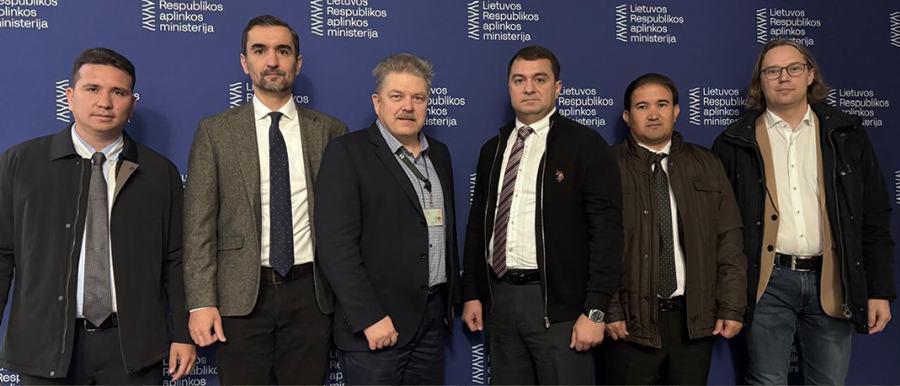
Several FAO projects have been launched. Within the framework of the project «Assistance in strengthening national monitoring of crops using remote sensing technology», the delegation of Turkmenistan studied Lithuania’s experience in digitalizing agriculture and land use system, including land registration and cadastral inventory (27–30 October).
The project “Support for the Adaptation and Promotion of Sustainable Soil Management Practices” was launched and aimed at restoring degraded soils, diversifying agricultural production, and adapting to climate change. Based on the results of the research, a list of adapted methods, including a four-course rotation, will be developed.
Events. Two scientific-practical conferences were held in Ashgabat: “Development of agricultural sciences and technologies - a condition for food abundance and healthy nutrition of the population” (7 April) and “Sustainable development of the agro-industrial complex” (6-7 November); as well as an exhibition of economic achievements of Turkmenistan (18-20 September).
Delegations of Turkmenistan participated in international agricultural exhibitions, such as AgroWorld Uzbekistan (Таshkent, 11-13 March); Caspian Agro (Baku, 13-16 May); Sawsana-2025 (Amman, Jordan, 29-31 May).
Representatives of SIC ICSD took part in the launch of the Central Asia – Russia Interregional Group website to implement the provisions of the United Nations Convention to Combat Desertification (CCD UN) (online, 8 July).
Energy
The Ministry of Energy of Turkmenistan (MET) comprises 12 state power plants with a total installed capacity of 6,511.2 MW. According to the results for January–December, enterprises fulfilled the plan by 107.1%, driven by the modernization of existing power plants and the development of new projects for stable power supply.
Latest developments in legislation. MET approved the following documents: (1) Safety Rules for the Operation of Electric Power Facilities (02 May); (2) Ensuring the guaranteed grid connection of renewable energy installations to public energy systems (01 July); (3) Procedure for Maintaining the State Cadastre of Renewable Energy Sources and the Use of Its Data (01 August); (4) Instruction on Reducing Technological Energy Losses through Transmission in the Electric Power System of Turkmenistan (2 October).
National strategies and programs. As part of the 2021-2025 Energy Diplomacy Development Program and the National Strategy for the Development of Renewable Energy in Turkmenistan until 2030, the draft Program for Strengthening International Cooperation in the Field of Renewable Energy Sources for 2025–2030 and a set of measures for its implementation were developed and approved (Ashgabat, 14 March). The document is aimed at strengthening cooperation with international partners, financial institutions and expert organizations to advance RES in Turkmenistan.
A national strategy for raising awareness of the benefits of RES and energy efficiency started to be developed. The strategy is intended to serve as a roadmap for environmental protection and enhanced economic resilience. As part of this work, round tables were held among representatives of ministries, the EU, UNDP, international projects and the public, where special attention was paid to the role of youth and women in promoting green policy (Mary, 24 March; Ashgabat, 18 July).
Projects. The project “Support to Policy Making and Building National Capacity towards Green Energy Transition in Turkmenistan” (UNDP, UNECE, November 2024 – November 2025) was completed. Key achievements included: a comprehensive evaluation of technological capacities and human capital in the energy sector; training of specialists and heads of relevant ministries and departments (Ashgabat, 29-30 July; 4-5 September); recommendations to reduce methane emissions and integrate climate measures into national climate and renewable energy strategies until 2030, as well as long-term programs for the country's socio-economic development. At the concluding event, key research findings, a roadmap for the development of renewable energy sources and proposals for further technical assistance were presented (Ashgabat, 21 October).
As part of the project «Sustainable Energy Connectivity in Central Asia (SECCA)» (ЕU), the following events were held: (1) a series of workshops “The Role of Sustainable Energy in Environmental Protection. Studying the features of renewable energy development in Turkmenistan’s climatic conditions” (Mary, 10-18 February); “Studying the peculiarities of introducing innovative energy efficiency technologies in the manufacturing sectors of the economy in the climatic conditions of Turkmenistan” (Mary, 10-31 March); “Development of renewable energy sources in Turkmenistan: Features of integrating solar and wind power plants into electric power system” (Ashgabat, 19-20 November); regional trainings on the model-based integrated energy and climate analyses (Almaty, 28-31 January; 27 March, online); (2) international conferences “Decision Support in the Energy Sector for the Development of Sustainable Energy in Turkmenistan” (Ashgabat, 2 April); “System-thinking for Integrated Energy and Climate Analysis. Study of peculiarities of sustainable energy development in Turkmenistan” (Mary, 4 April) and “International experience in advancing and implementing innovative EE and RE technologies in residential and public buildings” (Mary, 2 September).
University students and staff completed an online training course “Introduction to Sustainable Energy: Theory and Practice” (20 January-28 February, with the support of the Florence School of Regulation (FSR).
Expert recommendations were submitted to the Ministry of Energy, providing a basis for new regulatory acts in RES (see Latest developments in legislation above).
As part of the project “EU for Green Development in Turkmenistan: Policy Dialogue and Climate Action for 2024–2028” (EU/GIZ), a national delegation visited Germany to discuss climate policy and expand academic partnerships with leading German universities (23-28 June). With the support of the project, a new academic building was opened at the State Energy Institute of Turkmenistan, and memoranda of cooperation were signed with the Clausthal University of Technology and the Martin Luther University Halle-Wittenberg (Mary, 1-5 September). Representatives of Turkmenistan received training as part of the “Regulation and Integration of Renewable Energy Sources” course organized by FSR (Florence, Italy, 29 September-1 October).
The project “Developing Turkmenistan’s National Capacity through Improving the Regulatory Framework for Energy-Efficient and Sustainable Construction» has been launched/TEESB” (GEF/UNDP, 2025-2030).
Alternative energy. The construction of a hybrid solar-wind power plant with a capacity of 10 MW (7 MW - SPP, 3 MW - WPP) near Lake Altyn Asyr in Balkan velayat is close to completion. Work is in progress under the Agreement with Masdar (UAE) on the development of a solar photovoltaic project (100 MW), the expected generation of which is to be 160-180 GWh per year.
At the Hydrogen Energy Center of the Yagshigeldi Kakayev International University of Oil and Gas, a series of experiments were conducted to produce hydrogen by water electrolysis, enabling the generation of environmentally friendly energy; an installation for deriving hydrogen from natural gas by the plasma-chemical method was developed.
Events. (1) round table on the development of a public outreach strategy on RES and energy efficiency (Маry, 24 March); (2) UN high-level round table “Supporting Policy Making and National Capacity towards Green Energy Transition in Turkmenistan” (Ashgabat, 4 June); (3) TESC-2025 International Conference (Ashgabat, 5 June); (4) 30th “Oil & Gas of Turkmenistan - 2025” International Conference and EXPO (Ashgabat, 22–24 October); (5) International Conference and Exhibition “Development of the Construction, Industrial, Chemical and Energy Sectors of Turkmenistan”/CIET-2025 (Awaza, 3–4 November); (6) International “Turkmen Energetika” Exhibition (Ashgabat, 3-5 November).
The delegation of Turkmenistan participated in: (1) 9th International Iran Renewable Energy Conference and Exhibition (Teheran, Iran, 26-27 May); (2) Baku Energy Week (2-4 June); (3) «Gastech-2025» (Milan, Italy, 9-12 September); (4) 69th Session of the IAEA General Conference (Vienna, Austria, 15-19 September); (5) Dialogue of energy ministers of the Central Asian countries on RES with the participation of the EU and GIZ (Brussels, Belgium, 10 October); (6) 5th Meeting of energy ministers of the OTS Member States (Istanbul, Turkey, 10 December).
Regional and international cooperation. During the meetings with the management of the IAEA, the Ministry of Foreign Affairs of Turkmenistan considered current and future joint projects, including those on updating the legislative framework on radiation safety (Ashgabat, 11 February); The draft Framework Program for 2025-2029 between the Government of Turkmenistan and the IAEA on Atomic Energy was discussed (Turkmenabad, 4 August).
Environment and climate change
Latest developments in legislation. In 2025, Turkmenistan was working to improve legislation and adapt to climate change. A round table was held to discuss the draft law "On Climate Change" (Ashgabat, May 5).
National strategies and programs. As part of implementation of the National Strategy of Turkmenistan on Climate Change, National Forest Program for 2021-2025 (approved on 25 June 2021); National Aral Sea Program for 2021-2025 (approved on 22 October 2021), tree planting campaigns are held throughout the country every spring and autumn; a new draft of the National Action Programme to Combat Desertification is developed .
A new Forest Program is being developed to restore ecosystems in the Karakum Desert, protect tugai forests, and preserve rare plant species listed in the Red Book. The program provides for large-scale digitalization of the sector, including the introduction of remote sensing, the development of a digital forest cadastre and fire-monitoring systems, and the establishment of a network of nurseries. The program focuses on attracting investment in environmental projects and the private sector, while being integrated with the National Aral Program and regional initiatives to combat desertification.
The process of updating NDC 3.0 has been initiated as part of Turkmenistan’s commitments under the UNFCCC and the Paris Agreement (Ashgabat, 27 August, 12 September , 22 December), while preparations are underway to open the Regional Center for Climate Technologies in Central Asia
Work continues on the establishment of the UN Special Program for the Aral Sea Basin (UN SPAS) – the feasibility and modalities for establishing the Special Program were examined, consultations were held, and further actions were agreed upon. The results were presented at the 81st ESCAP session (Bangkok, 21-25 May).
Projects. The project “Developing a National Adaptation Planning Process in Turkmenistan” (UNDP/GCF) has been completed. As a result, long-term resilience objectives for priority economic sectors and a system for monitoring climate actions were identified; a Roadmap for Turkmenistan’s National Adaptation Plan and a Concept for the Development of Climate Finance were developed. At the concluding conference, further steps to combat climate change were determined and textbooks on adaptive water management were handed over to universities and research institutes (Ashgabat, 10 April).
The second phase of the project “Regional Climate Action Transparency Hub for Central Asia”/ReCATH was launched in Ashgabat at the meeting of the Regional Coordination Committee. During the meeting, the project structure, objectives, priorities for climate reporting and policies for 2025-2026 were presented (12 May). Project implementers from Turkmenistan participated in a regional training to improve the quality and reliability of greenhouse gas emission inventories (Tashkent, 1-4 July).
As part of the regional project “Strengthening the Resilience of Central Asian Countries by Enabling Regional Cooperation to Assess Glacio-nival Systems to Develop Integrated Methods for Sustainable Development and Adaptation to Climate Change” (GEF/UNDP/UNESCO), Turkmenistan specialists took part in sub-regional meetings, where the main findings and recommendations of the Transboundary Cryospheric Diagnostic Analysis were presented, and the tasks for the development of the Joint Sub-regional Action Programme were discussed (Samarkand, Uzbekistan, 2-3 April; 6-8 August, Boz-Beshik village, Kyrgyzstan). A technical visit to the Tien Shan mountain station was also held to gain practical experience of the monitoring system (August 8). At the national workshop in Ashgabat, regional priorities were adapted into specific national measures to monitor glaciers and strengthen the country's water security in the face of climate change (12-13 May). The project specialists together with the Zurich University of Arts has developed a virtual training Glacier Lifelines (more details on the Knowledge Hub platform: https://glacier-lifelines.cryosphereca.org/) and the Diagnostic Analysis on Key Cryosphere Issues in Central Asia was published (see here: https://cryosphereca.org/en/news/proekt-gef-proon-iunesko-po-kriosfere-opublikoval-diagnosticeskii-analiz-kliucevyx-problem-kriosfery-v-centralnoi-azii).
Capacity building. The Ministry of Education of Turkmenistan together with UNICEF presented a new curriculum and a manual on adaptation to climate change for preschool education institutions (Ashgabat, 30 August).
UNICEF in Turkmenistan organised a summer school for youth on climate change, covering a wide range of topics, including climate, the environment, energy, agriculture, water resources, disaster risk reduction, biodiversity, waste management, project planning, and youth leadership. The program resulted in the development of a National Youth Statement for the LCOY 2025 conference and the preparation of local youth environmental projects (June–August).
Students of the Turkmen State Institute of Architecture and Construction completed a 40-hour online course under the program "Module of Teaching Environmental Care» (31 March- 25 May).
Events. Ashgabat held: CACCC-2025 (13-15 May); Scientific-Practical Conference «Ecological culture - the basis of sustainable development» (2 June); National Youth Climate Conference/LCOY 2025 (13 October); Climate Dialogue “Inclusive Future: Developing a Plan for Public and Women's Participation in Turkmenistan's NDC 3.0” (22 December).
The delegations of Turkmenistan participated in: (1) International Forum "Central Asia in the Face of Global Climate Challenges: consolidation for common prosperity» (Samarkand, 4-5 April); (2) Regional Forum “Strengthening transboundary cooperation for water and climate resilience in glacial-dependent basins of Central Asia” (29 May) and High-Level International Conference on Glacier Preservation (Dushanbe, Таjikistan, 29-30 May); (3) 17th ECO Summit “New ECO vision for a sustainable and climate-resilient future” (Khankendi, Azerbaijan, 4 July); (4) environmental conferences (Altai Republic, Russian Federation, 25 July; Trabzon, Turkey, November); (5) COP30 (Belem, Brazil, 10-21 November).
Regional and international cooperation. Speaking at the 80th session of the UN General Assembly, the President of Turkmenistan put forward an initiative to establish a Regional Center to Combat Desertification for the Central Asian countries, which will become a platform for coordinating efforts of the Central Asian states in environmental protection and will contribute to the achievement of the SDGs, in particular SDG 13 (combating climate change) and SDG 15 (preserving terrestrial ecosystems) (New York, USA, 25 September).
The delegation of Turkmenistan participated in the ICSD meetings in Dushanbe: ICSD Consultative Council (4 November) and the 36th Meeting of ICSD (5 November). See ICSD of Central Asia.
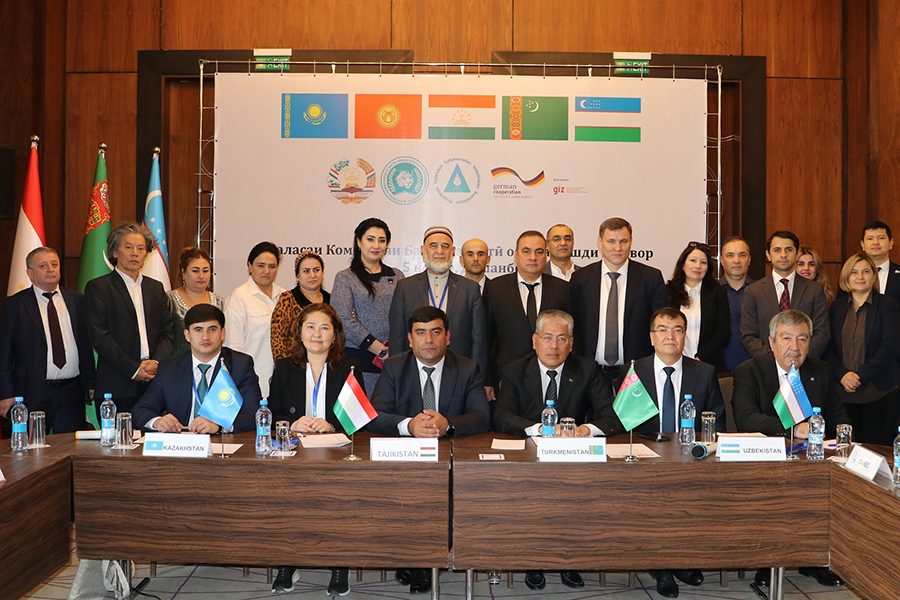
Kazakhstan, Turkmenistan, and Uzbekistan reached an agreement on the joint protection of the Ustyurt Plateau and signed a Roadmap for 2025-2030 aimed at preserving biodiversity and protecting rare animal species in this transboundary region of Central Asia.
Turkmenistan and Uzbekistan are preparing a joint nomination of the Koytendag and Surkhan State Nature Reserves as a single transboundary site to the UNESCO World Natural Heritage List.
Emergencies
The 2025 drought has exacerbated the water situation in the basins of the Atrek, Sumbar, Chandyr, Murghab and Tejen rivers: the Mammetkol and Delili reservoirs (Atrek River) have completely dried up; the water surface area of the Saryazi reservoir decreased by 3.2 times (the Murghab River) - from 40.5 km2 (as of May 1) to 12.4 km2 (as of November 20); (3) the Dostluk Reservoir (Tejen River) became shallow - from 10.3 km2 (as of 1 June) to 5.8 km2 (as of 20 November).
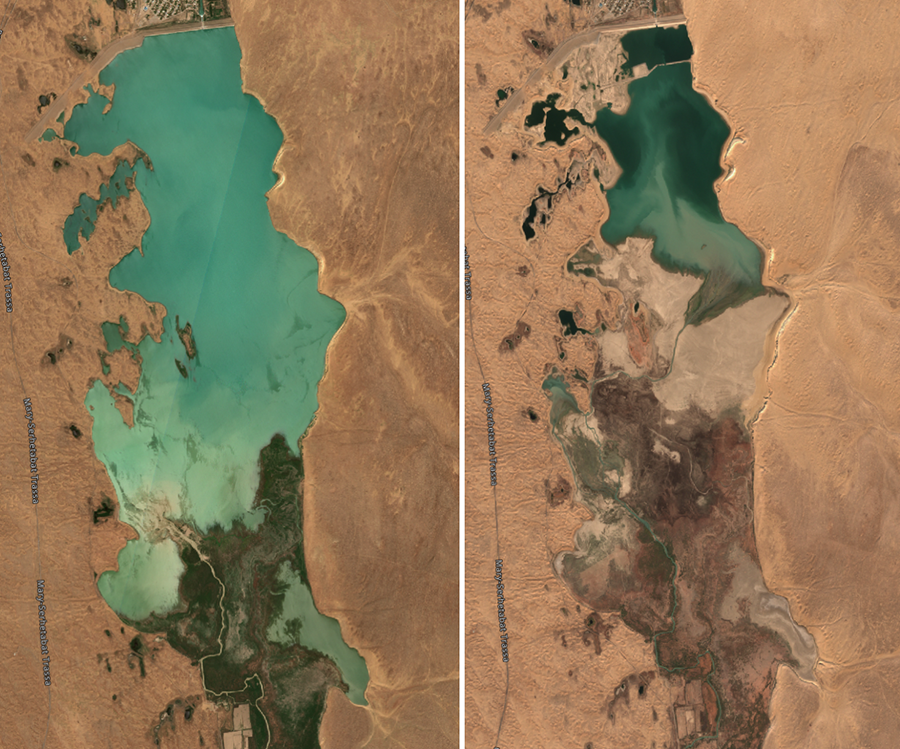
In view of the drought affecting Ahal, Balkan, Dashoguz, Mary and Lebap velayats, dust storms and haze were repeatedly recorded. The peak was in October, when wind gusts of up to 12–16 m/s reduced visibility in some areas to 1,000–4,000 m.
Hydrological drought is caused by a shortage of precipitation in winter-spring 2025 and a subsequent sharp decrease in river flow.
Projects. Within the framework of the projects (1) “Strengthening local and national capacities for emergency preparedness and response in Central Asian countries with high risk of earthquakes and natural disasters” (USAID), a series of events were held to improve emergency preparedness (Dashoguz velayat, 15-16 May; 5 velayats on 10-19 June); (2) “Climate Risk Management in Central Asia” (GIZ), representatives of Turkmenistan took part in the meeting of the Technical Working Group on the establishment of a regional early warning system, following which draft key documents were agreed, including the Protocol of Intent between the emergency agencies of the Central Asian countries on mutual warning in case of transboundary emergencies; Protocol of Intent between Hydrometeorological Services on Storm and Hazard Warning; Concept for the establishment of a regional early warning system and a Roadmap on phased development of this system (Almaty, Kazakhstan, 15-16 April). Training on climate risk assessment and adaptation to climate change in the Murghab River Basin was held in Mary (17-19 June).
Events. The delegation of Turkmenistan participated in the regional events in Dushanbe - the Dialogue on Urban Resilience, the Meeting of Partners on Early Warning Systems, the Early Warning for All (EW4All) initiative and the meeting of the WG experts of the Regional Forum (16 October), as well as in the Forum-meeting of the heads of emergency agencies of the Central Asian countries, following which the final Protocol for 2026–2027 was signed; the Concept and Roadmap of the Regional Early Warning System, mechanisms for information exchange and urban resilience, as well as the Declaration on the establishment of the Regional Coalition of Sustainable Cities of Central Asia were approved (17 October).
Regional cooperation. Turkmen and Kazakh hydrogeologists conducted field research on the Amu Darya River near the Kerki gauging station (Lebap velayat) to see the operation of the transboundary early warning system and identify locations for subsequent GIS research. The work aimed at improving the regional system for mutual early warning of hydrological events and identifying potential risks. It was planned to install automated monitoring at gauging stations, including connection to satellite internet, and develop public warning systems, including siren and voice alert systems and mobile applications.
SDGs in Turkmenistan
In 2025, the main focus of work under the SDGs was on: strengthening national monitoring and reporting mechanisms; developing partnerships with the UN and international organizations; preparing for a voluntary national review of progress on the SDGs; strengthening the competence of government agencies and engaging young people.
The implementation of the Sustainable Development Cooperation Framework between Turkmenistan and the UN for 2021-2025 was continued; the third Voluntary National Review is prepared with the updating of national indicators and an analysis of progress in priority areas until 2030, with an emphasis on improving the statistical framework and expanding international cooperation (Ashgabat, 31 July, Ashgabat, 13 November).
The Government of Turkmenistan and the UN Office in Turkmenistan held a series of working meetings in Ashgabat to strengthen the SDG reporting system, including data collection on agriculture, food security, land rights, sustainable consumption and production, and environmental protection (Тurkmenistan, 21-24 April). In the annual ranking of sustainable development published by the UN and the Bertelsmann Foundation, Turkmenistan took 96th place among 167 countries.
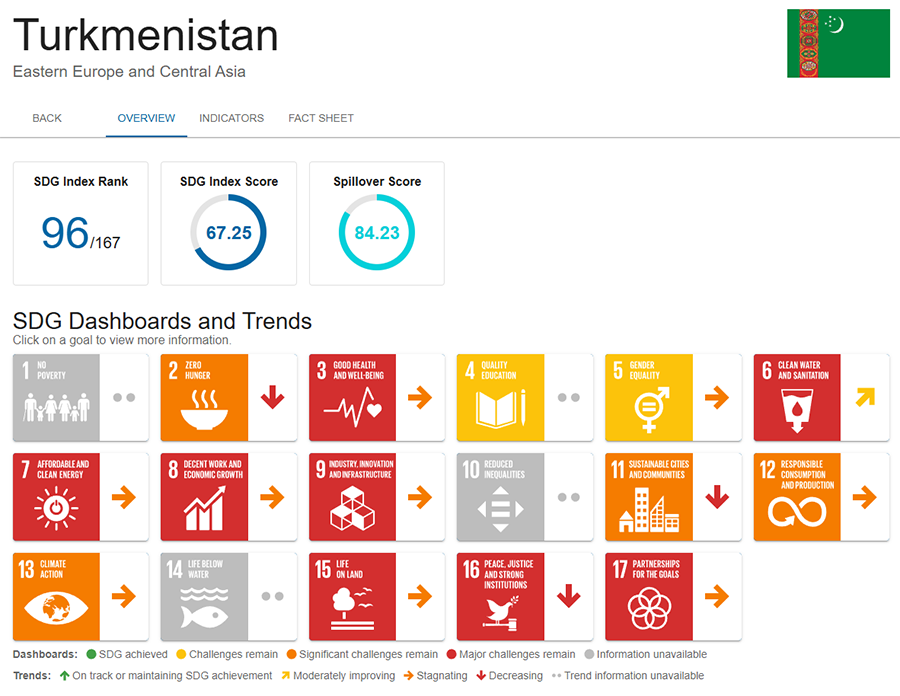
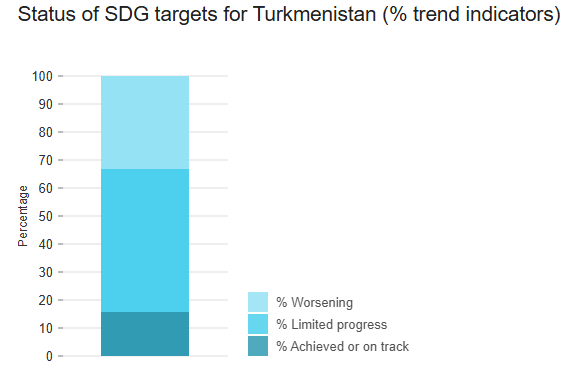
Projects. The project “Platform for the implementation of the Sustainable Development Goals” continues. As part of the project, a workshop on the SDGs localization process was organised (Ashgabat, 23-24 October).
Within the framework of the project “Young SDG Ambassadors” (UNDP), the work of young people enrolled in 2024-2025 continued. Young Ambassadors participated in the UN ECOSOC Youth Forum (New York, April); National Youth Climate Conference/LCOY 2025 (Ashgabat, 13 October) and the UNDP Regional Case Championship (Astana, 2-3 December).
Capacity building. A series of training workshops on the SDGs were held (Ashgabat, 3 June; 11 June). A UN FAO online webinar on data collection methodology and key SDG indicators was held in Ashgabat (10-13 June).
Events. (1) First ECO Ministerial Forum on Sustainable Development (Arkadag, 27-29 April); (2) International conferences: “The Role of Education, Science and Innovative Technologies in Achieving Sustainable Development Goals” (Ashgabat, 29-30 May); “The Role of Women in Modern Society: Development of International Cooperation on the Way to Achieving the Sustainable Development Goals”, the outcome of which was circulated as a document of the General Assembly and the Security Council (Awaza, 10 December); (3) Youth Forum and side event “International Year of Peace and Trust: building momentum towards SDG 16 that promotes peaceful and inclusive societies for sustainable development» (Awaza, 4 August; 7 August); (4) Roundtable discussion on strengthening national SDG reporting mechanisms (Ashgabat, 30 October).
The delegation of Turkmenistan took part in the high-level meeting "Five Years to the 2030 Agenda for Sustainable Development: Central Asian Perspectives” (Astana, Kazakhstan, 6 February); the Regional Workshop on the outcomes of the Third Reporting Cycle for SDG 6.5.2 and the exchange of best practices in the using reporting as a tool to advance transboundary cooperation (Tashkent, 12-13 February) and Forum “Advancing sustainable, inclusive, science-based solutions for the 2030 Agenda for Sustainable Development and its SDGs in the ECE region, leaving no one behind” (Geneve, Switzerland, 2-3 April).
International cooperation. The Government of Turkmenistan and the UN signed the Sustainable Development Cooperation Framework for 2026-2030 , which determines the strategic priorities of cooperation for the coming period (Ashgabat, 23 October).
Cooperation on the Caspian Sea
Turkmenistan continues developing constructive and balanced cooperation in the Caspian region, focusing on environmental protection, rational use of natural resources, improvement of the legal framework, and strengthening of multilateral cooperation among the Caspian states. A meeting of the Interdepartmental Commission on Caspian Sea was held. The meeting reviewed and summarised the results of work, identified priorities, including the protection of biological resources and the alignment of the national regulatory framework with international obligations (Ashgabat, 23 February).
In the format of five-sided cooperation, Turkmenistan participated in: (1) High-level Working Group , discussing the coordination of methods for establishing straight baselines in the Caspian Sea; the issues of preparation for the meeting of foreign ministers and proposals for the establishment of a working group on shallowing of the Caspian Sea (Moscow, Russian Federation, 5-7 May; Ashgabat, 15 September); (2) working meetings of representatives of the Caspian states on the preparation of draft five-sided documents, including the draft Agreement between the Governments of the Caspian Littoral States on Cooperation in Marine Research and the Protocol on Cooperation in Combating Illegal Fishing of Aquatic Biological Resources (poaching) in the Caspian Sea to the Agreement on Security Cooperation in the Caspian Sea of November 18, 2010 (Ashgabad, 13-17 October); (3) 9th session of the Commission for the Conservation and Rational Use of Aquatic Biological Resources . As a result, a Protocol decision was adopted to ban commercial sturgeon fishing in 2026, with the admission of catch exclusively for scientific purposes and for reproduction within the agreed quotas (Ashgabat, 24-26 November); (4) Geneva Meeting on Establishing Tehran Convention Secretariat (Geneva, Switzerland, 18-19 December).
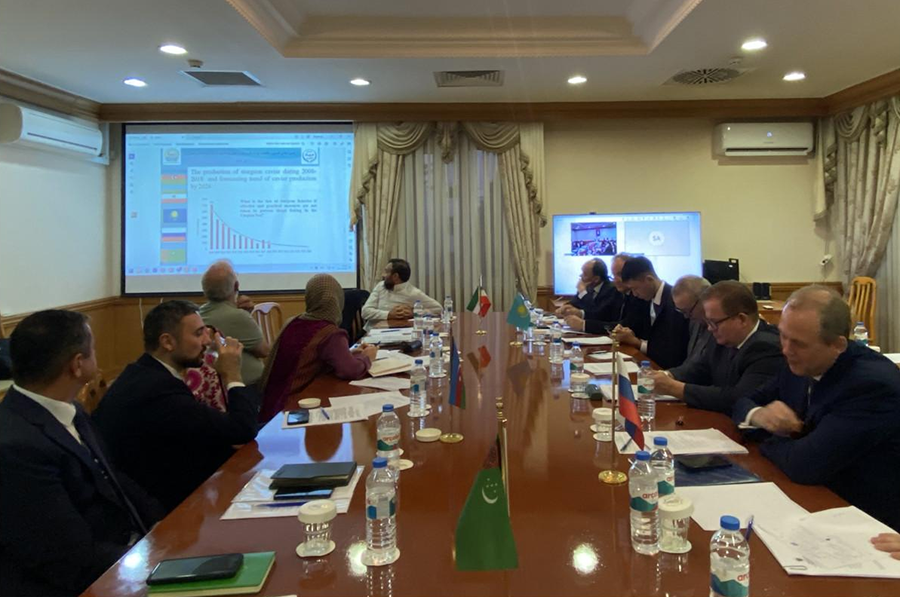
The President of Turkmenistan, during his address at the 80th session of the UN General Assembly, proposed holding a Caspian Environmental Forum in 2026 (New York, USA, 25 September).
Events held in Turkmenistan: (1) Training course “Caspian Sea – Sustainable Development and Management” (Ashgabat, 14-27 July); (2) Meeting of the Deputy Heads of Government of the Caspian States . During the meeting, the joint steps to mitigate the adverse consequences of the rapid shallowing of the Caspian Sea were discussed (Awaza, 5 August); (3) International conference “The Caspian Sea – Sea of Friendship and Peace” (Turkmenbashi, 11-12 August).
Turkmenistan delegations took part in: (1) the 3rd Caspian Economic Forum (Iran, Teheran, 17-18 February); (2) 10th Caspian Media-Forum (Astrakhan, Russian Federation, 22 August); (3) 3rd International Caspian Digital Forum (Kaspiysk, Dagestan, Russian Federation, 30-31 October); (4) 9th (29th) session of the Coordinating Committee on Hydrometeorology of the Caspian Sea (Saint-Peterburg, Russian Federation, 4-5 September); (5) Panel discussion convened to discuss the critical decline of the Caspian Sea’s water level (Belém, Brazil, 17 November); (6) International Environmental Forum «On the Wave of the Caspian» (Makhachkala, Russian Federation, 8-9 December).
Foreign policy and International Cooperation
In 2025, the Ministry of Foreign Affairs of Turkmenistan actively pursued its foreign policy agenda, guided by the principles of positive neutrality, peacefulness and constructive cooperation, while continuing to implement the 2022–2028 Concept of the Foreign Policy Course of Neutral Turkmenistan. Dozens of high-level events were held and included international visits and participation in key summits and forums. Among the notable events were 15 visits by the President of Turkmenistan and 9 foreign visits by the Chairperson of the Halk Maslahaty. The country’s international legal framework was further strengthened by the adoption of 264 documents.
Working and official visits. Through the year, the President of Turkmenistan paid a visit to Mongolia (June), China (August), Tajikistan (October), Italy (October), USA (September, November), Uzbekistan (April, November), Каzakhstan (May, June, November), Japan (April, December) and Russia (May, December).
Key events in the Foreign Policy of Turkmenistan in 2025
The key priorities of Turkmenistan’s foreign policy are to preserve and strengthen its status of permanent neutrality, develop cooperation with Central Asian states and strategic partners, contribute to the activities of international organisations, promote transport, energy and economic projects, and implement humanitarian, environmental and peacebuilding initiatives.
The following events were held in Turkmenistan: (1) international conferences on “International Year of Peace and Trust: the Role of Interregional Economic Cooperation in Ensuring Sustainable Development” (Ashgabat, 19 March), “The Role of Women in Modern Society: Promoting International Cooperation for Sustainable Development” (Turkmenbashi, 10 December); (2) Third UN Conference on Landlocked Developing Countries (Turkmenbashi, 5–8 August); (3) International Forum confined to the International Year of Peace and Trust, International Day of Neutrality and the 30th anniversary of the permanent neutrality of Turkmenistan, following which the Аshgabat Declaration (Ashgabat, 12 December) was adopted.
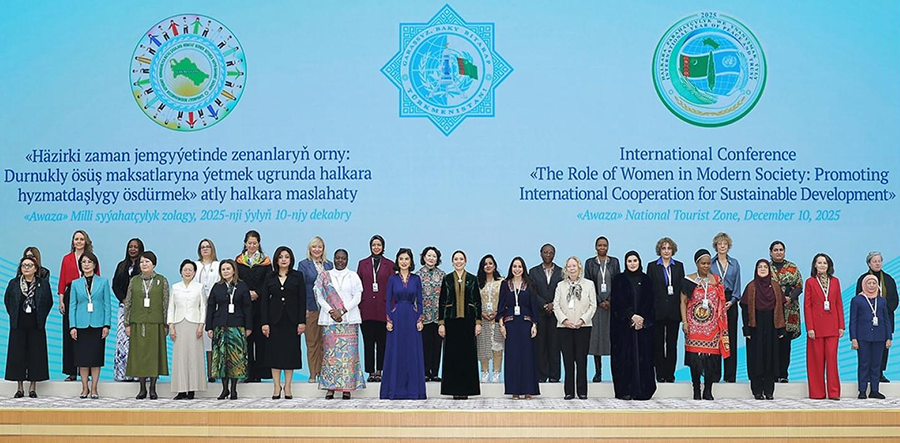
Alliances and strategic partnerships. In 2025, the President of Turkmenistan paid state visits to Uzbekistan (Tashkent, 16-17 November) and Kazakhstan (Astana, 24-25 November). As a result, the heads of state signed Joint Statements and several bilateral interdepartmental documents. Uzbekistan launched joint Turkmen-Uzbek cross-border trade zone «Shavat-Dashoguz». See Cooperation between the Countries of Central Asia on Water and Other Matters.
A trilateral meeting of presidents of Azerbaijan and Uzbekistan and the chairperson of the Halk Maslahaty of Turkmenistan was held in Turkmenistan. The meeting focused on the development of multilateral cooperation in the areas of trade, economy, transport, communications, energy and humanitarian affairs. As a result, a Joint Statement was adopted, and several cooperation documents were signed (Turkmenbashi, 22 August).
The President of Turkmenistan signed laws on accession to the 1988 Protocol to the International Convention on Load Lines, 1966 (12 April) and on ratification of the Treaty of Eternal Good-Neighbourliness, Friendship and Cooperation between the Republic of Kazakhstan, the Kyrgyz Republic, the Republic of Tajikistan, Turkmenistan, the Republic of Uzbekistan and the People’s Republic of China, signed in Astana on 17 June 2025 (22 November).
Delegations of Turkmenistan headed by the President participated in the Central Asia-EU Summit (Samarkand, 4-5 April); Central Asia-Italy Summit (Astana, 31 May); First China-Central Asia Summit (Astana, 17 June); Second Russia-Central Asia Summit (Dushanbe, 9 October); US-Central Asia Summit (Washington, 6 November); Summit of Central Asia plus Japan Dialogue (Tokio, 20 December), as well as in the 7th Consultative Meeting of the Heads of State of Central Asia (Tashkent, 17 November).
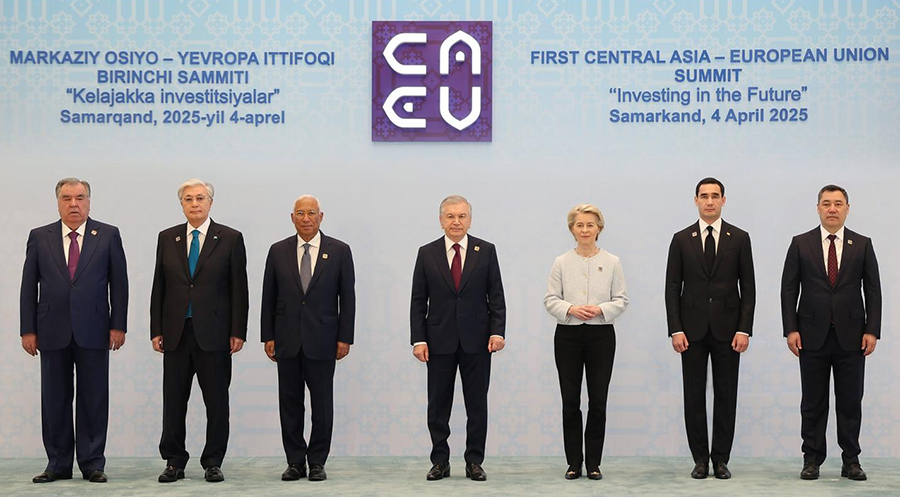
Chairmanship in international organizations. In 2025, Turkmenistan acted as the chair country of SPECA, managing its work, organizing and participating in high-level meetings (Geneva, Switzerland, 29 January) and ministerial sessions (Geneva, Switzerland, 8 April), as well as preparing for key events under the auspices of SPECA.
Promotion of national interests and reinforcement of the country's image. Turkmenistan actively cooperates with the UN, EU, OSCE, OIC, ECO, etc.
EU. Turkmenistan develops cooperation with the EU in trade and economy, transport and logistics, energy and green economy, environmental initiatives, etc. Meetings were held in Ashgabat to review the results of 2024 and discuss prospects for cooperation in 2025 (24 January) with the Deputy Managing Director for Eastern Europe and Central Asia (6 November), as well as at the 24th meeting of the Turkmenistan-EU Joint Committee (7 November).
OSCE. Turkmenistan, together with the OSCE Center in Ashgabat, relevant government agencies and public organizations, has developed a project plan for 2025, covering such matters as strengthening peace and security, developing preventive diplomacy, ensuring cybersecurity, improving energy efficiency and environmental sustainability. Ashgabat hosted the Forum “OSCE – 50 Years of Security Commitments on the Path to Peace and Trust” (22 April).
UN. At the 80th session of the UN General Assembly, the President of Turkmenistan initiated the establishment of the Regional Center to Combat Desertification in Central Asia, promoted the Caspian Environmental Initiative (put forward at the 78th session of the UN General Assembly) and proposed to hold the Caspian Environmental Forum in 2026 (New York, 23 September).
At the initiative of Turkmenistan, the following resolutions were adopted in 2025: (1) A/RES/79/274 “Permanent Neutrality of Turkmenistan” (New York, USA, 21 March); (2) A/RES/79/279 “Additional information on the arrangements for holding the Third United Nations Conference on Landlocked Developing Countries” (New York, USA, 11 April); (3) A/RES/80/3 “Awaza Political Declaration” (New York, USA, 14 October); (4) A/RES/80/132 “United Nations Decade of Sustainable Transport (2026–2035)” (New York, USA, 15 December); (5) A/RES/80/131 “The pivotal role of reliable and stable energy connectivity in driving sustainable development” (New York, USA, 15 December).
The outcome document of the international conference “International Year of Peace and Trust: The Role of Interregional Economic Cooperation in Ensuring Sustainable Development”, held in Ashgabat on 19 March, was published as an official document of the 79th session of the UN General Assembly (A/79/828, New York, 21 March).
The 4th meeting of the Strategic Advisory Board “Turkmenistan-UN” (16 October) and a conference dedicated to the 80th anniversary of the United Nations were held in Ashgabat. The conference resulted in signing new Sustainable Development Cooperation Framework for 2026–2030 covering 4 areas - improving public administration through digitalization, inclusive and green economic growth, environmental sustainability and resilience to climate change, improving the social sphere and the healthcare system (23 October).
CIS. The delegation of Turkmenistan participated in meetings of the: (1) Council of Heads of State of the Commonwealth of Independent States (Dushanbe, 10 October); (2) Council of Heads of Government (Minsk, 29 September); (3) Council of Foreign Ministers (Almaty, 11 April; Dushanbe, 9 October); (4) informal CIS Summit (St. Petersburg, Russian Federation, 22 December).
SCO. At the invitation of the President of the People’s Republic of China, the President of Turkmenistan participated in the SCO+ meeting, where he presented the priority areas for cooperation in transport, logistics, energy and trade, proposed developing key regional corridors and promoting the use of the International Port of Turkmenbashi (Tianjin, China, 2 September).
Sources:
The official web-sites of: Ministry of Foreign Affairs of Turkmenistan, Permanent Mission of Turkmenistan to the UN, State Committee for Water Management of Turkmenistan, Ministry of Justice of Turkmenistan, Ministry of Energy of Turkmenistan, Ministry of Economy and Finance of Turkmenistanа, Academy of Sciences of Turkmenistan.
Information agencies:
turkmenistan.gov.tm,
tdh.gov.tm,
turkmenportal.com,
oilgas.gov.tm,
orient.tm,
arzuw.news,
www.parahat.info
ashgabat.in
Development and support
Scientific-Information Center ICWC