
About project

Central Asia Regional Water Information Base Project (CAREWIB) aims at the improvement of information provision in water and environmental sectors in Central Asian countries in order to promote transparency openness and foster public support for rational natural resources use.
The project implements by SIC ICWC in Tashkent, UNECE, Zoi Environment Network with active participation of EC IFAS and ICSD with financial support of Swiss Agency for Development and Cooperation (SDC).
Main task for Interim Period (August 2007 - June 2010)
CAREWIB project's interim period after Phase-2 is aimed at further improvement of information support in water and environmental sectors of the Central Asian region initiated by CAREWIB Phase-1/2 Project.
The specific objectives of the interim period are the following:
1. Contribute to closer inter-institutional cooperation under the IFAS umbrella with the purpose of fostering the development of a water management decision support system and responsibility for respective data collection and input
- Creation of Working Group consists of the main suppliers and customers in the region (EC IFAS, ministries, SIC ICWC, BWOs, and RHC (NHMS) etc.) for evaluating of the project with the aim to detect deficiencies, problems, gaps in the development of information space and exchange and to defining new customers and additional information suppliers.
- Elaborating the cooperation mechanism on the basis of abovementioned evaluation not only within the project, but with regard to the information exchange as a whole.
- Developing, elaborating and testing analytical instruments of IS, including:
- multi-playing Aral Sea Basin Management Models (ASB-mm);
- model of water balance of river sections (selection of river sections, and problem solving on flow distribution, channel inflow calculation, water losses in the river-bed) - with participation of BWOs;
- estimation and forecasting of lateral inflow to Syrdarya and Amudarya - with participation of BWOs;
- estimation and forecast of water content in the rivers of the Syrdarya and Amudarya Basins by the climatic and hydrological hindcasting series - with participation of RHC, Hydromet services, BWOs;
- real-time forecasting of return water and lateral inflow - with participation of BWOs ;
- finding discrepancies in river water balance - with participation of BWOs;
- analysis of the socio-economic aspects related to activity of other sectors connected to water sector;
- Developing computer models and interfaces to solve routine problems of water resources management and estimation in an on-line regime:
- Model of reservoir's waterworks facility with hydroelectric power station (object selection and problem solving on streamflow regulation by reservoir, evaluation of HES's operating mode, including electricity production, deficit calculation, releases and others) - with participation of CDC “Energy”, BWOs
- Model of hydrochemical composition of water for Amudarya river (selection of gauging station, river section, input of data on hydrochemical composition, analysis of hydrochemical balance [in mg-eq], data validity estimation) - with participation of BWOs
- Evaluating performance of the models - analytical instruments including used analytical models and initial data.
2. Rationalize the information service’s institutional structure in Central Asian water sector
- Broadening the Political&Geographical coverage (Afghanistan);
- Improving the institutional structure (involving EC IFAS, SIC ICSD, BWO, RHC, NHMS, CDC “Energy”);
- Increasing the financial support (cooperation with donors and international organizations: Germany, France, USA, World Bank, WMO, WHO, others);
- Cooperation with other data holders (CACILM, UNDP, others);
- Conduct stakeholder workshop to plan the project and define its role in the ASBP 3 framework;
- Making, matching and finalizing the Project Document for the next phase on the base of elaborated cooperation mechanism
3. Enhance the content and increase access to the Information System, including strengthening of data collection and information retrieval mechanisms at the regional and national levels
- Evaluation of the project by the main suppliers and customers in the region (EC IFAS, ministries, SIC ICWC, BWOs, and RHC (NHMS) etc.) with the aim to detect deficiencies, problems, gaps in the development of information space and exchange and to defining new customers and additional information suppliers.
- Elaborating the cooperation mechanism on the basis of abovementioned evaluation not only within the project, but with regard to the information exchange as a whole.
Main activites:
- Filling the regional and national DBs with new information, based on model and GIS requirements;
- Spatial visualization of databases' regional statistics through GIS-interface;
- Inclusion of the whole CA into the IS (include national provinces outside the boundaries of the Aral Sea basin) - with participation of EC IFAS and its branches and national water management organizations of CA, ICSD, CDC ”Energy”;
- Making and developing a new database on the quality of water resources;
- Making and developing a database block on the assessment of long-term forecasts and climate change impact on water resources of Central Asia;
- Creating a Database on ASBM-3 projects.
- Inclusion of data from Afghanistan within the Aral Sea Basin into the IS (GIS-layers and possibly periodic data).
4. Enhance informational scope and scale of the CAWater-Info Portal including an online platform of modeling tools
- Extending experience and broadening cooperation in the EECCA regions (within activity related to developing of water management organizations network);
- Maintaining the existing portal, including updating of the knowledge base and database, news posting, etc;
- Developing new sections on the portal, which demonstrate the IS content and its analytical instruments.
5. Produce various informational products including digital publications (collection of materials, printing and transmission to partners, publishing on the web portal) and disseminate them among target user groups and other interested parties
- Publication of popular thematic, graphic and cartographic information about the most urgent water and ecological problems in the region (including training of regional organizations how to prepare such information);
- Publication of ICWC bulletins, EC IFAS bulletins, other periodicals of SIC ICWC, EC IFAS and other partner-organizations;
- Publication of monographs, booklets, scientific articles etc. of partner-organizations`;
- Digitization and publication of rare and ancient books, of maps etc. related to the Aral Sea Basin problem, which are in the partner-organizations' archival depositories via web-site;
- Publication the existing material and preparing new material on water resources of Central Asia aiming to promote the portal and Information System in the global ISs (WaterWiki etc.);
- Investigating needs of farmers, WUAs, agricultural producers in the information of IS and of the portal and possibilities for its delivery to users (agro-newsletters, satellite images etc.).
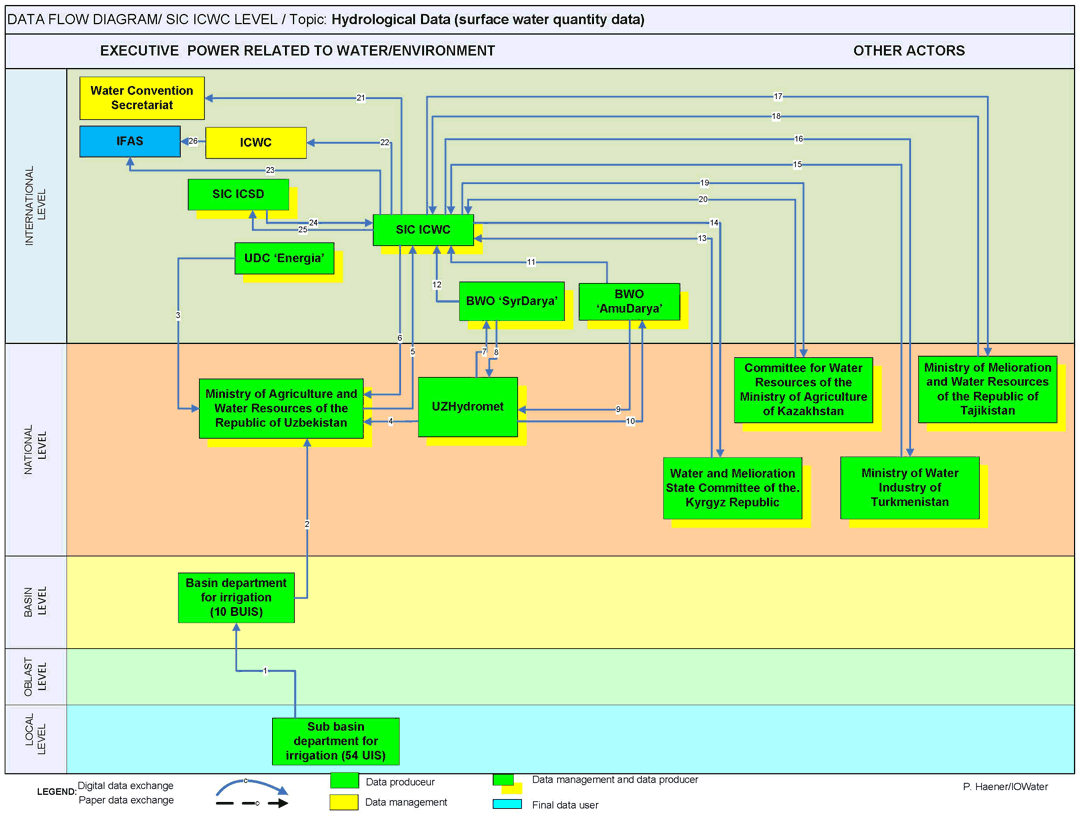
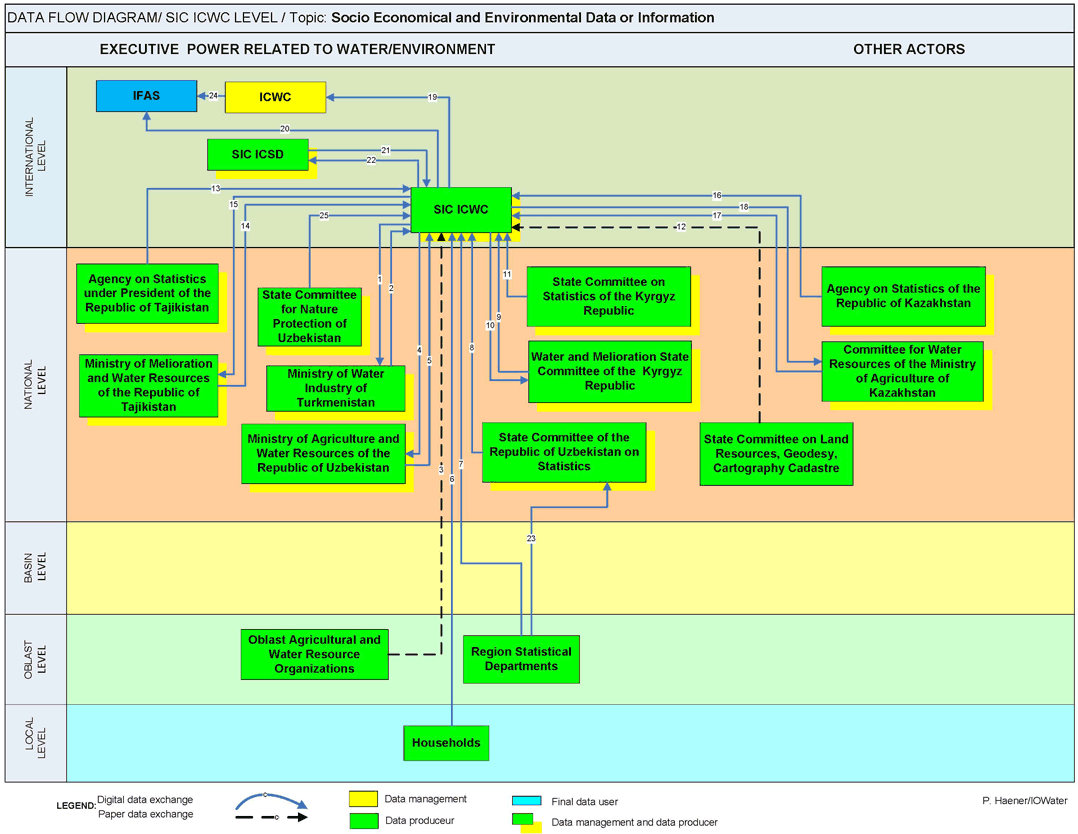
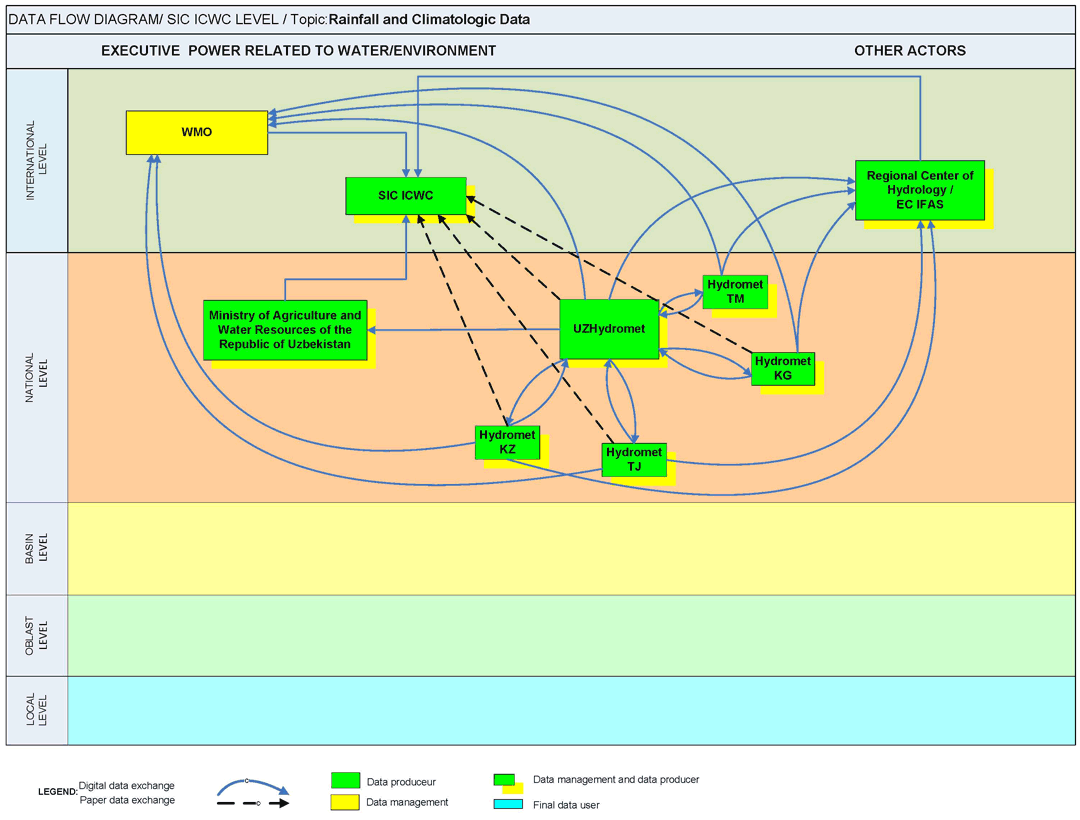
Data Flow Diagrams
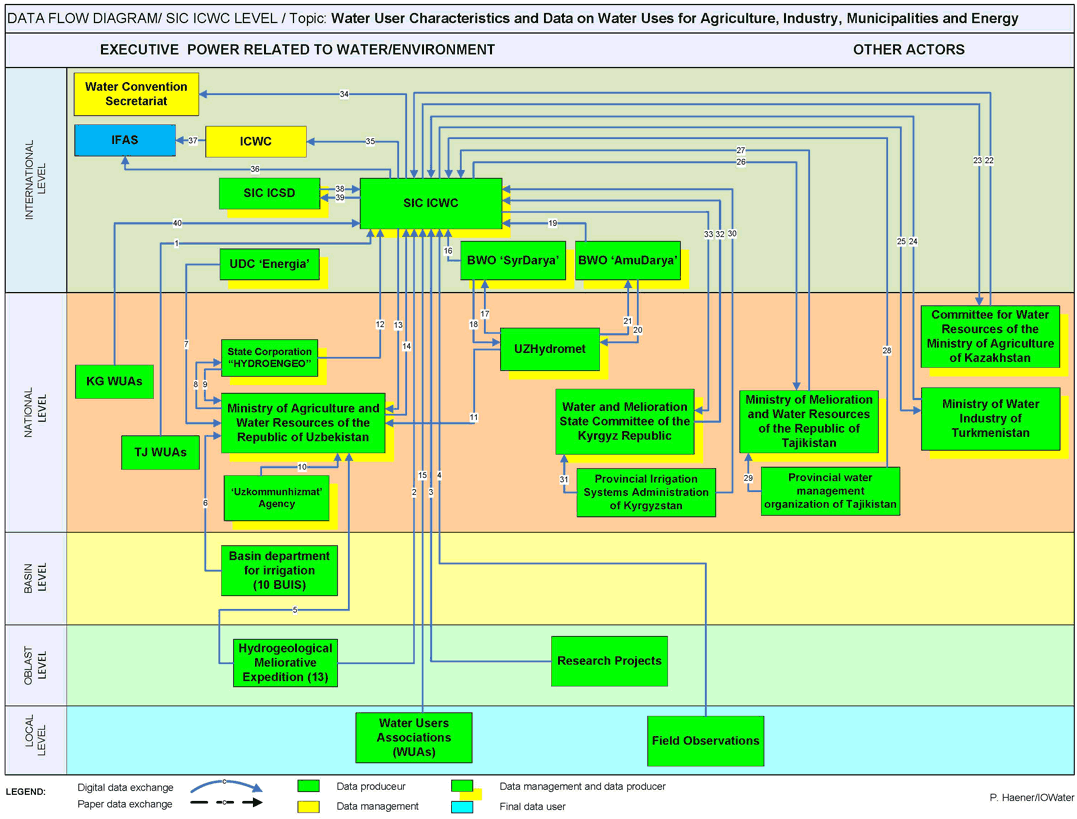
Hydrological Data (surface water quantity data)
Socio Economical and Environmental Data or Information
Rainfall and Climatologic Data
Aiming to ahead
Developing information exchange and relationship mechanisms among its participants in Central Asia
View on the past
Results of Phase II (August 2007 - June 2010)
Results of Phase I (December 2003 - December 2006)
Publications of project